


By Folasade Akpan
Advocates have urged the Federal Government to enforce uniform paid parental leave policy to boost productivity, family welfare and child development nationwide across public and private sectors.
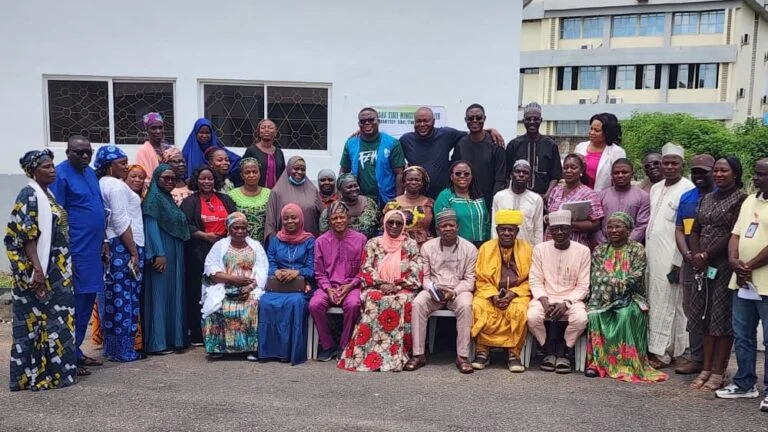
They made the call on Monday in Abuja while unveiling the “Best Start Campaign” at the Ministry of Labour and Productivity by the Nigerian Women in Leadership Coalition.
The campaign is a national call for the government to enact a fully paid, 16-week maternity leave alongside a two-week paternity leave for all workers, regardless of their sector.
The News Agency of Nigeria (NAN) reports that the Federal Executive Council (FEC), under the revised Public Service Rules 2021, approved 14-working-day paternity leave for male federal civil servants not exceeding once in two years for up to four children.
Under the Nigerian Labour Act, pregnant workers are entitled to 12 weeks maternity leave (six weeks before and six after birth) with at least 50 per cent salary paid by the employer.
The law applies to both public and private sectors requiring a medical certificate with protection against dismissal during this period for eligible pregnant employees across workplaces nationwide.
However, implementation varies widely across states, sectors, and organisations without consistent enforcement nationwide, creating unequal access to parental leave benefits and undermining labour standards across the country.
Representing the coalition, Ms Ekemini Akpakpan, Executive Secretary, Women in Successful Careers (WISCAR), said the coalition was urging 16 weeks maternity and 14 days paternity fully paid leave enforced across sectors for uniformity and standardisation nationwide.
“It is very important for labour reforms. Standardisation across public and private sectors requires a legal framework to ensure full pay, adequate duration, and compliance monitoring,” she said.
She added that the policy would ensure that parents were present for their families with mothers recovered fully while fathers’ involvement would support early child development, bonding, and productivity when they returned to work.
Akpakpan noted concerns about costs, adding that support improved productivity and retention for organisations,
“Without adequate support, workers can not remain effective, and organisations ultimately lose skilled and experienced personnel.”
Relating her daughter’s post-partum experience, a nurse, Mrs Priscilla Sanshima, said her daughter resumed work 12 weeks after delivery even though she underwent a caesarean section.
“After surgery, recovery is incomplete, and early resumption affects productivity and overall wellbeing significantly.
“Some private organisations pay half salaries, but we advocate full payment for 16 weeks maternity leave and two weeks paternity leave,” she said.
Mr Honesty Chukwuma, a father, said the paternity leave was important to enhance bonding with newborns and support for wives.
“It is a privilege that strengthens families, improves child development, and allows fathers to actively participate in early stages of life, which is critical for long-term growth and stability.”
Mrs Regina Solomon, a mother of two, said mothers go through a lot during childbirth, and fathers should be available to support them during those early weeks after childbirth.
“Children should enjoy both parents. Without early interaction, they bond more with mothers alone, affecting familiarity and emotional connection with fathers during formative developmental stages of life.”
Mr Joshua Animata, a businessman, while relating his experience after the birth of his son, said that he had to close his business to cater to the child and mother as she was too weak to handle the responsibilities alone.
He added that the leave would help fathers support families and ensure better upbringing and care for children.
The advocates called for legal backing, transparency, and nationwide compliance monitoring, stressing that uniform implementation across all sectors would eliminate discrimination and strengthen families, workforce stability, and national development.(NAN)(www.nannews.ng)
Edited by Abiemwense Moru


Comments