


By Muhammad Sani
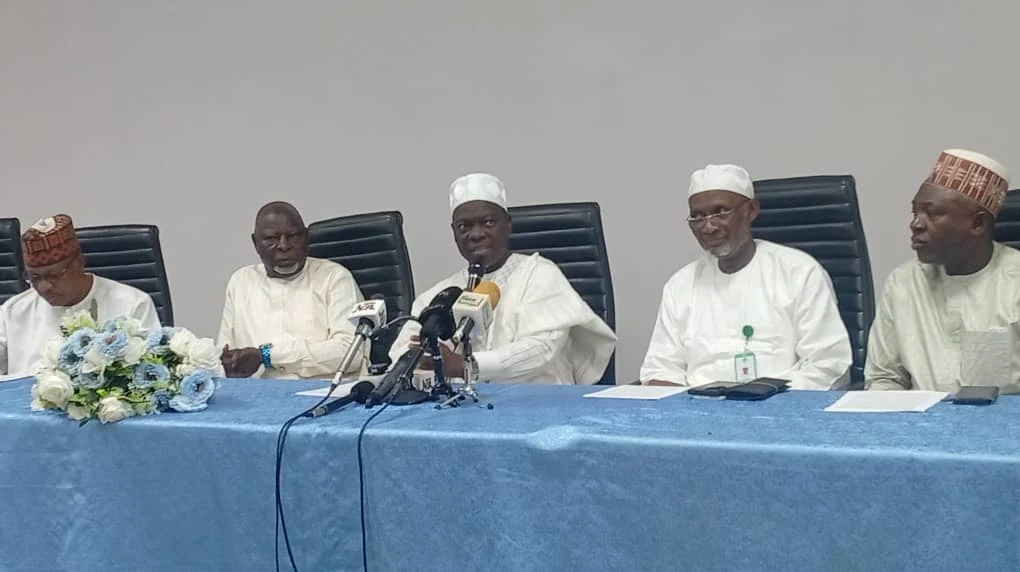
Al-Habibiyyah Islamic Society has expended N4.3 billion on the construction of its Islamic Centre and plans to raise N3 billion Waqf empowerment fund to promote welfare and societal development.
The National Chief Imam of the Society, Alhaji Fuad Adeyemi, disclosed this on Monday in Abuja during a news conference to announce activities marking the inauguration of the Islamic Centre and launch of the N3 billion Waqf endowment fund.
Adeyemi said the initiative was designed to establish a sustainable financial structure that would support humanitarian activities, education, healthcare, welfare services and other interventions for the benefit of society.
The News Agency of Nigeria (NAN) reports that President Bola Tinubu, the Sultan of Sokoto, Alhaji Sa’ad Abubakar III, and other prominent personalities are expected to attend the inauguration scheduled for Friday, Nov. 27, 2026.
The chief Imam explained that Waqf, an Islamic endowment system, had sustained generations and supported important institutions across the world for more than 1,000 years.
He described Waqf as a sustainable mechanism for community development, noting that its capital remained intact while returns generated from investments were channelled towards social and humanitarian activities.
According to him, the system has historically played significant roles in the development of education, particularly in the establishment and sustenance of institutions of higher learning.
He said many people were unaware that the first university in the world was established through Waqf funds, which continued to sustain its operations centuries after its establishment.
Adeyemi identified the University of Al-Qarawiyyin in Morocco as an example of an institution established through Waqf, saying it was founded in 859 AD by a Muslim woman.
He said the institution had continued to benefit from the endowment system, which supported its educational activities and other institutional responsibilities.
The chief Imam explained that Muslim communities had developed and sustained higher educational institutions through Waqf long before the emergence of the first university in Europe.
He recalled that the University of Bologna in Italy, generally recognised as the oldest university in Europe, was established in 1088 AD, about 229 years after the founding of Al-Qarawiyyin.
He said the historical development demonstrated the importance of Islamic endowments in promoting education, knowledge acquisition and sustainable institutional development.
Adeyemi explained that unlike conventional charity, where donated money could be spent immediately, Waqf preserved the original capital for continuous investment and long-term benefits.
“Conventional sadaqa, you will eat everything once and for all when you go out to beg, but if it is Waqf, that money, one naira will not be touched,” he said.
He added that the value of the endowed capital would be preserved, while only the returns generated from its investment would be used to finance designated projects and activities.
“The capital or the building or anything which you have endowed will not be reduced.”
He added that the endowment would be invested in viable ventures to generate sustainable income for the provision of educational, healthcare, welfare and other essential services.
Adeyemi appealed to President Tinubu to support the initiative by establishing an additional endowment of between N5 billion and N10 billion in his name.
He said such a contribution would strengthen the Waqf initiative and demonstrate the importance of institutionalising sustainable philanthropy for the benefit of future generations.
On the management of the proposed fund, the chief Imam assured prospective contributors that the Society would adopt professional and transparent investment practices.
He disclosed that Al-Habibiyyah had already established partnerships with international investment companies that operated in accordance with Islamic financial principles.
“We are already partnering with international investment companies that are Sharia-compliant that we will partner with in the investment,” he said.
He stressed that the fund and other endowed assets would not be managed solely on the basis of religious knowledge but through professional expertise and established investment procedures.
Adeyemi said some members of staff were already undergoing specialised training and attending programmes in different parts of the world to acquire the necessary skills for effective Waqf administration.
He added that the Society intended to establish a model endowment institution that would attract other organisations and individuals interested in sustainable community development.
According to him, the Society has also created a special department and directorate to assist individuals and organisations wishing to establish their own Waqf endowment schemes.
Adeyemi described Al-Habibiyyah as an Islamic think tank whose activities covered Islamic and Western education, Da’wah, mosque development and other religious and community-oriented programmes.
He said the Society was committed to providing purposeful leadership for the Muslim Ummah while addressing contemporary challenges through religious guidance, education and social interventions.
Adeyemi said the organisation would continue to promote Islamic propagation in Nigeria and across the world through peaceful engagement, exemplary conduct and the teachings of Islam.
He identified Da’wah, Islamic and secular education, inter-religious dialogue, counselling, healthcare, welfare assistance and the promotion of Islamic culture as major areas of the Society’s activities.
The chief Imam said the Society remained committed to extending its humanitarian services to people from different backgrounds, irrespective of their religious or social circumstances.
He expressed optimism that the Islamic Centre and the proposed Waqf endowment fund would strengthen the organisation’s capacity to deliver sustainable services and contribute meaningfully to national development.
NAN reports that the inauguration is expected to attract several dignitaries, including President Tinubu, Sultan Abubakar III, who is also the President-General of the Nigerian Supreme Council for Islamic Affairs, and Chairman of BUA Group, Alhaji Abdulsamad Rabiu.
Other expected guests include Sen. Abdulaziz Yari and other government officials, Islamic scholars, business leaders and representatives of various organisations.(NAN) www.nannews.ng
Edited by Deji Abdulwahab


Comments