


How Jordan develops youth national teams
You rarely hear about Jordan in the context of major football. This is not Spain or Brazil. There are no giant clubs here worth hundreds of millions on the market. And yet the country consistently produces players for leagues in Qatar, Saudi Arabia, and the United Arab Emirates. So where does this result come from? The answer lies in a system built almost entirely from scratch. No palaces. No insane budgets. Just proper work with children, patient coaches, and a long-term plan. Jordan decided not to buy finished stars, but to grow its own. And honestly, they’re doing a pretty good job of it.
Of course, major trophies are still far away, but the foundation has already been laid seriously. Interestingly enough, even local analysts who love breaking football down through statistics are paying increasing attention to Jordan’s youth teams. And while almost nobody used to place serious betting (Persian: شرط بندی) on their matches, the odds no longer seem so predictable now. So let’s look at how this «invisible» talent factory actually works.
The Prince Ali methodology
If we use football as the example, the secret behind Jordan’s success is simple: they search for young talent not in the capital, but in smaller regions across the country. Under Prince Ali’s development project, 12 regional training centers have been opened nationwide, where UEFA-certified coaches — yes, the Jordanians hire accredited Europeans — work with boys aged 9 to 14. Enrollment is free, while the selection process is strict enough. Every year, around 4,000 candidates are evaluated, but only the best 200 ultimately make it through.
Here is how the Jordanian system looks on paper — and the numbers are surprising:
| Category | Key Figures | Notes |
| Grassroots centers (2026 relaunch) | 65 training hubs across the country | Covers all provinces. Eight are exclusive to girls, in cities like Amman, Zarqa, Irbid, Ajloun, Jerash, Karak and Aqaba. |
| Original rollout (early 2000s) | Once expanded to 30 locations | Operated from the early 2000s until 2015. Nurtured the current national team stars. |
| Target age group | Born 2015–2016 | Sessions run three times a week for boys, twice for girls, on ministry pitches. |
| Capacity per center | 30 young players (15 per gender) | Selected via open performance trials. Future plans expand to three age categories per hub. |
| Youth league involvement (pre‑relaunch) | 144 clubs, roughly 4,320 participants | 63 of those clubs field adult amateur sides. |
| Grassroots coaching staff | Over 100 qualified coaches | Supported by volunteers and coordinators across 14 governorates. |
| Partnerships | WHO, Ministry of Education, several others | Also works with the National Centre for Disabled, SOS Children’s Villages. |
| UEFA credentials in the system | UEFA Pro & A licenses present | Head coach Fadi Ananza holds a UEFA A License, PRO Asian License, and FIFA Professional Diploma. |
| Registration | Entirely free | The public can sign up online through the JFA portal. |
| Infrastructure push | Nashama Training Centre at Al Hussein Youth City | Includes a medical unit, recovery space, fitness area, and specialised athletic zones. |
| International collaboration | WorldCoaches·Shiraka programme | Launched in late 2025 with the Dutch FA; offers life‑skills sessions for over 2,500 kids. |
| Governance recognition | AFC Grassroots Silver Membership | Awarded for «outstanding achievements» in grassroots development. Covers 20 performance categories. |
Training sessions take place three times per week alongside regular school education. Boarding schools and separation from family are out of the question. At the same time, the technical infrastructure is respectable:
- artificial pitches with high-quality turf;
- medical centers equipped with modern technology;
- video analysis, sports psychologists, and more.
All of this is funded through state grants. Part of the money is also generated by the national team, which occasionally qualifies for the AFC Asian Cup. By the way, tournament details and results can also be followed through MelBet Facebook Iran, where fans receive fresh news, insider updates, and promotional announcements.
You may ask: where are the actual results? Well, despite the relatively recent launch of the program, Jordan’s U-20 side reached the quarterfinals of the Asian Championship in 2023. Then, in 2025, the U-17 team advanced to the semifinals of the WAFF Championship, losing to Saudi Arabia only on penalties, while the Olympic U23 side won the WAFF title back in 2021.
The biggest challenge: keeping talent inside the country
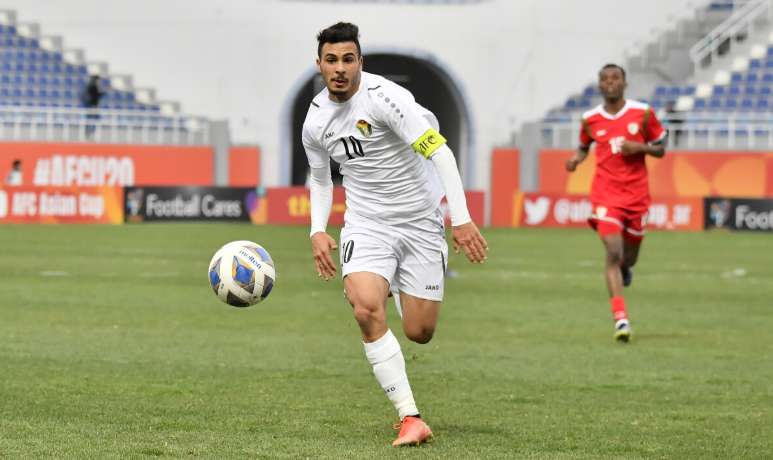
The system works, but there’s one problem. Money. Jordan simply does not offer massive contracts. Even salaries at the top clubs in the domestic league rarely exceed $3,000-5,000 per month. Meanwhile, in Qatar or the UAE, the same footballers can earn five times more. Naturally, they leave. And honestly, you can understand why.
The financial gap, by the numbers
It’s not just about modest local pay. Many domestic players struggle with unpaid financial entitlements stretching back several years. Some clubs delay wages or fail to honor contract terms, which pushes professionals to seek stability abroad. Why blame a local player for chasing opportunities overseas when his own club hasn’t settled what it owes him? The Jordanian league remains modest in commercial pull, and without reliable income at home, the Gulf’s petrodollar offers an irresistible escape route. Twelve local Pro League clubs operate under tight budgets, despite occasional state support — for example, the JFA once distributed JD320,000 among them based on contract expenses. That’s hardly a game‑changer.
Plugging the leak: a special retention fund
The Jordanian federation is trying to slow down this talent drain before another generation disappears overseas too early. New initiatives are already emerging, offering promising prospects additional financial support through a developing compensation fund. The concept is straightforward: spot elite potential early, stabilize the player’s situation at home, and reduce the temptation to accept the first contract arriving from abroad.
The federation’s retention strategy currently revolves around several priorities:
- direct financial support for standout teenagers identified through grassroots competitions and academy scouting;
- facility modernization, including better recovery zones, upgraded gym equipment, and improved training surfaces;
- regional development hubs aimed at narrowing the gap between Amman and smaller cities;
- longer development pathways, allowing athletes to mature locally before exploring opportunities overseas;
- closer oversight of foreign recruitment, particularly involving underage prospects approached by outside intermediaries.
Authorities have also pledged to double the JFA budget starting in 2026, unlocking additional resources for academy expansion and infrastructure projects across every governorate. More money circulating inside the domestic system creates at least some resistance against aggressive scouting networks from wealthier leagues. Jordan still cannot outspend Gulf giants or European clubs, but it is finally trying to compete in a smarter way — by making young players feel they have a future at home before looking elsewhere.
Privatization: a structural fix on the horizon
In addition, a committee has been created to develop football club privatization rules in order to attract private investment. In late 2025, the national committee met to examine global best practices, amend existing legislation, and prepare a general framework for the club privatization project. The aim is to shift ownership from state‑lean structures to private entities, improve governance, and increase financial solvency. Lawmakers have called for amending regulations and legislation after the national team’s World Cup campaign concludes, clearing the path for investor-friendly reforms. If done right, privatization could raise club revenues, stabilize wages, and reduce the urge to flee to richer neighbors.
Tax incentives and fresh sponsorship deals
In parallel, tax incentives and new sponsorship deals are also being introduced. The cabinet exempted the JFA from sales tax on revenues from sponsorship contracts, marketing deals, broadcasting rights, and match ticket sales. Donations to the association are now tax‑deductible, and contractors working with the JFA pay no work permit fees. These measures are designed to make the sport more attractive for corporate backers. The JFA has welcomed this financial and moral boost, noting that it encourages private investment and helps achieve long‑term sustainability. More breathing room for the federation means more money that can be redirected toward keeping home‑grown stars on Jordanian soil
Final thoughts
Major football nations love selling beautiful stories about «golden generations.» Jordan chose a different path. Even though the amount of work ahead remains enormous, the country started building a functioning system where talented teenagers are not forgotten after a couple of good matches in the neighborhood. The federation gradually expanded regional academies, school tournaments, and youth national teams — but most importantly, it connected them all together. A player no longer disappears after a single scouting session. He continues to be monitored, promising youngsters receive playing opportunities, and their strongest qualities are developed further.