


By Uche Bibilari
Prof. Thairu Yunusa, the Chief Medical Director (CMD), University of Abuja Teaching Hospital (UATH), says improved facilities and provision of equipment will contribute to reducing maternal and infant mortality.
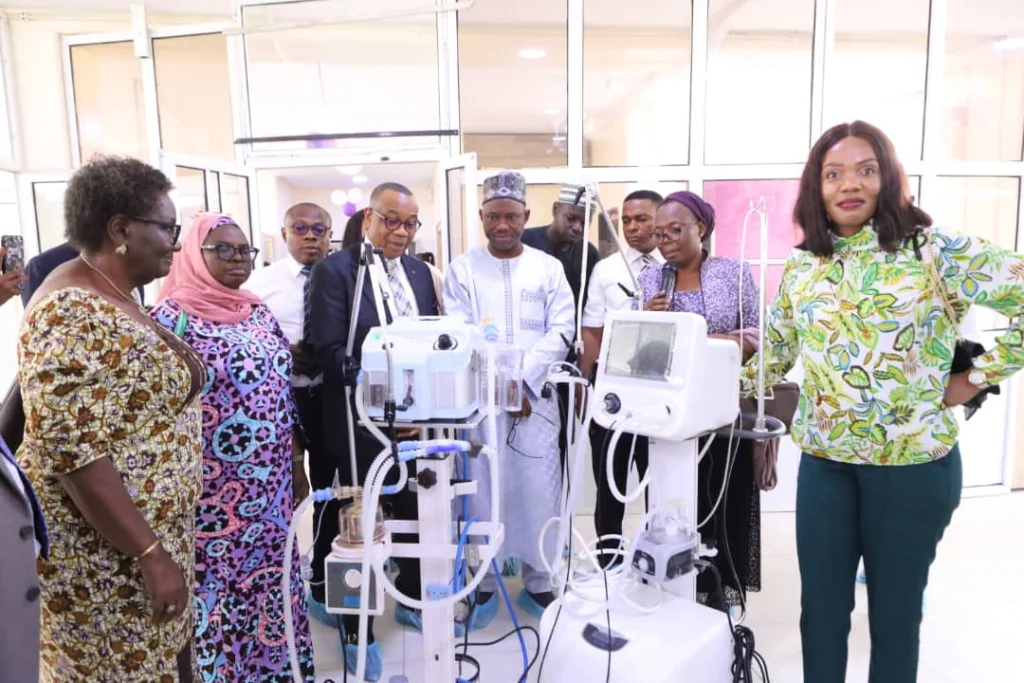
Yunusa said this during the inauguration/ handover of the renovated Special Care Baby Unit (SCBU)/ Labour Ward and donation of equipment by the Church of Jesus Christ of Latter Day Saints to the hospital on Wednesday in Gwagwalada.
He described the church’s intervention as a significant contribution to the hospital’s efforts to improve healthcare delivery, adding that the facility would improve healthcare outcomes.
“With this equipment, definitely the population health outcomes will be improved, turnaround time to health will be reduced.
“What we call the reduction in maternal and infant mortality can be achieved with this equipment”, he said.
He said improved access to medical equipment and diagnostic tools was essential to strengthening the healthcare system and enhancing the quality of care for women and children.
According to him, UATH plays an important role in providing specialised healthcare services, particularly in gynaecology, maternal health and paediatrics.
The CMD appreciated the church for choosing the hospital for the intervention and demonstrating confidence in its management, assuring that the donated facilities and equipment would be maintained to ensure their continued use for the benefit of patients.
He said the intervention demonstrates the importance of collaboration in strengthening healthcare infrastructure and improving maternal and child health outcomes.
Yunusa said that the hospital had made significant progress in digitalisation, including the introduction of electronic administrative processes and an integrated email system.
This, he said, was to make administrative requests faster, improve coordination among departments and reduce dependence on paper-based processes.
Yunusa, however, called on stakeholders and members of the public to support the hospital’s development efforts, adding that the reforms were intended to improve access to efficient and quality healthcare.
Earlier, Mr Christian Chigbundu, Counsellor in the African West Area of the Church, said that the intervention reflects the Christian principle of loving one’s neighbour and caring for the poor and vulnerable.
Chigbundu said that the initiative shows the church’s commitment to improving the welfare of mothers and newborns by providing safer delivery conditions and access to essential medical care.
“The church has seen the need to put a little touch on where children are being born. Those children are given to us as gifts from our father in heaven to take care of.
“So it is important that we make effort to ensure that where they will be born is taken care of. We want our wives, our mothers to be comfortable when they are performing this labour.
“The renovation of the washrooms and the provision of essential medical equipment and intervention will bless the lives of more than 3,500 beneficiaries each year,” he said.
He added that the church believed that caring for mothers and newborn babies was an important way of giving back to society and supporting the development of future generations.
He said that the church’s humanitarian activities were inspired by the teachings and example of Jesus Christ, especially the commandments to love God and one’s neighbour.
He explained that the project was funded through voluntary donations by church members across the world, including Nigeria, adding that the contributions were made out of love and a desire to help others rather than for recognition.
Chigbundu said that the intervention was not motivated by personal benefits or expectations from the hospital, but by the belief that every individual deserved care and compassion.
“Healthy mothers and healthy babies strengthen families. Strong families strengthen communities, and strong communities build a strong nation”, he said.
He called on individuals, organisations and other stakeholders to support vulnerable members of the society, adding that small contributions could make a significant difference.
Chigbundu urged the hospital management, medical professionals and other stakeholders to protect and maintain the renovated facilities and equipment to ensure their continued use for the benefit of patients.
He expressed confidence that the hospital management would sustain the intervention, given the commitment demonstrated during the project.
He said that the church had undertaken humanitarian interventions in different sectors, including healthcare and education, as part of its efforts to support communities. (NAN)
Edited by Folasade Akpan



Comments