


By Usman Aliyu, News Agency of Nigeria (NAN)
Africa’s drive towards a digitally connected economy is gaining momentum, with instant payment systems offering the promise of faster transactions, broader market access and more seamless cross-border trade.
Yet fragmented payment networks, unequal access to financial services, high transaction costs and growing fraud risks continue to prevent millions of people from fully benefiting from these advances.
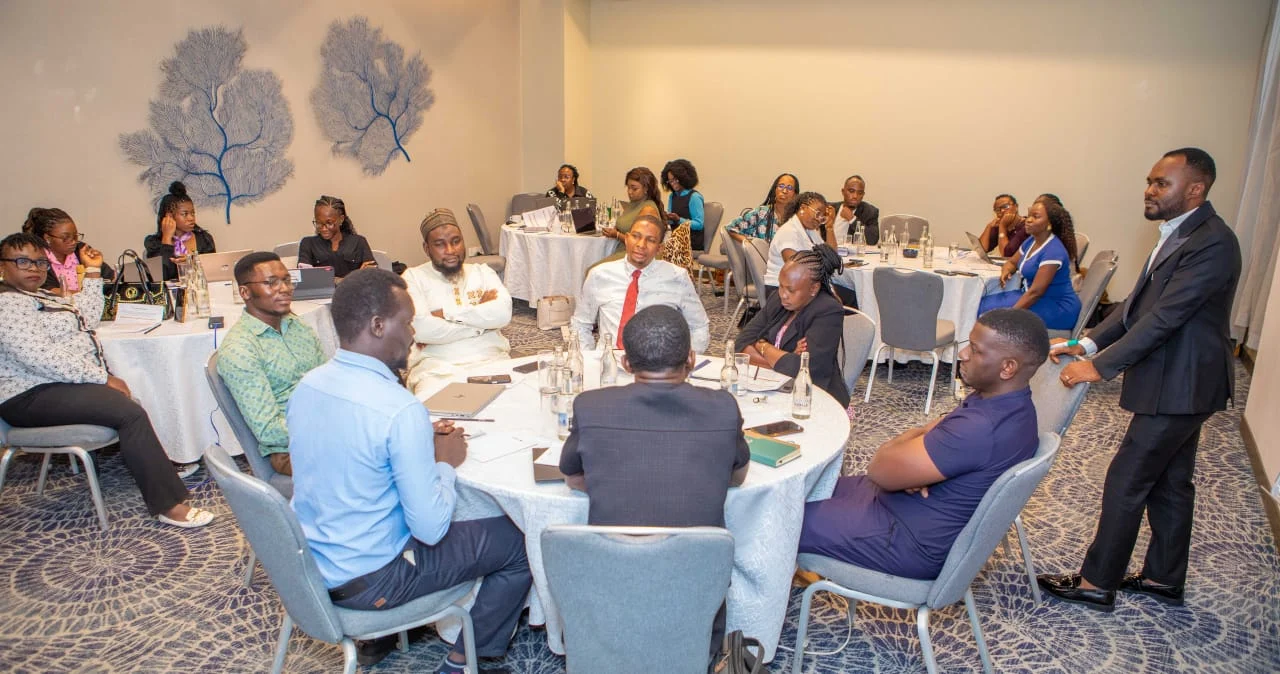
These challenges were at the centre of discussions at a three-day workshop recently organised by the AfricaNenda Foundation in Nairobi, Kenya.
AfricaNenda Foundation is an African nonprofit organisation that works to accelerate inclusive instant payment systems so that people across Africa, including underserved communities, can access and use digital financial services.
Its work focuses on making digital payments more accessible, affordable and interoperable, helping individuals and small businesses participate in the digital economy.
The workshop brought together 18 journalists and three communications officers from the African Union Commission to strengthen reporting on inclusive instant payment systems (IPS) and financial inclusion.
The discussions examined whether payment systems are mature, accessible, affordable and reliable for ordinary people, small businesses and underserved communities, shifting the focus beyond technology and transaction volumes to the experiences of those who use them.
During a session on financial inclusion, Sabine Mensah, Deputy Chief Executive Officer of the AfricaNenda Foundation, posed a thought-provoking question: “Can consumers access the right information and conduct transactions easily, simply, affordably, anytime, anywhere, and instantly?”
Data presented at the workshop showed that about 75 per cent of African adults own mobile phones, while 58 per cent have a bank or mobile money account.
However, about half of the continent’s adult population according to the cited data, uses mobile payments, leaving approximately 49 per cent outside their use.
The figures clearly highlight the gap between access to mobile technology and meaningful participation in digital finance.
John Muthiora, Technical Payment Specialist at the AfricaNenda Foundation, explained that inclusive instant payment systems must connect different categories of licensed financial institutions rather than operate in isolated networks.
He noted that bilateral arrangements between banks, mobile money operators and other providers required separate agreements, connections and settlement arrangements, increasing costs and operational demands.
A multilateral system, by contrast, he said, allowed a participating institution to connect once and transact across a wider financial ecosystem.
“Multilateral in this sense means one gives you access to many,” Muthiora said, explaining that such infrastructure could connect banks, mobile money operators, fintechs and microfinance institutions.
According to Muthiora, the objective, is to reduce the complexity and cost of moving money between providers, making transactions cheaper and easier for consumers.
Multilateral, he said, was the best in building an inclusive instant payment system.
However, connectivity alone does not guarantee inclusion. Muthiora said systems must also accommodate people using basic mobile phones, particularly in rural communities where smartphones, electricity and reliable internet access might be limited.
He stressed that an inclusive system should serve people whose access to financial services depended on basic phones, microfinance institutions or community-based financial organisations.
Nigeria’s lead—and the gaps that remain
The workshop also examined AfricaNenda foundation’s framework for assessing instant payment systems, which classified them into three levels: basic, progressed and mature.
Serge Ambadiang, Partnership, Advocacy and Capacity Building Specialist at the foundation, said the assessment covered 36 domestic and regional instant payment systems in Africa.
The figures presented at the workshop placed 15 systems at the basic level and 10 at the progressed level, while 10 had not been rated. Nigeria’s NIBSS Instant Payment (NIP) system was identified as the continent’s only mature-level system under the framework.
NIBSS stands for Nigeria Inter-Bank Settlement System. It is a Nigerian financial technology and payment infrastructure company that facilitates electronic payments and transactions between banks and other financial institutions in Nigeria.
NIBSS plays an important role in Nigeria’s digital financial ecosystem through services such as:
NIBSS Instant Payments (NIP). This enables instant electronic transfers between bank accounts and participating financial institutions.
Ambadiang explained that basic-level systems generally support person-to-person and merchant payments but lack the broader interoperability and governance arrangements needed for further development. He, however, noted that progressing towards maturity required more than adding transaction options.
“Systems must support a wider range of use cases, provide effective consumer complaint and redress mechanisms, and maintain sustainable cost-recovery models that keep services affordable.”
Cross-border payments and the cost of fragmentation
Participants at the workshop agreed that Cross-border payments remained a major challenge. And that Businesses and individuals continued to face obstacles when transferring money across jurisdictions with different currencies, regulations and payment infrastructures, in spite of regional efforts to improve connectivity.
A study discussed during the workshop estimated that about $5 billion could be lost annually through currency conversion routed via the US dollar or other currencies in cross-border payments.
The study also estimated that about $1 billion a year could return to families in fees on 100 million transfers if charges were reduced to a three per cent target.
These estimates underline the potential benefits of reducing the cost of cross-border transactions. For small and medium-sized enterprises, smoother payments could widen markets and reduce the cost and inconvenience of trading with customers and suppliers in other African countries.
Harmonising Africa’s payment landscape
Addressing the regulatory barriers, Dr Patrick Olomo, Head of Economic Policy and Sustainable Development at the African Union Commission, said the AU and AfricaNenda had been working since 2023 towards regulatory harmonisation to facilitate seamless digital payments across African countries.
The initiative, he explained, was not about creating another payment infrastructure, but making existing systems effectively and efficiently work together.
“One of the fundamental challenges that we have is that there is so much fragmentation and so much friction on the regulatory side of things,” Olomo said.
With 55 African Union member states and about 40 central banks, he said, common rules and regulatory understanding were essential to improving cross-border payments and advancing financial inclusion.
There was a sense of relief when Jacqueline Jumah, AfricaNenda’s Director of Advocacy and Capacity Development, said a feasibility study had found that a harmonised regulatory framework was legally, technically, institutionally and economically achievable.
She noted, however, that implementation would require binding continental rules, interoperable systems, appropriate governance and a phased roadmap that recognised differences in countries’ levels of digital development.
She identified eight priority areas: licensing and passporting; interoperability standards; anti-money laundering and customer due diligence; consumer protection; data governance; supervisory cooperation; settlement and liquidity; and a binding African Union instrument.
“Without an enforceable continental basis, the other seven can remain voluntary and uneven,” Jumah said.
Protecting consumers and building trust
Beyond interoperability and regulation, participants examined the risks associated with instant payments, particularly fraud and the difficulty of recovering money once a transaction has been completed.
Interoperability is the ability of different systems, institutions or technologies to connect and work together seamlessly, allowing them to exchange information or carry out transactions without unnecessary barriers.
In digital finance, interoperability means that customers can send and receive money between different banks, mobile money operators and other financial service providers, even when they use different platforms.
Example: A customer using a mobile money service in Kenya can transfer money to someone with a bank account in Nigeria, provided the relevant payment systems are connected and support the transaction.
On this, Mensah, however, warned that “fraudsters exploit the same speed that makes instant payments convenient.”
She highlighted different types of payment scams in the evolving digital payment ecosystem.
In authorised payment scams, she said victims were manipulated into approving transfers, while unauthorised fraud involved criminals accessing credentials or accounts and initiating transactions without the account holder’s knowledge.
Because funds may reach recipients within seconds, she said, recovering money could be difficult, particularly “when it is withdrawn immediately.”
Mensah highlighted possible responses, including recipient verification before transfers, real-time fraud monitoring, stronger information-sharing among providers and clearer reimbursement arrangements for victims.
She also stressed the importance of consumer education, noting that scams increasingly exploited impersonation, social engineering and artificial intelligence to deceive users.
Sharing a similar sentiment, Ambadiang said consumer recourse was one of the challenging criteria in determining whether a payment system had achieved maturity.
Consumers, he said, needed to know where to complain, how quickly cases would be resolved and what happened when providers failed to address their grievances.
Without effective redress, he said, a system might process transactions instantly but struggle to earn and retain public trust.
Journalism beyond official announcements
For Jude Fuhnwi, AfricaNenda Foundation’s Media Lead, the workshop was designed to address gaps in journalists’ understanding of instant payment systems and improve the quality of public reporting.
He urged journalists to move beyond official announcements and investigate whether systems worked for people outside major urban centres, where network problems, affordability and limited access could undermine their benefits.
“As journalists, you have a wider audience,” Fuhnwi said, noting that the media could bring consumers’ experiences into policy discussions often dominated by regulators and technical experts.
He said participants would become part of AfricaNenda’s media coalition advancing inclusive instant payments, which he described as a network for learning and independent story development rather than a public relations platform.
Fuhnwi urged journalists not to rely solely on AfricaNenda’s reports but also to interpret data from commercial banks and other sources and examine how payment systems performed in practice.
Similarly, Mensah urged journalists to amplify the experiences of consumers who were often excluded from policy discussions.
“We can leverage the media as an anchor to amplify what’s happening in the digital finance ecosystem,” Mensah said.
Ultimately, Africa’s digital payment ambitions will depend not only on how quickly money moves, but also on who can access these services, how much they cost and whether users are adequately protected when things go wrong.
As African countries deepen regional trade integration under the African Continental Free Trade Area, interoperable, affordable and reliable payment systems will be critical to enabling businesses and consumers to transact seamlessly across borders.
For policymakers and the journalists holding them to account, the task is to ensure that the promise of instant payments goes beyond speed and convenience to deliver tangible, inclusive and lasting benefits for the people and businesses who need them most.(NANFeature)



Comments