


By Ijeoma Olorunfemi
The Biotechnology Society of Nigeria (BSN) has advocated responsible, adequately funded and commercial-oriented biotechnology ecosystem capable of transforming Nigeria’s scientific knowledge and biological resources into sustainable wealth.
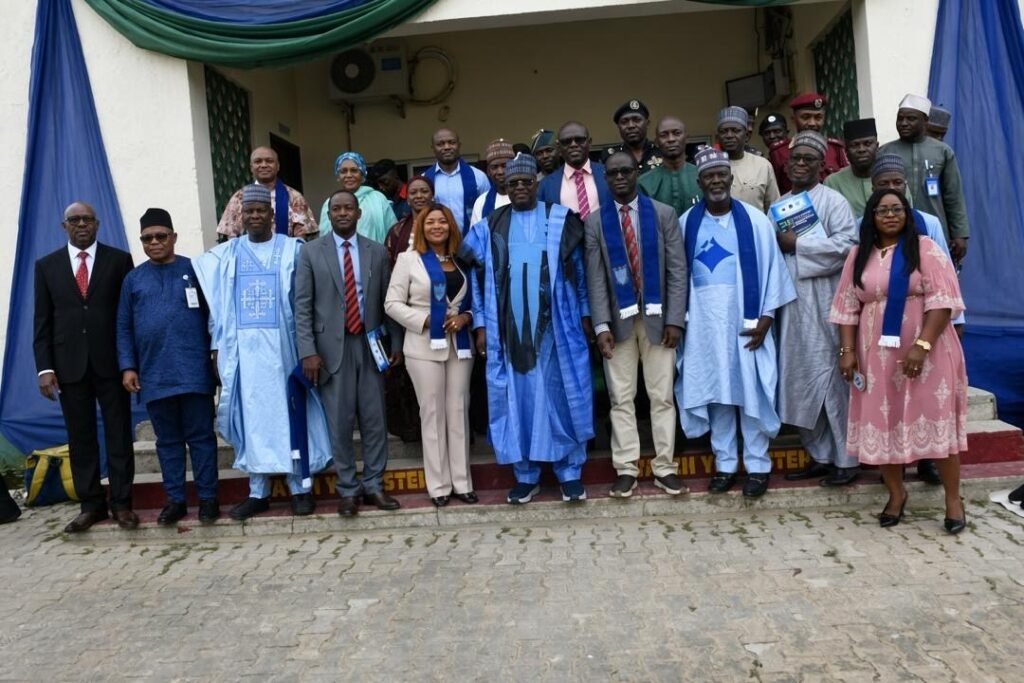
The society made the call in a communiqué entitled `Minna Declaration 2026` issued at the end of the 38th International Annual Scientific Conference of the society which held in Minna.
The conference, held from Aug. 23 to Aug. 27, and with theme “Advancing Safe Biotechnology for Sustainable Wealth Creation.”
The communique was co-signed by Prof. Sylvia Uzochukwu, President of BSN and Prof. Dickson Achimugu, the Vic- President.
Participants comprised scientists, researchers, academics, policymakers, regulators, industry representatives, development partners and students.
The participants said Nigeria should move beyond generating scientific abstracts and publications to translating research into technologies, products, enterprises, industries and jobs.
With many scientific abstracts, the participants stressed that scientific productivity should be measured by its impact on the society and the economy.
They said biotechnology research should shift from being predominantly supply-driven to becoming problem-driven, demand-driven and impact-oriented.
According to the declaration, the preferred research pathway should begin with identifying a real problem, followed by stakeholder engagement, needs assessment before developing research questions and scientific solutions.
The participants also advocated the establishment of a national bench-to-market pipeline to support innovations from discovery and proof of concept through validation, intellectual-property protection, product development, regulatory approval and commercialisation.
They urged Nigeria to strengthen technology-transfer offices, innovation hubs, incubators and partnerships between research institutions and private industry to bridge the gap between scientific output and commercial output.
The scientists said the conference also identified the convergence of Artificial Intelligence (AI), synthetic biology, genomics, bioinformatics and bio-manufacturing as an important frontier for Nigeria’s future biotechnology development.
They proposed an innovation pathway built around “predict, design, govern and manufacture.”
They cautioned that the ability to predict and design should be accompanied by responsible governance, including biosafety, biosecurity, ethics, risk assessment, quality assurance and regulatory oversight.
They said that Nigeria should develop the industrial capacity to scale up and utilise locally generated biotechnology innovations.
“Funding biotechnology must be regarded as a strategic national investment in technological sovereignty, industrial development and economic prosperity,” they argued.
The News Agency of Nigeria (NAN) reports that the declaration further recognises the potential of biotechnology in addressing food and nutrition challenges.
It also underscores that role of biotechnology in improving agricultural productivity and resilience, protecting the environment, advancing healthcare and developing products from indigenous biological resources. (NAN)
Edited by Uche Anunne



Comments