


By Funmilayo Adeyemi
The Resource Centre for Human Rights and Civic Education (CHRICED) has called on the Federal Government to significantly increase investment in education as a strategic response to rising insecurity and unemployment in the country.
Executive Director of CHRICED, Ibrahim Zikirullahi, made the call at a news conference on the state of the nation on Tuesday in Abuja.
Zikirullahi said that expanding access to quality education and skills development remained critical to addressing Nigeria’s widening socio-economic challenges, particularly youth unemployment and growing poverty.
He urged government at all levels to prioritise funding for education and healthcare, strengthen public institutions and ensure efficient utilisation of resources to improve learning outcomes nationwide.
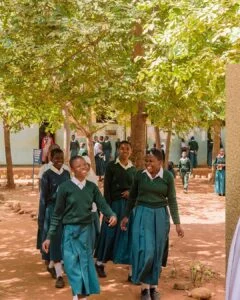
According to him, the country’s rising number of out-of-school children represents a major threat to national stability and long-term development.
”Schools across the country suffer from inadequate funding, dilapidated infrastructure, overcrowded classrooms, and teachers who are poorly motivated due to irregular salaries and lack of support.
”The quality of learning continues to deteriorate, leaving millions of children without the foundational skills they need to thrive.
”This widening educational decay deepens inequality, as only the wealthy can afford quality schooling while children from poor households are left behind.
”A nation that abandons its public schools is a nation actively undermining its own future.”
The executive director noted that economic hardship, displacement caused by insecurity and declining household incomes was forcing many parents to withdraw their children from school.
”The education sector must be treated as a national emergency because the future of democracy and economic growth depends on an educated population,” he said.
Zikirullahi added that weak educational infrastructure, overcrowded classrooms and poor teacher welfare continued to undermine the quality of learning in public schools.
He linked insecurity partly to lack of education and employment opportunities for young people, stressing that sustained investment in education would reduce vulnerability to crime and violent extremism.
He also highlighted broader national concerns, including insecurity, economic hardship and shrinking civic space as affecting citizens’ welfare and access to essential services.
He called for people-centred governance, transparent public spending and policies that promoted innovation, vocational training and youth empowerment.
Zikirullahi therefore urged political actors, civil society organisations and development partners to collaborate in strengthening civic education and democratic participation.
According to him, national renewal depends largely on building an informed and educated citizenry capable of promoting accountability, peace and sustainable development.(NAN)(www.nannews.ng)
Edited by Deborah Coker

Comments