






By Ifeanyi Olannye
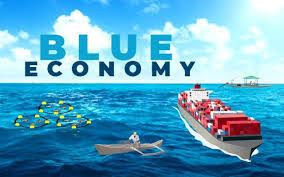
Delta Government says it will utilise its unique geographical assets and aquatic wealth to chart an inclusive and sustainable blue economy.
The state’s Commissioner for Works (Rural and Public Information), Mr Charles Aniagwu, stated this while outlining the state’s transformational blueprint at a ministerial joint briefing in Asaba.
The briefing was with key ministries, departments and agencies (MDAs) and members of the Senior Executive Course 47 of the National Institute for Policy and Strategic Studies (NIPSS), led by retired DIG Adeleye Oyebade.
The theme was, “Blue Economy and Sustainable Development in Nigeria: Issues, Challenges and Opportunities”.
The commissioner highlighted the state’s role as a national pacesetter in harnessing inland and coastal water resources to drive economic growth, environmental sustainability, and social inclusion.
Aniagwu was in the company of the Commissioner for Transport, Mr Onoriode Agofure; Commissioner for Environment, Mr Ejiro Jamani; and Commissioner for Oil and Gas, Mr Peter Uviejitobor, among others.
He described Delta’s extensive river networks, over 500 kilometres of navigable waterways, and Atlantic coastline as a “strategic advantage” that remains underutilised.
He said that the Gov. Sheriff Oborevwori-led administration was determined to drive this trend through deliberate, multi-sectoral investments that would bring rural and riverine communities into the mainstream of economic development.
According to Aniagwu, the blue economy goes beyond traditional sectors like fisheries and tourism, it is a framework for building climate resilience, reducing poverty, and fostering inclusive economic participation.
He emphasised that the state’s approach was to treat rural roads, jetties, cold-chain logistics, and digital access as interconnected pillars capable of unlocking the full spectrum of aquatic-based opportunities.
“Among the key efforts underway are major road construction and rehabilitation projects in traditionally marginalised areas.
“These include the Ogheye Floating Market and access roads in Warri North, Ohoror/Bomadi/Gbaregolor Road in Bomadi, and the Trans-Warri-Ode Itsekiri Road network, which incorporates 15 bridges.
“The ongoing construction of the Ayakoromo Bridge in Burutu Local Government and rigid pavement roads in Warri South-West are also cited as critical arteries meant to connect hinterland communities with market hubs.
“In addition to road networks, the state has significantly invested in water transport infrastructure, including the building and upgrading of jetties.
“These moves are designed to ensure safe, efficient, and environmentally sustainable mobility across Delta’s waterways, which remain the primary means of transportation for many rural dwellers,” Aniagwu said.
The commissioner said that the government’s approach was not limited to physical infrastructure.
“It is also focused on empowering people particularly youth and women through capacity-building in aquaculture, tourism, logistics, and marine services.
“By strengthening cooperatives, enhancing ICT access, and integrating renewable energy solutions such as solar-powered cold storage, the state is helping small-scale producers to scale their operations and connect with broader markets,” he said.
He noted that Delta’s vision aligns with the M.O.R.E Agenda of Governor Sheriff Oborevwori, which prioritises Meaningful development, Opportunities for all, Realistic reforms, and Enhanced peace and security.
Aniagwu explained that the integrated rural infrastructure strategy was expected to yield far-reaching impacts.
“Economically, it will increase trade in fish and agricultural products, lower transportation costs, attract private investment, and reduce rural unemployment.
“Socially, it will foster community ownership, promote women’s participation in fisheries and trade, and preserve indigenous knowledge systems.
“Environmentally, the shift to clean energy transport, mangrove restoration, and sustainable resource management will protect fragile ecosystems while enhancing community resilience,” he said.
The commissioner called for greater national coordination and proposed the designation of Delta State as a pilot “Blue Corridor” beginning in 2026 to test integrated blue economy initiatives.
Aniagwu also advocated for federal support in the deployment of cleaner transport technologies, inland waterway dredging, and cold-chain logistics development.
He recommended a dedicated Blue Economy and Inland Water Transport Taskforce to synchronise efforts across federal and state lines.
He assured of the state government’s readiness to collaborate with the Federal Government, development partners, and private investors to turn its aquatic riches into engines of sustainable development.
He said: “Our waterways must become drivers of opportunity, prosperity, and environmental sustainability, not barriers to progress.”
“With strategic planning, inclusive policies, and coordinated infrastructure investment, Delta is positioning itself not just as a hub of blue economic activity, but as a replicable model for coastal and riverine development across Nigeria.
On his part, the Leader, Course 47 Team, Oyebade, commended the Delta government for establishing the Ogheye Floating Market and urged the state to attract more investments in the blue economy by leveraging its rich Atlantic coastline resources. (NAN)(www.nannews.ng)
Edited by Joe Idika