


By Nefishetu Yakubu
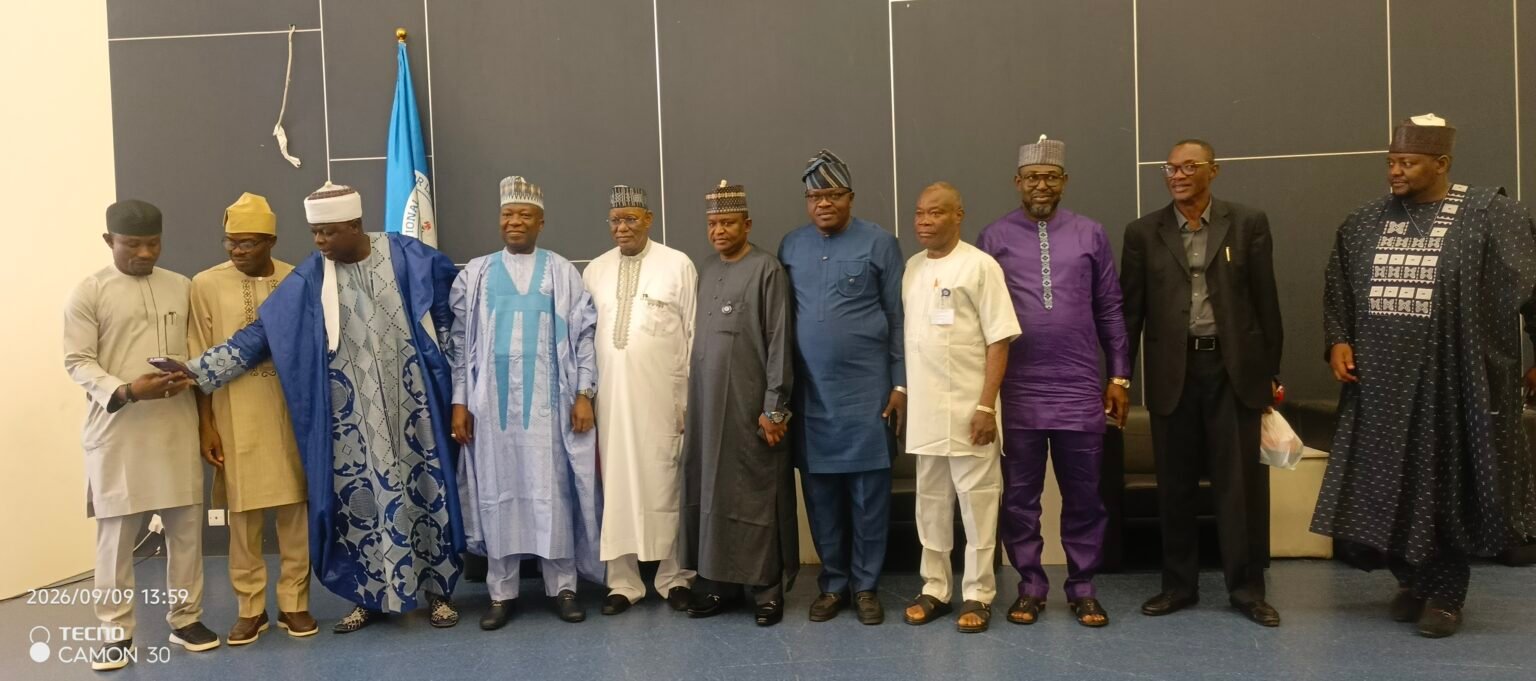
Prof. Abubakar Sulaiman, Director-General, National Institute for Legislative and Democratic Studies (NILDS), has urged political parties to strengthen internal democracy ahead of the 2027 general elections.
Sulaiman stated this on Wednesday in Abuja while speaking at a public lecture organised by the institute on Nigeria’s political transition to 2027.
The News Agency of Nigeria (NAN) reports that the lecture, entitled “Nigeria’s Political Transition to 2027: Challenges and Opportunities for Multi-Party Democracy,” examined issues shaping Nigeria’s democratic development ahead of the polls.
According to the director-general, the 2027 elections present an opportunity to assess the health of Nigeria’s democratic system and identify ways to strengthen institutions.
He said the effectiveness of multi-party democracy depended on strong political parties, open internal processes, alternative policy choices and commitment to democratic values.
Sulaiman further stated that political parties should not be regarded merely as vehicles for winning elections, but as institutions for political recruitment and leadership development.
He said parties also had important responsibilities in policy formulation, political education and aggregation as well as representation of citizens’ interests within the democratic system.
The director-general noted that the transition to 2027 offered political parties an opportunity for introspection, renewal and promotion of issue-based political engagement across the country.
He said the rapid expansion of digital and social media had transformed political communication, created opportunities for increased participation and civic engagement among citizens.
He, however, warned that misinformation, disinformation, hate speech and politically-motivated narratives could distort public debate, deepen divisions and undermine confidence in democratic institutions.
Sulaiman called on political actors, media organisations, technology platforms and citizens to promote responsible communication and a healthier information environment.
He said the institute’s public lecture was intended to stimulate informed dialogue on Nigeria’s political transition and the future of multi-party democracy.
In his goodwill message, the PDP National Publicity Secretary, Mohammed Jungudo said the party had survived turbulent times and internal crises, adding that it was now fully prepared to participate in the 2027 general elections.
Jungudo expressed PDP’s commitment to a seamless, smooth and peaceful transition, maintaining that it had remained law-abiding throughout its internal disputes.
The representative of NSCDC, Dr Michael Emeriewen, said elections were matters of national security, public safety and democratic stability, requiring professionalism, impartiality and effective inter-agency collaboration.
Emeriewen urged security agencies to create an environment where citizens could exercise constitutional rights without fear, intimidation or violence during the 2027 electoral process.
The chairman of Council of Chiefs in Kwali Area Council, Luka Ayedoo, commended NILDS for strengthening democratic capacity and providing deeper governance insights.
He also lauded Nigerians for their resilience and commitment to democracy in spite of challenges, saying that the country had continued to learn and improve its democratic processes over time.
Earlier, the Guest Speaker, Prof. Rufai Alkali, who took participants through the evolution of political transition from 1960 till date, said it was impossible to have a one-party democracy in Nigeria.
Alkali noted that Nigeria’s experience of multi-party democracy had revealed that the country often tends to move toward one dominant party system rather than a one-party state.
He referenced the National Party of Nigeria (NPN) during the Second Republic (1979-1983) and the Peoples Democratic Party (PDP) during its 16-year reign (1999-2015) in the Fourth Republic.
“It contends that the ruling party’s dominance is driven, not just by its own strategies but by the internal fragmentation, leadership challenges and organizational weaknesses of the opposition,” he said.
Alkali stated that successful political transition in Nigeria was dependent on broad coalition and strategic elite consensus.(NAN)
NY/WAS
Edited by ‘Wale Sadeeq
Comments