


By Suleiman Shehu
Prof. Afis Oladosu of the Department of Arabic and Islamic Studies, University of Ibadan, has advocated greater engagement with Islamic schools to promote peace and religious tolerance in Nigeria.
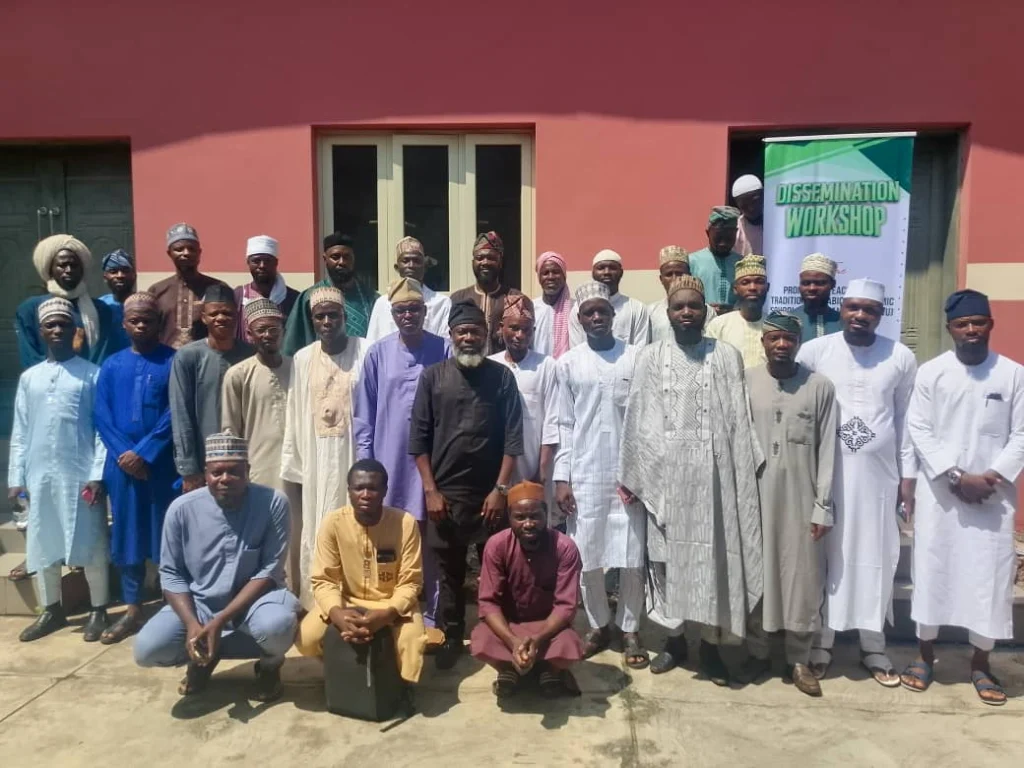
Oladosu, the team lead of a research study on “promoting peace and religious co-existence using Arabic and Islamic schools (Ile Kewu) in Ibadan, Nigeria,” stated this at a Dissemination Workshop, on Monday in Ibadan.
The News Agency of Nigeria (NAN) reports that the research was sponsored by International Peace Research Foundation (IPRAF).
The research was initiated to explore how Islamic educational institutions could contribute to building a more peaceful and harmonious society.
The don said that traditional Arabic schools, popularly known as Ile Kewu in Yorubaland and Makaranta in Northern Nigeria, have significant roles to play in shaping attitudes towards peace and interreligious relations in Nigeria.
Oladosu said that the research was motivated by the recognition that traditional Islamic schools could serve as breeding grounds for either peacebuilders or those whose actions could threaten peaceful coexistence, depending on the teachings and values they promote.
He explained that the project sought to review and interpret texts used in traditional Arabic schools in ways that reinforce Islamic teachings on peaceful coexistence, particularly in a religiously diverse society such as Nigeria.
Oladosu disclosed that the research team had undertaken several activities, including visits to selected Arabic schools, interviews with teachers and students, focus group discussions and wider interactive sessions involving both groups.
He said that the information gathered from those engagements provided the foundation for the dissemination workshop in order to present and discuss some of the research findings.
The don stressed that peace must not be taken for granted, saying it requires deliberate, continuous and collective efforts from individuals, religious institutions and society at large.
“If we all desire peace, we have to work for it. We have to strive for it, promote it, talk about it and live it. It is a lifelong exercise,” he said.
Oladosu further warned that the pursuit of peace should never be considered a completed assignment because new threats and factors capable of undermining peaceful coexistence would continue to emerge.
According to him, individuals and institutions committed to peace must remain vigilant and consistently identify and address developments that could threaten social harmony.
The research team lead expressed appreciation to the project’s collaborator, IPRAF, for its support and assistance throughout the research activities.
Also speaking, a member of the research team, Dr Khalid Afolabi, urged Muslim scholars, Arabic teachers and Nigerians in general to make peace a priority in their actions, statements and engagements with others.
Afolabi emphasised that peaceful relationships were beneficial not only to individuals but also to communities and the wider society.
He cautioned Islamic clerics and teachers against careless or inflammatory statements capable of misrepresenting the teachings of Islam and creating negative perceptions of Muslims among people of other faiths.
“Malams and Muslim scholars have to be very mindful and careful of their utterances so that we do not misrepresent Islam or the fundamentals of the faith to outsiders in a way that will make them perceive us as violent people,” he said.
Afolabi maintained that religious leaders and teachers have an important responsibility to ensure their teachings, public statements and interactions reflected the values of peace, tolerance and mutual understanding.
A participant at the workshop, Mr Ibrahim Korede, advocated social media regulations, saying misuse of social media, among other factors, contributed to religious intolerance and violence in the society.
The research highlights the importance of traditional Islamic educational institutions as strategic platforms for promoting peace, strengthening interfaith understanding and addressing attitudes that could contribute to religious intolerance and violence in Nigeria. (NAN)
Edited by Bayo Sekoni

Comments