



By Vivian Emoni
Prof. Ngozi Egbuna, World Trade Organisation (WTO) Chair for Nigeria, has urged African countries to translate the continent’s economic integration efforts into tangible prosperity through effective trade policies and implementation.
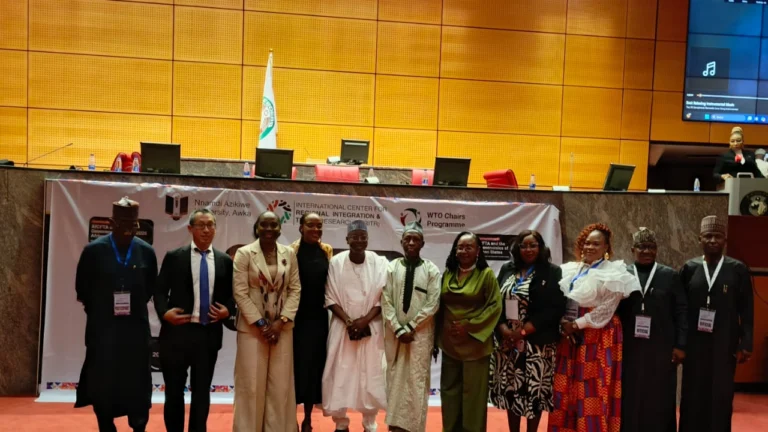
Egbuna, also Director, International Centre for Regional Integration and Trade Research (ICRITR), Nnamdi Azikiwe University, Awka, said this at a conference on Africa and Geoeconomics of African States, Integration, Power and Structural Transformation, on Monday in Abuja.
She said Africa must move beyond signing trade agreements to ensuring businesses trade successfully across borders, create jobs and retain economic value.
She called for stronger African trade cooperation to improve the continent’s influence in global economic affairs.
She described the African Continental Free Trade Area (AfCFTA) as an unprecedented opportunity to change the continent’s position in the global economy.
Egbuna the host of the event, however, emphasised that signing agreements and establishing a continental market would not automatically translate into economic benefits without effective implementation.
According to her, the real test of AfCFTA lies in the ability of African businesses to trade successfully across borders, create jobs and retain economic value.
Egbuna urged Africa to move from supplying raw materials to shaping global trade rules, controlling value chains and influencing international economic decisions.
She described the African Trade Group of WTO Chairs as an important intellectual and policy platform for advancing African perspectives in global trade discussions.
She urged African scholars to ensure their research informed public policies, influenced trade negotiations and contributed to practical solutions rather than remaining confined to academic journals.
Egbuna challenged participants to examine how AfCFTA could become an instrument of economic power, strengthen Africa’s collective negotiating capacity and benefit manufacturers, farmers, entrepreneurs, women and young people.
She said the questions were not merely academic but directly concerned livelihoods and the economic future of African countries.
Prof. Pat Utomi, Founder/CEO, Centre for Values in Leadership (CVL), however, noted the paradox of Nigeria and the Democratic Republic of Congo possessing critical minerals while recording some of the world’s highest levels of poverty.
He described the fight against poverty as humanity’s greatest challenge, stressing the need to understand why some countries prosper while others remain poor.
Utomi said his longstanding academic interest had centred on understanding the factors responsible for economic inequality among nations.
He said quality education and healthcare were essential components of human capital development and critical to improving national productivity.
Utomi also identified entrepreneurship as an important driver of prosperity, noting that societies must encourage risk-taking, innovation and value creation.
He emphasised that culture and leadership played significant roles in shaping national development, adding that leaders were responsible for setting the tone of society.
He said he had come to appreciate trade as another critical factor in understanding the prosperity of nations. (NAN)
VOE/VIV
======
Edited by Vivian Ihechu


Comments