


Edo 2027: The quest for credible elections
By Usman Aliyu, News Agency of Nigeria (NAN)
Growing reports of intimidation, destroyed campaign materials, and violence ahead of the 2027 general elections are heavily challenging Edo State’s ability to deliver a peaceful and credible vote.
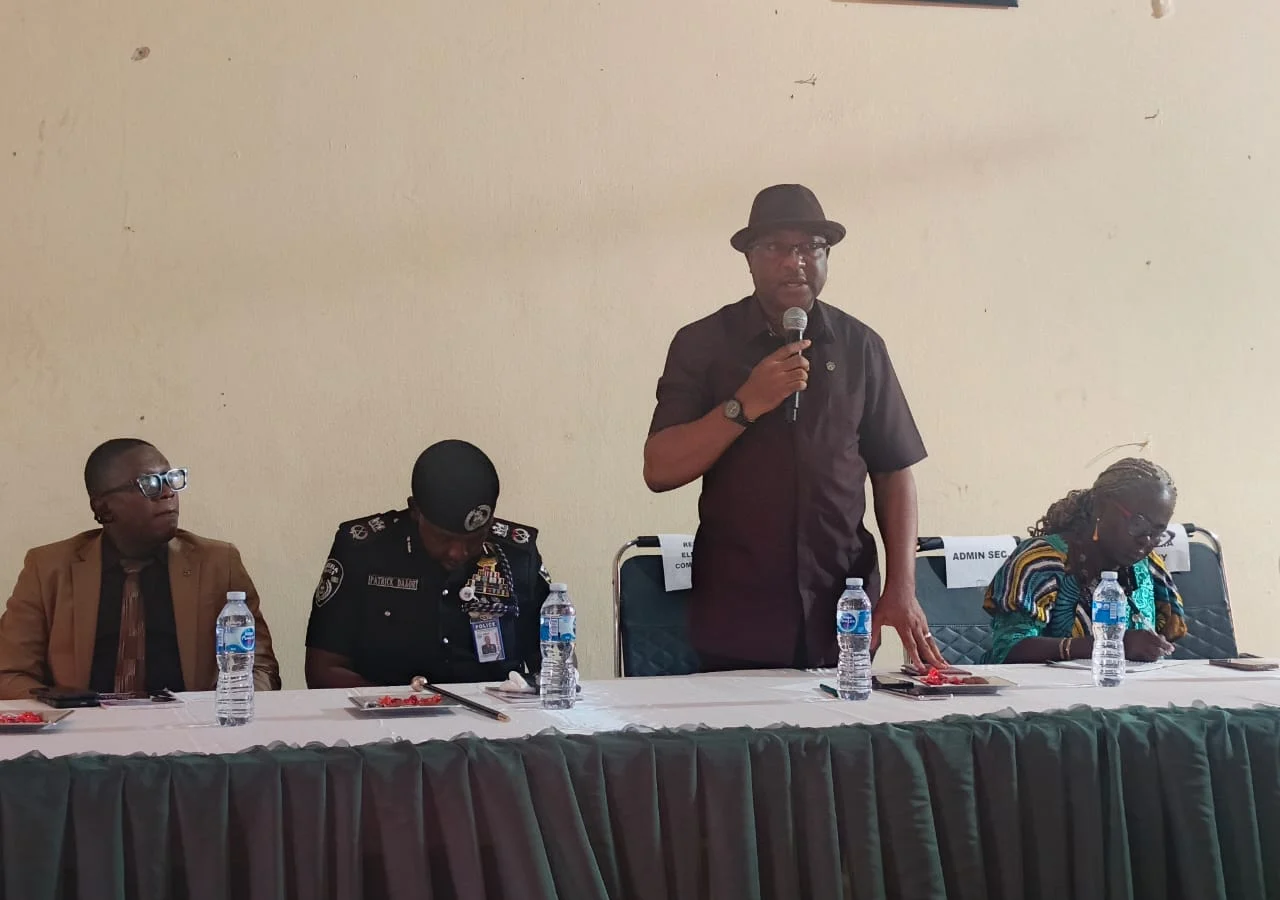
The concerns came into sharp focus at a stakeholders’ forum convened recently by the Independent National Electoral Commission (INEC) in Benin City, where political parties called for stronger security, equal treatment and decisive action against electoral offences.
The meeting came amid heightened public attention following the Oct. 23 attack on popular Benin-based entertainer Osagie Idiedia, known professionally as MC Porkupyne.
Opposition figures have cited the incident as a clear sign of the security challenges confronting political participation in the state.
The attack, reportedly carried out by unidentified assailants while the entertainer was returning from an outing, generated allegations of political intimidation and calls for those responsible to be brought to justice.
However, Gov. Monday Okpebholo linked the incident to cult-related activities, dismissing allegations of government involvement as unfounded.
The governor said intelligence available to the state government suggested that the attack was cult-related.
The Police Command in Edo, meanwhile, said investigations were ongoing to establish the circumstances surrounding the attack and identify those responsible.
Against this backdrop, the INEC forum provided a platform for political parties, electoral officials and security agencies to address concerns before the approaching elections turn competition into confrontation.
Opening the discussion, the Resident Electoral Commissioner (REC) in Edo, Mr Obo Effanga, assured stakeholders that the commission would provide a level playing field for all political parties.
He said the forum was convened to engage party leaders, address their concerns and remind them of their obligations under the Electoral Act and other relevant laws.
Effanga warned against violence, threats, attacks on political opponents, disruption of meetings, intimidation of electoral officials and journalists, and destruction of campaign materials.
He also cautioned against cyberbullying and the circulation of false information, stressing that political activities must not undermine public order or the rights of other participants.
“Violence and threats of violence should not be part of politics and campaigns.” he said.
The resident electoral commissioner disclosed that 13 political parties attended the meeting, although all registered parties had been notified.
His message was that peaceful elections required not only an impartial electoral umpire but also the willingness of political parties to obey the rules and restrain their supporters.
The commission, he said, remained committed to engaging stakeholders and addressing emerging concerns before they became threats to the electoral process.
In spite of the assurances, representatives of several opposition parties expressed concern about what they described as recurring intimidation, destruction of campaign materials and inadequate consequences for electoral violations.
Mr Noshagare Ogiebor, Chairman of the Peoples Democratic Party (PDP) in the state, alleged that campaign materials belonging to his party had been destroyed.
He urged the police to investigate such incidents and ensure that those responsible were held accountable.
Mr Smart Osimhen raised concerns about the alleged proliferation of arms during election periods, vote-buying, the collection of Permanent Voter Cards (PVCs) by party agents and the handling of result sheets during collation.
Mr Osiriame Edeipo, State Chairman of BOOT Party, questioned the short notice given for the meeting and argued that previous peace accords and security engagements had not always translated into sustained action.
He called for the equal application of the law.
Similarly, Mr Mathew Edaghese, Legal Adviser to the National Democratic Congress (NDC) in Edo, alleged that supporters of his party had suffered violence.
He called for enforcement against perpetrators rather than repeated appeals for peace.
Ms Helen Uwangue, State Chairman of the Labour Party, said the perceived absence of consequences for electoral offences could encourage further violations.
“Opposition parties have suffered intimidation in the past. So, we want assurance that all parties will be protected equally. No party should use security to oppress others,” she said.
Uwangue also urged INEC to maintain transparency, release electoral guidelines promptly and guard against manipulation during the collation of results.
The African Democratic Congress (ADC), through its Deputy State Chairman, Mr Sylvester Ewanehi, also alleged increasing political intimidation against opposition parties and called for sincerity among political actors.
Mr Ugbebor Uyi, the Action Peoples Party (APP) State Chairman, argued that INEC should not distance itself from responsibility for electoral offences by placing the burden entirely on security agencies.
He maintained that the commission, as the electoral umpire, should actively promote fairness and hold relevant agencies accountable where necessary.
However, Mr Samuel Obuoh, State Assistant Secretary of the All Progressives’ Congress (APC) rejected suggestions that his party was violent, saying it was campaigning across wards.
He urged political parties to concentrate on presenting their candidates and manifestoes to voters instead of trading allegations.
According to him, electoral competition should be based on persuading voters rather than accusing political opponents.
Mr Segun Jegede, State Chairman of the Social Democratic Party (SDP) also urged political actors to sustain peaceful conduct before, during and after the elections.
Jegede drew attention to longstanding complaints about electoral manipulation.
Taken together, the interventions showed that stakeholders were concerned not only about physical security but also about the transparency of electoral administration and the credibility of the eventual results.
Responding to the allegations, the Commissioner of Police in Edo, Mr Patrick Daaor, who also heads the Inter-Agency Consultative Committee on Election Security (ICCES) in the state, assured political parties of the cooperation of security agencies.
He advised parties to notify their Divisional Police Officers (DPOs) before holding rallies and other public events so that adequate security arrangements could be made.
Daaor said effective investigation of political violence required specific information and cooperation from complainants, cautioning against making allegations without evidence.
“The DPO is not a magician,” he said.
On the attack involving MC Porkupyne, the police commissioner said investigations were ongoing.
The police had earlier announced that a thorough investigation had been ordered to establish the circumstances of the incident and identify those responsible.
The governor’s suggestion that the attack was cult-related represents a separate position from the police investigation, whose findings are yet to be established publicly.
Beyond security, the forum addressed concerns about voter registration and candidate information, which included the allegation of Ai-generated photographs.
Effanga explained that the online voters’ register on display was an interim register intended to allow claims and objections before the final register was produced.
The resident electoral commissioner urged anyone who suspected irregularities to identify specific entries for investigation.
He added that biometric accreditation, including the use of voters’ photographs and fingerprints would help verify voters’ identities during elections.
On candidates’ lists, the REC said any further changes would have to comply with the law and be processed through INEC’s national headquarters, including where applicable, on the basis of court orders.
He also clarified that law enforcement agencies were responsible for enforcing criminal laws, while INEC would draw their attention to incidents affecting the electoral process.
On the collection of Permanent Voters’ Card (PVCs), he said the available cards could be collected at its local government offices statewide.
He explained, however, that cards arising from fresh registration and updates undertaken in 2025 and 2026 were still being awaited.
The News Agency of Nigeria (NAN) recalls that under the published timetable, the presidential and National Assembly elections are scheduled for Jan. 16, 2027, while state Houses of Assembly elections will hold on Feb. 6.
However, Edo is expected to participate in the state House of Assembly election only on Feb. 6, as the governor’s tenure is not due to expire.
It is worthy to note, therefore, that the significance of the forum lies in whether its assurances translate into visible action.
For INEC, that means transparent administration, credible voter information, consistent communication and strict adherence to electoral rules.
For the police and other security agencies, it means impartial protection, prompt investigation of complaints and accountability for offenders, regardless of political affiliation.
Observers hold that the ultimate benchmark for the 2027 general elections, particularly in Edo, rests not on the mere conduct of the ballot, but on earning deep public trust and ensuring that the authentic will of the voters determines the outcome.(NANFeatures)
Edited by Chijioke Okoronkwo


Comments