






By Daniel Obaje
Mr Sunday Dare, Special Adviser to the President on Media and Public Communication, says reliable telecommunications and data services are critical to Nigeria’s economic growth, productivity and social inclusion.
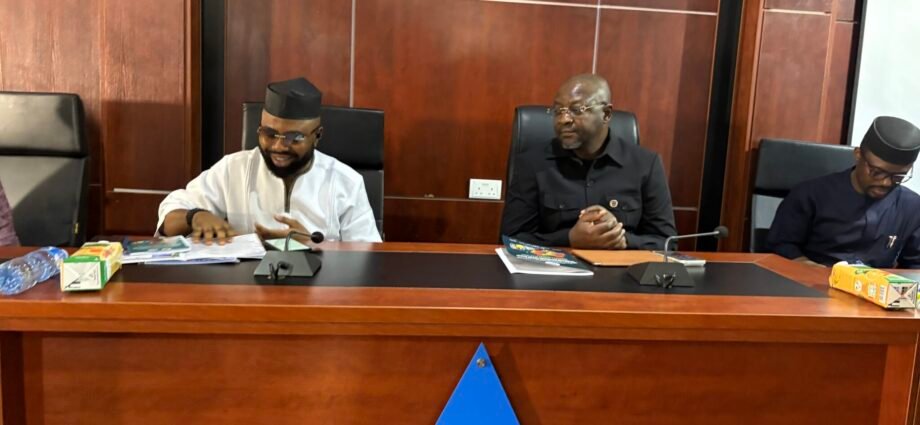
Dare said this on Thursday in Abuja, at the National Civil Society Dialogue on Telecommunication and Data Service Provisions in Nigeria.
The dialogue had the theme: “Upscaling Telecommunication and Data Services for Enhanced Microeconomic and GDP Growth.”
He said telecommunications had evolved from a supporting utility into critical national infrastructure as farmers, businesses, students, hospitals and government now depend on digital connectivity.
“Every sector of the economy now depends on connectivity, farmers access market information through their mobile devices, small businesses transact through digital platforms and digital marketing.
“Students learn online, degrees are earned online, while hospitals depend on digital communications.
“Government services are also migrating to digital channels and that is why the issue before us is not merely about technology but economic opportunity, national productivity, social inclusion and the future competitiveness of Nigeria as a country.”
Dare said increased broadband connectivity would expand economic participation, innovation, productivity gains and job creation, but stressed that subscriber growth must be matched by improved quality of service.
“The quality of services experienced by citizens must improve at the same pace as investment and expansion.
“Customers deserve explanation on data usage, operators should increase investment in network optimisation, fibre deployment and rural coverage.
“Customer service must become more responsive, efficient and emphatic.
“Corporate investment should target digital literacy, youth innovation and local content.”
The former Executive Commissioner of the Nigerian Communications Commission (NCC) also called for infrastructure sharing among operators and stronger protection of telecommunications infrastructure from vandalism and theft.
He said the rollout of 5G would create new opportunities in smart agriculture, industrial automation, telemedicine, smart cities and advanced logistics.
Dare urged government, regulators, operators, development partners and civil society organisations to collaborate in expanding affordable connectivity to underserved communities.
“Let us move beyond assigning blames. Let us move on to building solutions. Let the consumers in their millions be heard.
“Let operators also be supported but held accountable. Let regulators remain very, very vigilant. Let the civil society remain constructive but also in a transparent way.”
Also speaking, Mr Odoyemi Ogohi, Director, Technical Standards and Network Integrity, NCC, said the commission welcomed public scrutiny and constructive dialogue on telecommunications services.
Ogohi said the NCC was committed to using evidence to assess network performance and address consumer complaints.
“From the NCC perspective, dialogue is one thing that we actually encourage and it is one thing that we take actionable steps to demonstrate.
“We are not afraid of public scrutiny; we actually welcome it because it is part of our DNA.
“At the NCC, we are led by evidence, if anyone complains or we see the data sets, we work based on data.”
He disclosed that Nigeria has 192 million active telecommunications users as of June, while broadband penetration stood at 56.7 per cent.
Ogohi said Nigerians consumed 8.51 million terabytes of data between January and June, adding that usage is increasing monthly.
“The implication for this is that quality, affordability, security and inclusion are economy-wide priorities for the commission.
“One good thing with good quality of service is that it actually encourages use and you usually see that increased use in the volume of data consumed across the networks.”
Ogohi also acknowledged the gap between network experience in rural and urban areas, saying the commission has shifted towards measuring service quality at local levels.
Earlier, the Executive Director, National Civil Society Council of Nigeria, Amb. Blessing Akinsolotu, said civil society organisations had raised concerns over poor telecommunications services, arbitrary deductions and other consumer-related complaints.
“There have been a whole lot of issues around telecommunication and data service provision in Nigeria, there have been a lot of agitation from CSOs and there have been protests over some of these issues.
“A lot of people complained about arbitrary deductions and messages, but I believe strongly that the NCC will do justice to that and help us communicate with them properly.”
He expressed confidence that the resolutions from the dialogue will be communicated to relevant stakeholders for further action.(NAN)(www.nannews.ng)
Edited by Magdalene Ukuedojor