


By Edith Tsokar
Mr Michael Oluwagbemi, Chairman of Lofty Inc. Group, has urged federal, state and local governments to recruit qualified public administration professionals to strengthen institutional capacity and improve governance.
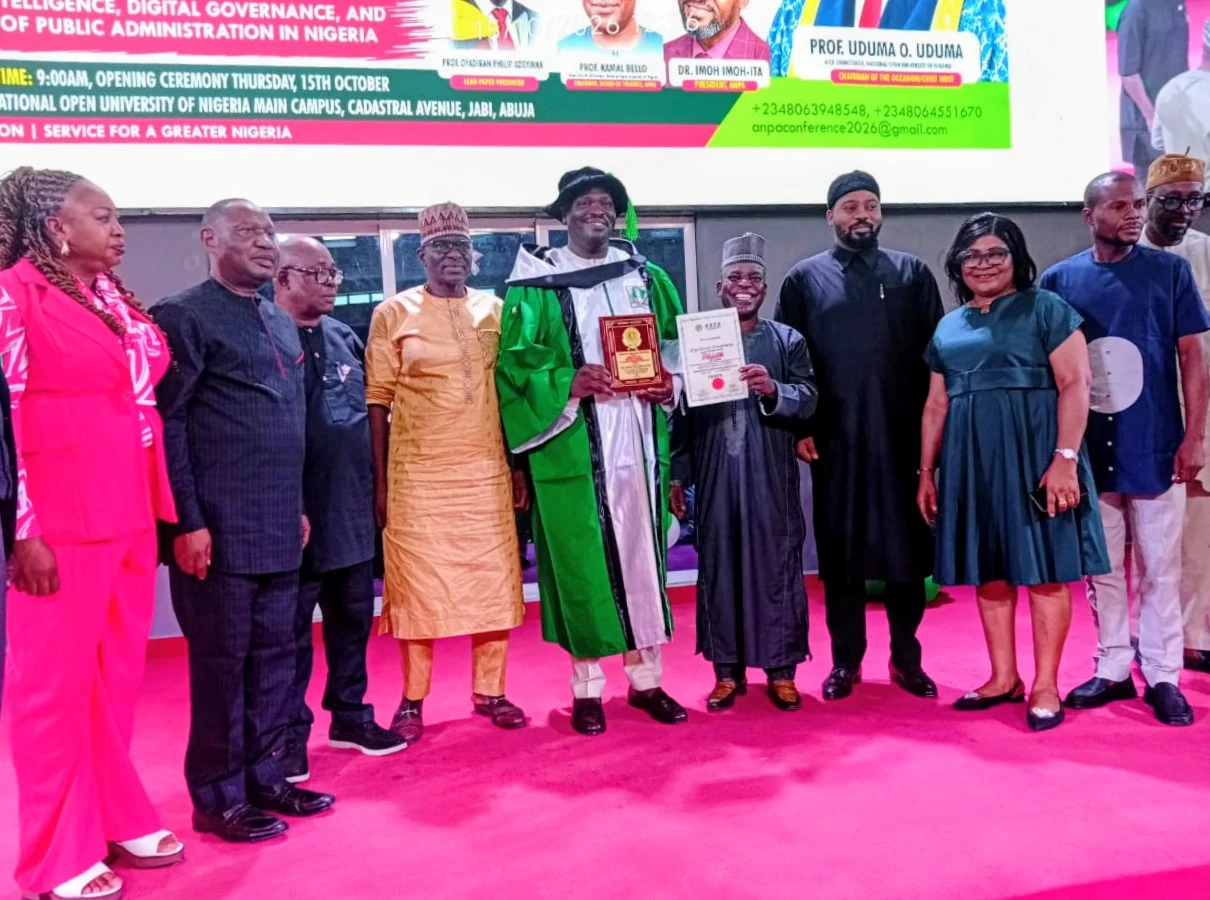
Oluwagbemi, immediate past Chief Executive of the Presidential Compressed Natural Gas Initiative, made the call at the sixth Annual International Conference of the Association of Nigerian Public Administrators (ANPA) on Thursday in Abuja.
The conference, held at the National Open University of Nigeria (NOUN) from Oct. 14 to Oct. 17, was themed “Artificial Intelligence (AI), Digital Governance and the Future of Public Administration in Nigeria.”
Oluwagbemi said public administration played a critical role in translating political decisions into practical policies and programmes that served the public interest.
He stressed that strengthening professional competence was necessary to address challenges confronting public institutions and improve administrative performance amid growing technological advancements.
Prof. Oyadiran Adeyinka, a lecturer in the University of Abuja, who also served as a resource person at the conference, said that AI could improve public service delivery through automated data analysis, fraud detection and better allocation of public resources.
Adeyinka said digital governance could reduce paperwork, strengthen communication between government institutions and citizens, and expand access to public services through online platforms.
According to him, increasing government data and growing public demand for faster services made the transition from traditional administrative processes to digital systems increasingly necessary.
He, however, cautioned that technological advancement alone would not guarantee improved governance without strong institutions, reliable data, adequate infrastructure, appropriate legislation and investment in human capital.
The expert identified inadequate digital infrastructure, fragmented records, unequal technological access, limited digital skills and weak institutional capacity as major challenges hindering digital transformation in Nigeria and other African countries.
He urged participants to develop practical solutions that would strengthen digital governance, improve administrative efficiency and ensure technology-driven reforms addressed citizens’ needs.
The Vice-President of ANPA, Dr Charity Nwigwe, said the evolving digital environment required public administrators to rethink policy formulation, public resource management and strategies for sustaining public trust.
Nwigwe said some federal ministries and state governments had recorded progress in deploying digital systems, but many local government areas remained largely analogue and inadequately connected.
She warned that such disparities could undermine efforts to build an efficient public service if rural communities and marginalised populations were excluded from digital transformation.
The ANPA vice-president challenged participants to develop practical policy frameworks for inclusive digital infrastructure that would serve remote local councils as effectively as federal agencies in Abuja.
Also speaking, Prof. Kamal Bello, the Dean of the Faculty of Social Sciences and Chairman of ANPA’s Board of Trustees, said countries harnessing emerging technologies would improve governance and meet citizens’ needs.
Bello said AI could assist public administrators in making informed decisions, allocating scarce resources and coordinating activities across geographical boundaries.
He explained that digital tools could facilitate engagement with people across countries and time zones, improving coordination and participation without depending entirely on physical meetings.
The don stressed that AI effectiveness depended on reliable data and public administrators’ ability to frame relevant questions reflecting Nigeria’s realities.
He warned that inadequate data and inappropriate local inputs could prevent AI systems from generating results that adequately addressed Nigerians’ needs.
Bello emphasised the need to expand broadband infrastructure and strengthen digital capabilities, noting that progress in digital identification and electronic payments could support further public sector transformation.
The conference featured keynote presentations, panel discussions and research papers examining emerging governance challenges and identifying practical approaches to public sector reform.(NAN)
Edited by Deji Abdulwahab



Comments