


By Oluwafunke Ishola
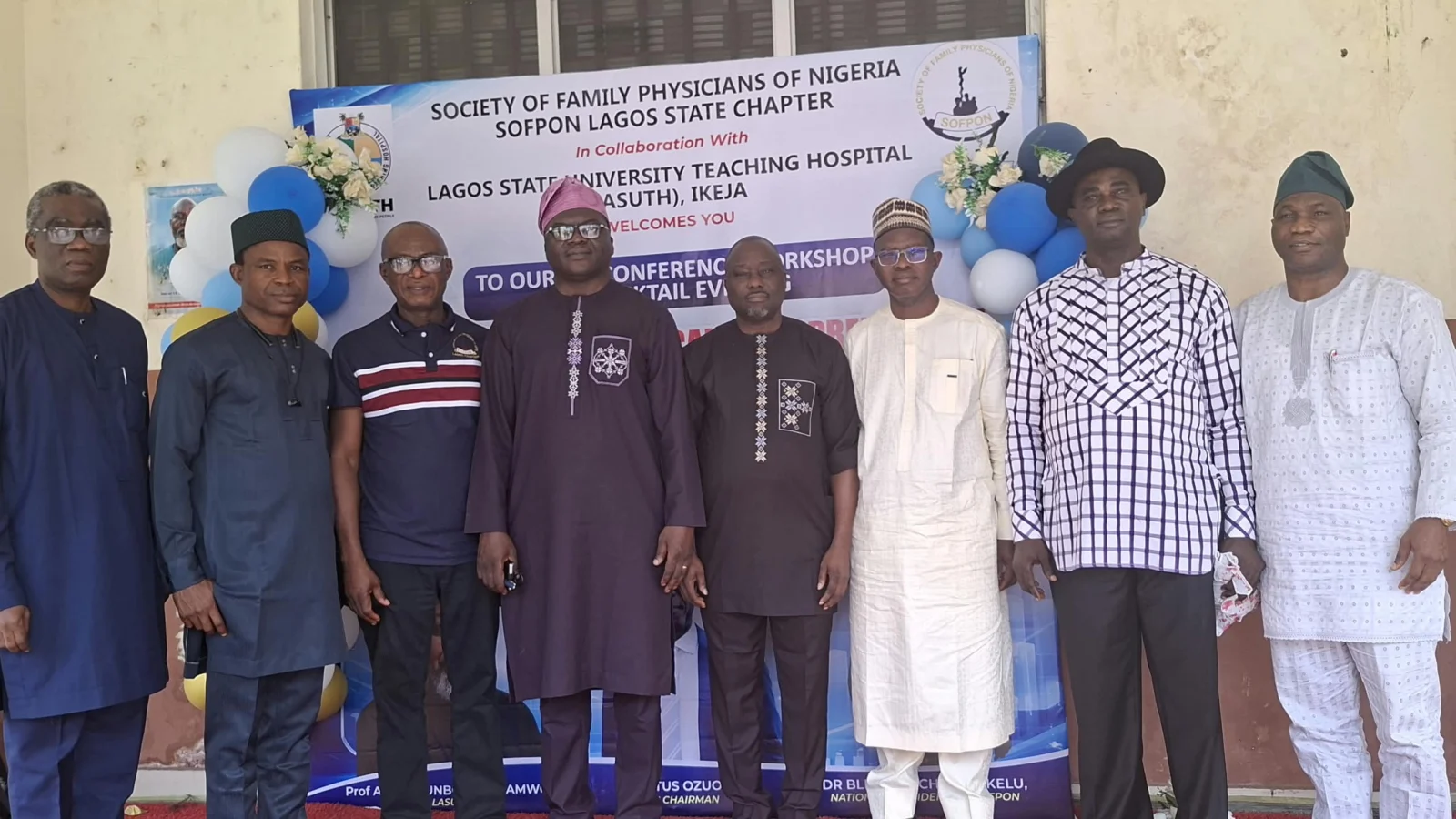
The Society of Family Physicians of Nigeria (SOFPON) has called for the integration of family physicians as team leaders in primary healthcare centres nationwide to improve service delivery and build community trust.
Its Vice-President, Dr Ibrahim Yakubu, made the call on Thursday at a news conference ahead of the society’s 29th Annual General and Scientific Meeting in Lagos.
The News Agency of Nigeria (NAN) reports that the meeting has the theme: “Primary Healthcare Without Family Physicians: Can Nigeria Afford the Gap?”
Yakubu warned that Nigeria’s primary healthcare system risked becoming less effective and more costly without family physicians, urging governments at all levels to prioritise their deployment, welfare and leadership roles.
According to him, early diagnosis, effective supervision and continuity of care would reduce preventable complications and the financial burden on Nigerian families.
Yakubu explained that the absence of family physicians in primary healthcare centres was contributing to fragmented medical services, delayed diagnoses, avoidable complications and higher treatment costs for patients.
He said family physicians were specially trained to provide comprehensive and continuous care, manage a broad range of medical conditions and determine when patients require referral to other specialists.
Yakubu argued that strengthening primary healthcare without adequately incorporating family physicians would leave a critical gap in the health system, particularly as Nigerians increasingly face the combined burden of infectious and non-communicable diseases.
According to him, conditions such as hypertension, diabetes, kidney disease and cancer are placing additional pressure on communities already grappling with infectious diseases.
“The current structure often forces patients to move between different specialists without an accurate initial assessment, resulting in unnecessary consultations, delayed treatment and increased financial burdens.
“Family physicians were trained to manage undifferentiated illnesses and identify the appropriate course of treatment before referring patients to specialists.
“Symptoms such as dizziness could be associated with several conditions requiring the attention of different specialists, but a family physician could conduct an initial comprehensive assessment, establish the likely cause and make appropriate referrals,” he said.
Yakubu said this approach would reduce unnecessary hospital visits and prevent patients from spending money on consultations and investigations that might not address the underlying problem.
He warned that inadequate supervision at primary healthcare centres could allow manageable conditions to deteriorate into complications requiring more expensive treatment at secondary and tertiary hospitals.
“A patient who received inadequate management of hypertension at the primary healthcare level could develop complications that would have been prevented through early diagnosis, proper monitoring and timely referral,” he said.
Yakubu expressed concern over the state of primary healthcare infrastructure and manpower, citing figures which indicated that only about 20 per cent of Nigeria’s approximately 30,000 primary healthcare centres were functional.
He attributed the situation to inadequate funding, poor infrastructure, insufficient equipment and a shortage of skilled healthcare professionals.
Beyond infrastructure, Yakubu identified poor remuneration, insecurity and inadequate welfare as major factors contributing to the migration of doctors and other health workers from Nigeria.
Similarly, Dr Jatau Ahmed, National Secretary of SOFPON, stressed that its demand for family physicians in primary healthcare administration did not mean deploying one specialist to every centre across the country.
Rather, he proposed a supervisory arrangement under which family physicians could oversee several primary healthcare facilities within designated geographical areas, while training and mentoring nurses, community health extension workers and other frontline personnel.
“Under this proposed model, family physicians would develop and supervise the implementation of standard operating procedures and referral protocols, conduct periodic visits and ensure that healthcare workers could identify conditions requiring specialist intervention.”
Ahmed maintained that such an arrangement would improve service delivery, strengthen confidence in primary healthcare facilities and encourage more Nigerians to seek medical attention at the grassroots rather than bypassing them for higher-level hospitals.
He explained that family physicians could help manage a significant proportion of conditions presenting at the primary healthcare level, estimating that about 80 per cent could be handled at that level through appropriate care and supervision.
Ahmed stressed that doctors working in underserved communities require competitive remuneration, accommodation, security guarantees and other incentives to encourage them to remain in the country and serve at the grassroots.
Also, Prof. Sunday Udoh, ex-officio of SOFPON, warned that improving facilities without addressing the working conditions of healthcare professionals would not guarantee effective service delivery or prevent further loss of medical personnel.
Udoh called for improved working environments, including reliable electricity, internet connectivity and appropriate medical equipment, particularly in rural healthcare facilities.
Similarly, Dr Sixtus Ozuomba, Chairman, Local Organising Committee of the Conference, said the welfare of healthcare workers was directly connected to the quality and continuity of care available to patients.
Ozuomba warned that excessive workloads and professional burnout could undermine the effectiveness of the health system.
He said these issues would form part of the discussions at its 29th Annual General and Scientific Meeting, which would bring together family physicians, medical scholars and policymakers to develop practical recommendations on strengthening primary healthcare. (NAN)
Edited by Olawunmi Ashafa

Comments