


By Philip Yatai
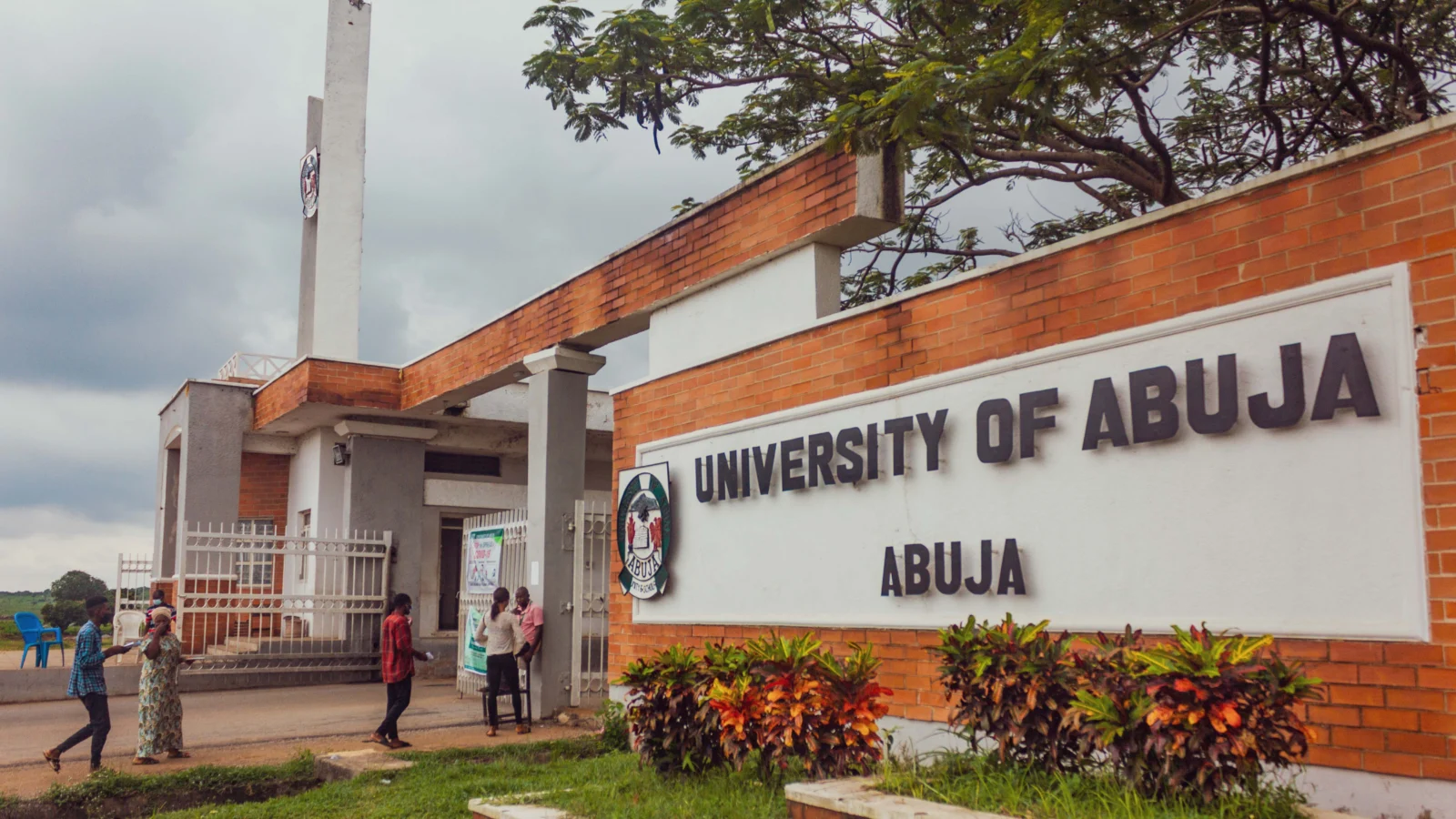
The Federal Capital Territory Administration (FCTA) has cautioned workers’ unions at the University of Abuja (UNIABUJA) against politicising land allocation issues, stating that trade unionism should not be used as a licence for irresponsible behaviour.
Mr Lere Olayinka, Senior Special Assistant on Public Communications and Social Media to the FCT Minister, Mr Nyesom Wike, gave the warning in a statement issued in Abuja on Thursday.
Olayinka decried the utterances of union leaders, particularly the Academic Staff Union of Universities (ASUU) Chairman, Prof. Sylvanus Ugoh, describing them as unbecoming of intellectuals in an academic environment where knowledge was expected to be imparted to future leaders.
He specifically condemned allegations by the Joint Action Committee (JAC) of the university, accusing the FCT minister of forging a 2016 government committee report, describing the claim as “recklessness and irresponsibility taken too far.”
Defending the FCT minister’s statutory powers, Olayinka noted that under the Land Use Act No. 6 of 1978 (Cap. L5, Laws of the Federation of Nigeria 2004), the minister reserves the authority to review land allocations without needing any committee report.
He questioned the rationale behind workers’ unions staging protests over government land management, pointing out that employees have no mandate to contest how an employer manages government property.
“The university is owned by the government. The land is owned by the government. When did it become the responsibility of an employee to fight an employer for choosing to reduce the land occupied by his own establishment?” Olayinka queried.
Providing further detail, the FCT minister’s aide disclosed that after existing for 38 years, UNIABUJA has only utilised 1,426.67 hectares of its landmass, with 49.56 hectares used for staff quarters.
He also questioned why the institution had previously allocated portions of the land to private individuals and corporate organisations, including the Economic and Financial Crimes Commission (EFCC), if the entire acreage was urgently needed.
Olayinka noted that many of the agitating union leaders had their children enrolled in private universities across Nigeria, none of which sit on more than 100 hectares of land.
He insisted that the protest was misplaced, adding that it was strange for university union leaders to agitate over unutilised land at a time when global tertiary institutions are already operating virtually.
The News Agency of Nigeria (NAN) reports that the controversy stemmed from the FCTA’s decision to downscale UNIABUJA’s land allocation from an initial 11,824.04 hectares to 4,685 hectares.
The vast expanse of land, allocated to the institution decades ago, has been a subject of administrative review due to extensive encroachment, unmanaged village expansions, and low utilisation.
Official records show that a Joint Committee of the FCTA and UNIABUJA on Land and Sundry Issues was first established in 2016 under former FCT Minister, Mohammed Musa Bello, to address challenges.
The challenges included illegal settlements, issuance of Certificates of Occupancy for its main and mini campuses, and the replacement of title documents burnt during the 1994 students’ uprising.
A subsequent committee constituted on Dec. 17, 2020, following a visit by the university management to the FCT minister, revealed that out of the over 11,000 hectares, indigenous villages had already occupied 805.7 hectares.
Furthermore, 9.91 hectares were occupied by the Nigerian Army Welfare Ltd. Guarantee Housing Estate, while about 500 hectares had been approved for a main sewage treatment plant.
The 2020 committee recommended that, in line with the National Universities Commission (NUC) standard of 100 hectares for a standard university campus and the New Urban Agenda advocating compact design, a sustainable portion of land should be retained by the university.
It further recommended that the rest be re-designated by the Urban and Regional Planning Department for compatible institutional and research uses to curb endless encroachment disputes. (NAN)
Edited by Deji Abdulwahab

Comments