


By Mustapha Yauri
The Federal Government and the Bank of Agriculture (BOA) have launched the Renewed Hope Smallholder Agricultural Financing Programme to raise Nigeria’s annual grain output from about 11 million tonnes to 25 million tonnes.
The Managing Director of BOA, Mr Ayodeji Oludare-Sotinrin, said the initiative would boost food production, tackle food insecurity, reduce rising food prices and improve smallholder farmers’ access to affordable agricultural financing across the country.
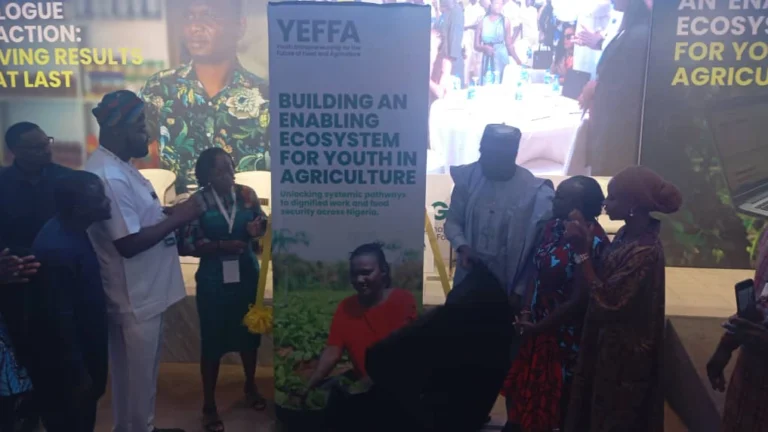
Oludare-Sotinrin spoke at the unveiling of the Renewed Hope Smallholder Support and Value Chain Fund organised by Arzikin Noma Africa in Zaria on Friday.
He said the programme would provide subsidised fertilisers, certified hybrid seeds and other essential farm inputs through a single-digit interest financing arrangement.
“This is designed to increase productivity and strengthen national food security sustainably,” he said.
According to him, the inputs are not grants but are financed under BOA’s nine per cent lending facility, making them affordable for farmers while ensuring sustainability and continuity of the intervention over time.
Oludare-Sotinrin said the bank selected 20 farm aggregators from more than 1,240 applicants after assessing their technical competence and operational capacity to effectively support farmers across participating states during the pilot implementation phase.
According to him, the first phase will benefit about 500,000 farmers during the current farming season before expanding to two million farmers next year and eventually reaching five million farmers across the country.
The managing director said five million farmers cultivating one hectare each and producing at least five tonnes per hectare would generate about 25 million tonnes of grains annually for national consumption and export.
He said the projected increase would reduce dependence on food imports, stabilise domestic prices, strengthen national food security and create opportunities for agricultural exports, rural employment and broader economic growth across Nigeria.
Oludare-Sotinrin disclosed that the bank also planned irrigation financing and irrigation-as-a-service initiatives to support year-round farming, increase productivity, improve farmers’ incomes and reduce the country’s dependence on seasonal agricultural production.
He urged the beneficiaries to use the inputs strictly for farming, avoid diversion or resale, comply with extension officers’ guidance and ensure prompt repayment to sustain the revolving financing scheme for future beneficiaries.
Earlier, the Minister of Agriculture and Food Security, Sen. Abubakar Kyari, said the federal government remained committed to addressing food inflation by increasing agricultural production rather than relying on food imports.
Kyari said food affordability was largely determined by supply and demand, stressing that expanding production through timely access to quality inputs remained the Tinubu administration’s central strategy for improving food security nationwide.
The minister said about two million farmers would benefit through registered farm aggregators providing quality inputs, extension services and a Guaranteed Minimum Price mechanism to protect farmers from unfair market practices after harvest.
“Although nearly 90 per cent of Nigerian farmers cultivate less than one hectare, they produce about 85 per cent of the country’s food, making sustained support for smallholders essential to food security,” he said.
Kyari, however, expressed confidence that timely input distribution, improved seeds, weather-based advisory services and guaranteed pricing would significantly increase food production, lower food prices and improve farmers’ incomes across the country.
In his remarks, the Group Managing Director of Arzikin Noma Africa, Mr Adeoluwa Adeshola, said sustained private sector participation and prompt loan repayment by beneficiaries were essential for the programme’s long-term success.
Adeshola said the government should provide policy direction and financing support, while the private sector should drive implementation because of its closer relationship with farmers and stronger understanding of agricultural value chains nationwide.
He said beneficiaries would repay the financing after harvest, explaining that the revolving nature of the fund would enable additional farmers to access support during subsequent farming seasons across the country.
Adeshola added that traditional rulers, community leaders, security agencies and other stakeholders had pledged support by encouraging beneficiaries to honour repayment obligations and ensure the sustainability of the agricultural financing programme.
“The sustained investment in smallholder agriculture and prompt loan repayment will increase food production, reduce inflation, improve rural livelihoods and position Nigeria as a leading agricultural producer and exporter in Africa,” he said. (NAN)
Edited by Modupe Adeloye/Muhammad Lawal


Comments