



By Abigael Joshua
The Federal Government is implementing policies aimed at reducing methane emissions from dumpsites and promoting sustainable waste management practices across the country.
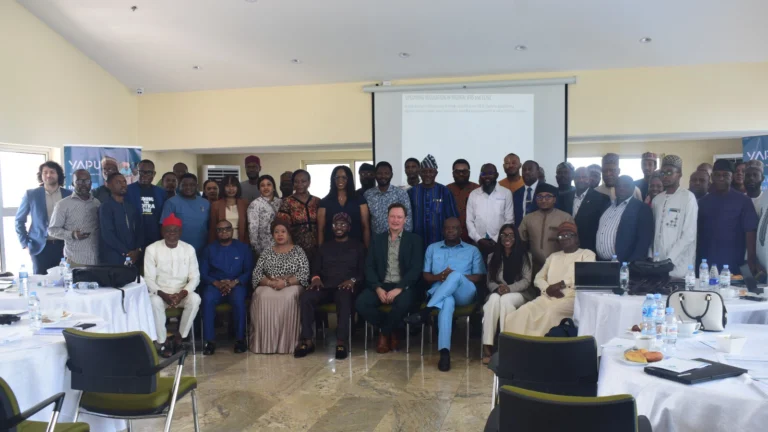
The Minister of Environment, Malam Balarabe Lawal, stated this at a stakeholder engagement workshop on the Multi-Solving Action for Methane Reduction in Nigeria (MAMRN) Project, on Friday in Abuja.
The workshop was organised by the National Council on Climate Change (NCCC) in collaboration with the Office of the Special Adviser to the President on Climate Change Matters and Sustainable Research and Action for Environmental Development (SRADeV) Nigeria.
Lawal who was represented by Mrs Omotunde Adeola, the Director, Pollution Control and Environmental Health Department, Federal Ministry of Environment, described methane as a potent greenhouse gas emitted from dumpsites.
He said the ministry was promoting its “Waste-to-Wealth” mandate, urging Nigerians to adopt responsible waste management practices and convert waste into useful economic resources.
The minister also warned that human activities contribute to flooding, stressing the need for residents to properly manage waste and avoid indiscriminate disposal into drainage channels.
Mrs Omotenioye Majekodunmi, the Director-General (D-G) NCCC, said MAMRN was designed to advance methane mitigation efforts in Nigeria’s waste sector.
Majekodunmi who was represented by Mr Michael Ivenso, Director, Energy, Transportation and Infrastructure, said the project was aimed at supporting the development of a National Action Plan for Methane Reduction in the Waste Sector.
Similarly, she added that the project would strengthen policies, stakeholder capacity and sustainable waste management practices.
She commended SRADeV Nigeria, the Office of the Special Adviser to the President on Climate Change Matters and other partners for supporting efforts to address methane emissions.
According to her, methane is among the most potent greenhouse gases contributing to global warming, making its reduction critical to slowing temperature increases and achieving global climate goals.
She said methane mitigation was particularly important to Nigeria’s Nationally Determined Contributions under the Paris Agreement, stating that open dumping and poor waste management significantly contributed to emissions.
She said addressing the challenges in the waste sector would deliver environmental, public health, economic and social benefits, including cleaner communities, green jobs, resource efficiency and improved quality of life.
She said effective waste management would strengthen Nigeria’s circular economy by promoting resource recovery, reducing environmental pollution and creating opportunities for sustainable economic development and employment.
Majekodunmi said that NCCC remained committed to supporting initiatives that accelerate emission reductions while promoting sustainable development, stressing that stakeholder collaboration was essential to achieving practical and implementable solutions.
She assured stakeholders that the NCCC would provide technical guidance and coordination support for developing and implementing the National Action Plan on methane reduction in Nigeria’s waste sector.
She said the council would work with the Federal Ministry of Environment, SRADeV, development partners and other stakeholders to ensure the workshop outcomes translates into measurable actions.
She said the challenge of methane emissions was significant, but collaboration could transform waste from an environmental liability into a valuable resource while strengthening climate resilience and public health.
She added that such efforts would create green jobs, reduce methane emissions and accelerate Nigeria’s transition toward a low-carbon and sustainable future.
Dr Leslie Adogame, the Executive Director, SRADeV, called for proper solid waste management to reduce methane emissions and mitigate their impact on climate change.
Adogame said solid waste was a potential source of methane, a potent greenhouse gas that contributed significantly to climate change.
He emphasised on the need for effective waste management practices, stating that waste generators must take responsibility for properly managing the waste they produce.
“Waste management has to be properly carried out to reduce methane emissions in the environment,” he said.
Adogame said an action plan was necessary to ensure effective waste management, adding that SRADeV was committed to the global target of reducing methane emissions by 30 per cent.
He commended Nigeria for developing a robust policy framework on waste management and urged stakeholders to sustain efforts toward reducing methane emissions. (NAN)(www.nannews.ng)
Edited by Sadiya Hamza
Comments