


By Justina Auta
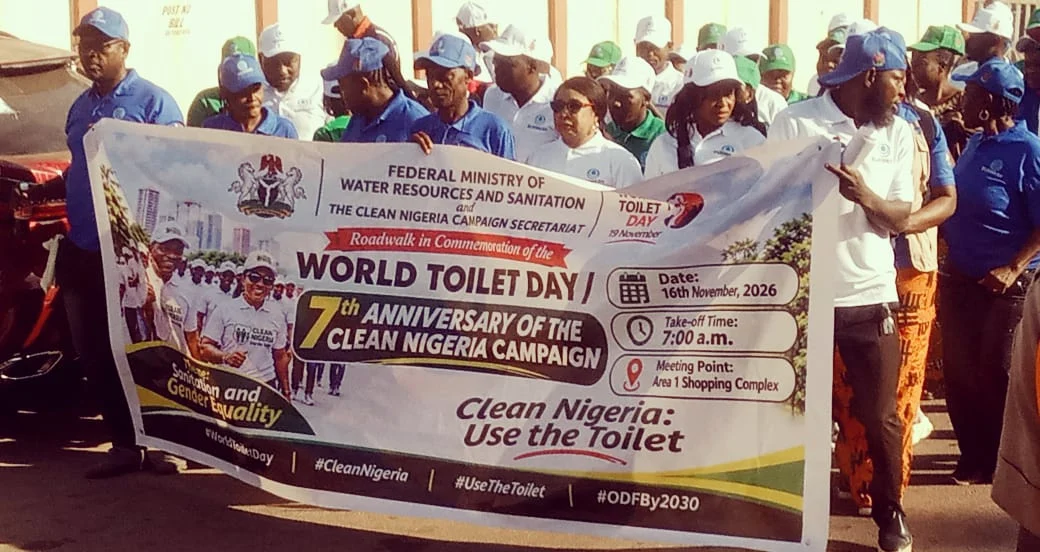
 The participants, comprising government officials, civil society organisations, sanitation advocates and community stakeholders, moved through parts of the city, sensitising residents on the importance of using toilets.
They carried messages encouraging Nigerians to construct and use toilets, patronise public sanitation facilities and adopt hygienic practices to prevent disease outbreaks.
Ms Bibian Ama, Head of Programme, Society for Water and Sanitation (NEWSAN), said open defecation remained a public health threat capable of affecting everyone, irrespective of social or economic status.
“Open defecation is dangerous because human waste can contaminate our environment, food and water sources, leading to the spread of diseases,” she said.
Ama said poor sanitation affected women and girls disproportionately because of inadequate access to safe and private toilet facilities, particularly in public places.
She said that the lack of appropriate sanitation facilities, especially during menstruation, could limit women’s participation in businesses and other economic activities.
Ama called for greater involvement of women in sanitation planning and decision-making, citing their role in promoting household hygiene and protecting families from sanitation-related illnesses.
Some residents described the sensitisation exercise as timely, saying it highlighted the health dangers of open defecation, which many people often overlooked.
Musa Abubakar, a sugarcane trader, said the awareness walk had changed his perception of sanitation, adding that open defecation was not merely an environmental issue but also a public health concern.
Mrs Hannatu Sunday, a food vendor, emphasised the need for landlords and school authorities to provide toilet facilities in their premises to discourage open defecation.
Meanwhile, Prof. Joseph Utsev, Minister of Water Resources and Sanitation, identified sustainable financing, improved data management and institutional strengthening as key areas requiring attention to achieve and sustain an open defecation-free (ODF) Nigeria by 2030.
Utsev made the observation during a ministerial press briefing, where he urged Nigerians to make toilet use a daily habit and discourage open defecation in all its forms.
He said ending open defecation required collective responsibility from households, communities and institutions.
“Every household, community and institution has a responsibility to contribute to a cleaner and healthier Nigeria,” he said.
The News Agency of Nigeria (NAN) reports that the event was supported by stakeholders, including SURWASH, RUTH WASH, UNICEF, Harpic, Clean Nigeria Campaign, SATO, WaterAid, Self Help Africa and Sightsavers.(NAN)

Comments