
By Funmilayo Adeyemi
The Minister of Education, Dr Tunji Alausa, has called on state governments to take ownership of the newly introduced Digitalised Nigeria Education Management Information System (DNEMIS).
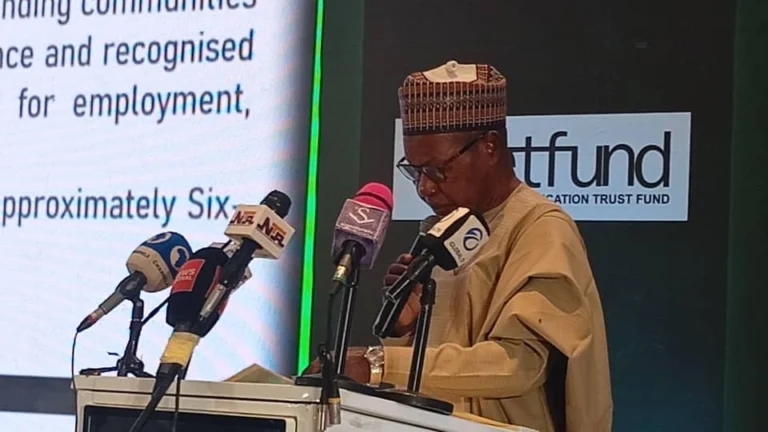
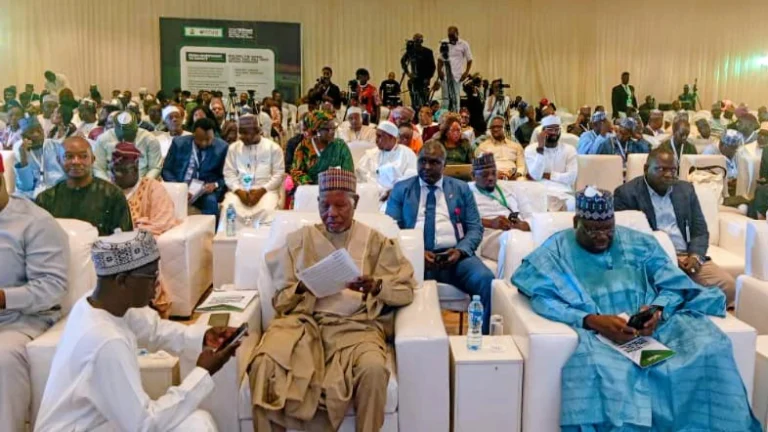
Alausa made the call in Abuja on Wednesday, during the official unveiling of the platform, designed to unify data repository, learners’ identification, tracking and real-time decision support, among others.
He explained that the dashboard would provide real-time information on classrooms, teachers, computers, water, sanitation and hygiene facilities and other infrastructure to support planning and resource allocation.
He said the Nigeria education data landscape had been fragmented, with schools reporting different data and states collecting different data with different formats.
According to him, the introduction of the new DNEMIS will end the irregularities in the data collection systems in schools.
He urged private school operators, nationwide, to enrol on the platform, stressing that their participation was essential for effective education planning and policy formulation.
He pointed out that reliable data remained the backbone of evidence-based policymaking, adding that the government could not effectively design interventions or monitor progress without credible education statistics.
Alausa assured private school owners that the data being collected would not be used for taxation but to improve education planning and service delivery.
“We need you to enter your data. The government is not collecting your data to tax you. We need accurate information because of the important role you play in Nigeria’s education sector,” he said.
He added that private schools had become a dominant force in Nigeria’s education sector and must therefore be adequately captured in the national database.
The minister said that in Lagos State, private schools account for about 75 per cent of junior secondary schools in the country, while about 94.5 per cent of the newly established schools in 2024 were privately owned.
He said that the development represents an 11 per cent increase in the last four years.
According to him, the figures underscored the growing role of the private sector in expanding access to education.
Alausa disclosed that the ministry had already captured data from about 90,000 public schools on the platform and is working toward obtaining comprehensive information on more than 50 million students nationwide.
He added that the federal government, in collaboration with development partners, would continue to strengthen the national education data infrastructure to support policy decisions and improve learning outcomes across the country.
To ensure sustainability, the minister warned against over-dependence on donor funding in executing the programme.
On his part, the Statistician General, National Bureau of Statistics (NBS), Mr Adeyemi Adeniran, said the bureau would integrate its statistical systems with DNEMIS to establish a single, credible source of education data in the country.
Adeniran said the NBS would link its Information and Communications Technology infrastructure with the education platform to improve data sharing, validation and nationwide dissemination of education statistics.
According to him, the bureau is already collaborating with the ministry on mapping out-of-school children through household-based statistical surveys.
He explained that data generated from the bureau’s surveys would be used to validate and cross-check information collected through DNEMIS.
“Our goal is to have one trusted source of education data for the country, while using NBS datasets to validate and strengthen the quality of information available on the platform,” he said.
The NBS boss said the bureau’s involvement would also guarantee the sustainability of the initiative, noting that it had participated in the project from inception and would continue to support its implementation.
He said the newly inaugurated State Coordinating Committees would play a critical role in ensuring regular data collection and quality assurance across the states.
Adeniran added that the technology powering DNEMIS was designed to function both online and offline, allowing users to collect data without interruption in areas with poor electricity or internet connectivity.
He also said that the platform is compatible with mobile phones, to enable education officials to capture and upload information using smartphones rather than relying solely on computers or other advanced devices.
In his remarks, the Chief Education Officer, UNICEF, Vanessa Lee, promised UNICEF’s commitment to address the out-of-school problem in the country.
Lee also promised continued partnership with the ministry of education to ensure that every child has a unique learners identification number.
Similarly, the National Commissioner, Nigeria Data Protection Commission, Dr Vincent Olatunji, assured the ministry of data security in the DNEMIS for inclusive learning outcomes.
Also, President of the Nigeria Union of Teachers (NUT), Audu Amba, assured the education ministry of their total support in making sure any data generated were used to improve teaching and learning outcomes across the country. (NAN)(www.nannews.ng)
Edited by Philip Yatai
Comments