



By Kelu Musa
Stakeholders in the agriculture sector have called for increased adoption of breeding innovations as part of efforts to drive comprehensive agricultural transformation and address Nigeria’s worsening food security challenges.
The News Agency of Nigeria (NAN) reports that stakeholders made the call at the 4th International Conference of the Nigerian Plant Breeders’ Association (NPBA) in Abuja.
The two-day conference is holding from Sept. 23 to 24 with the theme, “Leveraging Breeding Innovations and Strategic Partnerships for Agribusiness Investment, Stable Supply Chain and National Food Security in a Changing Climate”.
According to the stakeholders, as Nigeria grapples with food insecurity, adoption of breeding innovations stands as its most veritable lever to shift its agricultural landscape from low-yield subsistence farming into a highly competitive, climate-resilient agribusiness economy.
They identified climate shocks, pest outbreaks, and rapid population growth as some factors stretching the limits of conventional farming methods.
The stakeholders emphasised that accelerating Nigeria’s agricultural transformation requires moving beyond the laboratory to ensure cutting-edge genetic breakthroughs reach farming operations across the country.
In his speech, Prof. Victor Adetimirin, NPBA President, said the theme of the conference addressed urgent challenges confronting Nigeria’s agricultural sector, including climate change, food security and unstable supply chains.
“This is not simply a scientific theme; it is a national development agenda,” he said.
He said the theme addressed how Nigeria could use science, innovation, partnerships and investment to build a more productive, resilient and competitive agricultural sector.
“This is how Nigeria can use science, innovation, partnerships and investment to build an agricultural sector that is more productive, more resilient and more competitive,” he said.
Adetimirin said the sector must be capable of feeding Nigeria’s growing population while creating opportunities for economic growth and exports.
He said plant breeding contributes to food and nutritional security, agricultural productivity, climate resilience, agribusiness development, farmers’ livelihoods and economic growth.
“Investment in plant breeding should be viewed as an investment in Nigeria’s overall long-term resilience,” he said.
According to him, the conference is a platform for researchers, seed companies, farmers, processors, financial institutions, development partners, investors and government representatives to chart a common front for the advancement of the nation’s agribusiness economy.
“At this 4th International Conference of NPBA, we have brought together important players in the agricultural value chain to engage, discuss and form partnerships,” he said.
Adetimirin said the partnerships were expected to translate scientific innovations into products, enterprises, investments and measurable impacts across the agricultural value chain.
He said the pathway from breeding innovation to quality seed production, productive agriculture, reliable supply chains and agribusiness investment was important to food security.
According to him, NPBA remained committed to developing young plant breeders, researchers and agricultural scientists to contribute meaningfully to national development.
He said NPBA had supported 30 students from across Nigeria to attend the 2026 conference through its Students Travel Grants.
“We consider it one of our responsibilities to create an environment in which young scientists can acquire the skills, build partnerships and have access to opportunities,” he said.
Adetimirin also said the association launched the Nigerian Journal of Crop Improvement in June 2026 as part of efforts to strengthen research and professional development.
He said NPBA would host the African Plant Breeders Association (APBA) conference in Abuja in 2027.
Also speaking, Dr Simeon Ehui, Director-General, International Institute of Tropical Agriculture (IITA) said the institute remained committed to working with NPBA, universities and national research institutions to move agricultural innovations to farmers.
Ehui who was represented by Paterne Agre, Molecular Breeder, IITA, said developing the next generation of agricultural scientists was also important to sustaining innovation and achieving food security.
“For the past year, the Director-General has mentioned that with IITA and its partners, a lot of varieties have been developed; more than 200.
“What we need to emphasise this year is how we move from innovation and make sure that the products developed will reach farmers,” said.
Dr Martin Fregene, Ag.Vice-President and Officer-in-charge (OIC), Agriculture, Human and Social Development, African Development Bank (AfDB), said plant breeding was fundamental to agricultural transformation but required functioning systems around farmers.
“Plant-driven innovations can only transform national food security and rural livelihoods if robust seed systems, well-funded production, agro-industry and logistics are in place,” he said.
Fregene, a geneticist and breeder, said improved varieties could increase productivity but would not deliver their full benefits without functioning markets and infrastructure.
“A bag of seed is not agricultural transformation,” he said.
He said agricultural technology required an entire value chain covering production, irrigation, agro-industry, marketing, infrastructure, finance and insurance.
“Agricultural technology therefore requires the entire value chain of production, irrigation, agro-industry, marketing and supporting ecosystem of infrastructure, finance, insurance and so on,” he said.
Fregene said Africa needed increased investment in agro-industrialisation, adding that investors required bankable projects, de-risking instruments and technical assistance.
“There is no shortage of money looking for a fair return, there is only shortage of bankable investment plans, de-risking instruments, and a clear house to match investment opportunities and the varied risk of investors,” he said.
He said the AfDB was developing a Feed Africa Action Plan 2.0 and an Africa Food System Transformation Platform to mobilise investment.
According to him, agricultural small and medium enterprises are important to food production but has limited access to agricultural financing.
He urged stronger partnerships among government, researchers, investors and other stakeholders to identify market needs and strengthen seed delivery.
“Africa’s agricultural system will not be determined by how many technologies we are able to develop, but by how many farmers use them,” Fregene said.
He said the focus should be on converting scientific innovations into productivity, reliable supply, processing, investment, jobs, resilience, nutrition and food security.
Earlier, while declaring the conference open, Minister of Agriculture and Food Security, Sen. Abubakar Kyari, said agricultural innovations must reach farmers.
Kyari, represented by Bukar Musa, Director of Agriculture and Food Security at the ministry, said that transition required strong science, effective extension, financing, market access, supportive regulations, private-sector participation and sustained partnerships among institutions.
“The value of scientific crop improvement is ultimately realised when innovations move beyond laboratories and research fields into farmers’ fields, markets, processing facilities and other productive uses.
“That transition requires not only strong science, but also functioning systems, effective extension, financing, market access, supporting regulations, private-sector participation, and sustaining partnership among institutions,” he said.
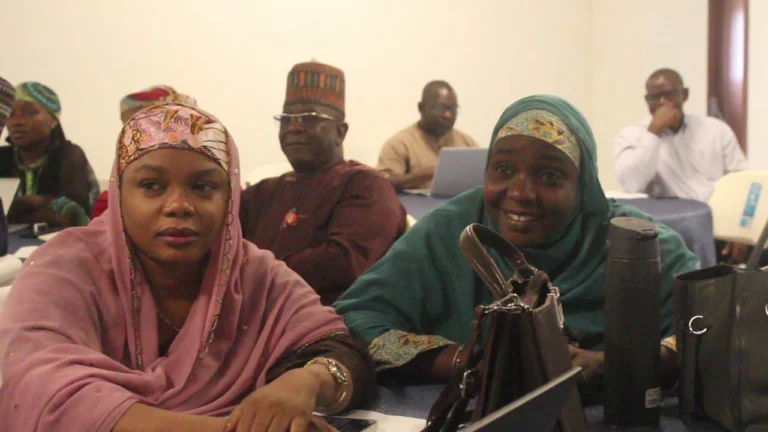
NAN reports that the conference brought together researchers, seed companies, farmers, processors, financial institutions, development partners, investors and government representatives.(NAN)
Edited by Joshua Olomu


Comments