


How India’s past, future are shaping new development narratives – News Agency of Nigeria
By Sarafina Christopher, News Agency of Nigeria (NAN)
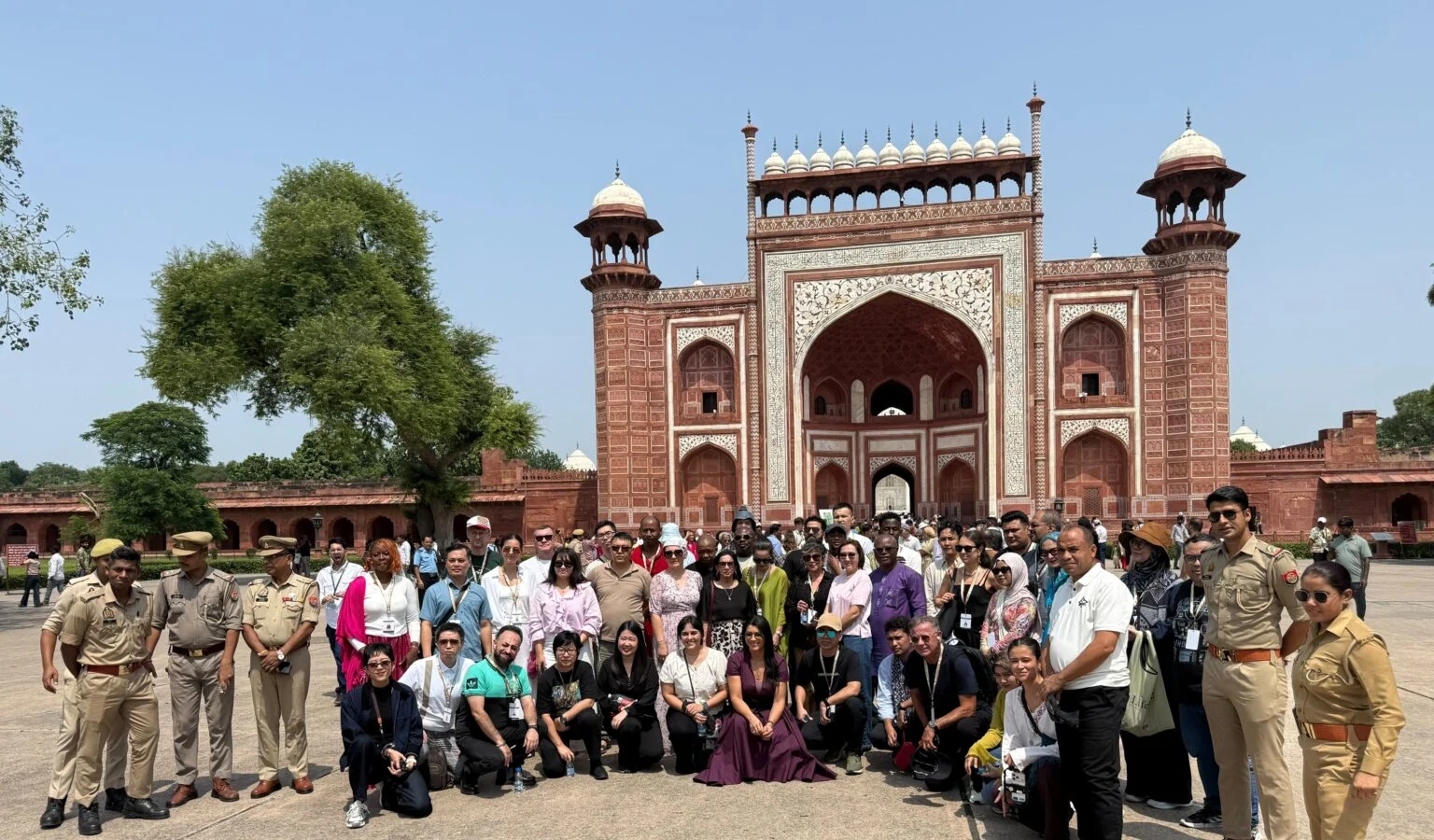
A 10-day media familiarisation visit from Sept. 9 to Sept. 18 unveiled India’s development—the coexistence of its historical inheritance and the rapidly changing economic and technological systems.
The visit offered glimpses into how the country connects heritage, urban development, finance, digital technology and creative enterprise.
The programme was organised by India’s Ministry of External Affairs for media editors and journalists from 19 countries across Africa, Asia, Europe, the Middle East and Latin America.
The participating countries were Belarus, Bolivia, Brazil, China, Egypt, Ethiopia, Indonesia, Iran, Kazakhstan, Malaysia, Nigeria, Russia, Saudi Arabia, South Africa, Thailand, the United Arab Emirates, Uganda, Uzbekistan and Vietnam.
For visiting journalists, the programme provided opportunities to experience aspects of India beyond official meetings and diplomatic engagements.
The journey through Agra and Mumbai raised a broader question: how does a country preserve its past while continuously building for the future?
Perhaps the most striking starting point was the Taj Mahal.
The monument, commissioned by Mughal Emperor Shah Jahan as a mausoleum for his wife, Mumtaz Mahal, remains one of India’s most recognised symbols.
Its familiar story is one of love, grief and devotion.
Yet, standing before the monument offered another reflection on sacrifice, leadership, service and legacy.
For Fawzia Moodley, a South African Journalist, the Taj Mahal represented another form of love, expressed through service and willingness to make sacrifices for society.
The question became what leaders and societies ultimately leave behind for future generations.
The Taj Mahal has survived centuries while becoming an important part of India’s cultural identity and international image.
Nearby, Agra Fort provided another reminder of the country’s historical depth and architectural inheritance.
The experience also prompted reflection on Nigeria’s own heritage, where numerous historic sites remain important repositories of culture and identity.
But the focus in Agra was unmistakably India’s ability to preserve and present its historical inheritance to visitors from around the world.
The journey from Agra to Mumbai shifted the focus from historical preservation to the challenges of managing a rapidly developing coastal metropolis.
For Fred Idehai, a Nigerian journalist arriving in Mumbai, the city also produced an unexpected sense of familiarity.
“The bridges, waterfront, dense skyline and commercial activity brought Lagos to mind.
“Yet, beyond the resemblance was an opportunity to understand how Mumbai manages the realities of a major coastal city,” he said.
During an interaction with officials of the Brihanmumbai Municipal Corporation, discussions focused on Mumbai’s exposure to several natural hazards.
These include cyclones, floods, earthquakes and landslides.
Officials explained that newer construction incorporates disaster-resilient features designed to withstand hazards such as high winds, flooding and earthquakes.
Coastal structures, they said, are constructed with environmental conditions associated with their locations in mind.
The city’s response mechanisms also extend beyond physical infrastructure.
Officials highlighted police patrols around vulnerable locations, lifeguards at beaches and disaster-response personnel available during water-related emergencies.
They also cited coordination with the Indian Navy and Indian Coast Guard when additional support is required.
“The broader lesson from Mumbai was that resilience involves more than constructing stronger buildings.
“It requires anticipating risks, coordinating institutions and maintaining systems capable of responding when communities face emergencies.
“The journey from urban resilience to financial markets presented another dimension of India’s transformation.’’
At the Bombay Stock Exchange, the evolution of India’s capital market could almost be read through the history of the institution itself.
BSE Managing Director and Chief Executive Officer, Sundararaman Ramamurthy, said the exchange evolved from informal stock trading beneath a banyan tree in Mumbai.
The informal association eventually became the Native Share and Stock Brokers Association before developing into the modern exchange.
The transformation did not stop with institutionalisation.
Ramamurthy explained that the trading hall once housed an active trading ring where brokers executed transactions through verbal bids and hand signals.
“Today, there is no trading ring.
“Trading moved from the exchange floor to brokerage offices, then to investors’ computers and increasingly to smartphones.
“That evolution illustrates one feature of India’s economic development: institutions adapting to technological change while expanding participation.’’
Ramamurthy said India had more than 260 million unique investor accounts participating in the securities market.
He noted, however, that substantial room remained for further growth given the country’s population.
Ramamurthy argues that the capital market’s significance extends beyond buying and selling securities.
He described the exchange as a “temple of trust”, emphasising investor confidence, regulation and transparency.
“Stock exchanges provide mechanisms for converting household savings into productive capital that can support economic growth,’’ he said.
To the African journalist, the discussion naturally raised questions about the role of capital markets in mobilising domestic savings.
But the more immediate impression was the scale of the transformation within India’s own financial system.
The same movement from traditional systems to technology-driven platforms was evident at the National Payments Corporation of India.
At NPCI, journalists were introduced to the Unified Payments Interface, known as UPI.
UPI has become a central component of India’s digital payments ecosystem.
Sonal Asnani, Head of Asia Pacific at NPCI International Payments Limited, explained that UPI’s strength lies largely in interoperability.
The system allows users to make transactions across participating banks and applications.
Its architecture separates the underlying financial account from the consumer-facing application.
This enables users to transfer money without being restricted to a particular banking application.
NPCI’s official statistics show that 752 banks were live on UPI in August 2026, with more than 24.5 billion transactions recorded that month.
The significance of the model lies not merely in transaction speed, but in the infrastructure operating behind each payment.
A simple mobile transaction depends on coordination between banks, payment platforms, technology systems and authentication mechanisms.
The visit provided an opportunity to see how digital infrastructure has become part of everyday economic life in India.
It also demonstrated that large-scale digital transformation depends on interoperability, trust, connectivity and participation across the financial ecosystem.
The familiarisation visit then moved from finance and technology into India’s creative economy.
At Film City, the experience became more personal
According to an anonymous journalist who grew up watching Bollywood films, visiting a location associated with their production brought childhood memories into physical space.
“The familiar sets and environment transformed something once experienced only through television screens into a tangible part of India’s cultural landscape.
“But beyond the nostalgia was a larger appreciation of the power of India’s creative industry.
“Bollywood has helped project Indian culture, stories, music and fashion to audiences far beyond the country’s borders.’’
The experience also brought Nigeria’s Nollywood to mind.
Nigeria and India already share an interesting cultural connection through the popularity of Indian films among Nigerian audiences and the international reach of Nollywood.
Nigeria’s Minister of Art, Culture, Tourism and the Creative Economy, Hannatu Musawa, has described Nollywood and Bollywood as “bridges of storytelling and understanding.”
She has also expressed support for deeper creative collaboration between both countries.
Such collaboration could include film production, technical training, distribution, festivals and other areas of the creative economy.
The possibility of greater exchange makes the relationship between the two industries worth watching.
The familiarisation visit therefore revealed different dimensions of India without reducing the country’s development story to one sector.
Agra presented a country deeply conscious of its historical inheritance.
Mumbai presented a city negotiating urban growth, environmental risks and modern infrastructure.
The BSE revealed the evolution of a financial institution from informal trading beneath a tree to technology-driven transactions.
NPCI demonstrated the scale at which digital infrastructure can transform everyday financial activity.
Film City showed how creative industries can become instruments of cultural influence far beyond national borders.
Analysts say together, the experiences reveal an India constantly negotiating between what it has inherited and what it is building.
“The contrast is perhaps the most interesting part of the country’s development story; its past remains visible in monuments, architecture and cultural traditions.
“Its future is increasingly visible in digital payments, financial technology, resilient infrastructure and creative enterprise.
“The two are not necessarily competing forces.
“The experience highlights how India’s rich heritage thrives alongside its modern institutions built for a changing world,” an analyst said.
Cultural enthusiasts note that this seamless blend of tradition and progress left the most lasting impact of the tour.
All in all, India’s journey is neither a strict preservation of history nor a blind race toward tomorrow; it is a masterclass in weaving both timelines into a single, cohesive national identity. (NANFeatures)
Edited by Chijioke Okoronkwo


Comments