


By Abigael Joshua
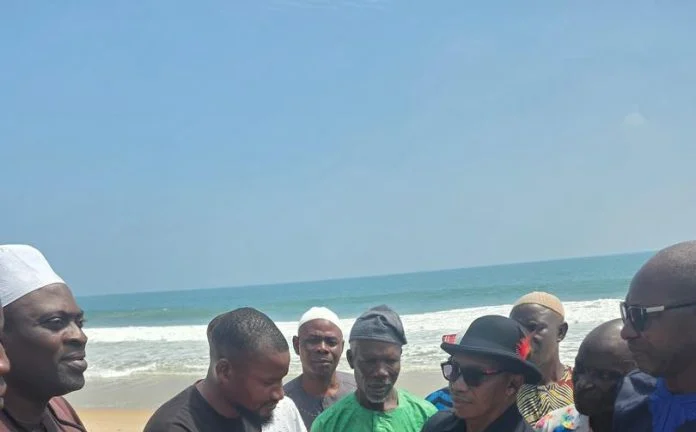
The Hydrocarbon Pollution Remediation Project (HYPREP) has made significant progress in restoring fragile ecosystems, with mangrove restoration and shoreline clean up in heavily impacted areas of the Ogoniland.
Prof. Nenibarini Zabbey, the HYPREP Project Coordinator, made this known in an interview with the News Agency of Nigeria on Tuesday in Abuja.
The HYPREP, he said, is marking its 10th anniversary by showcasing a comprehensive scorecard of achievements in the environmental and socio-economic restoration of Ogoniland.
“The Ogoni Cleanup was launched at the Bodo waterfront by the Federal Government of Nigeria on June 2, 2016, while the HYPREP Project Coordination Office (PCO) was established in February 2017 to coordinate the cleanup.
“On this anniversary, HYPREP celebrates the ongoing progress in restoring the environmental integrity and socio-economic well-being of Ogoniland, in line with the United Nations Environment Programme (UNEP) recommendations.
“Over the intervening years, the project has transitioned from its foundational phases to high-impact delivery across its core mandate areas.
“The project’s impact and implementation successes are achieved through deliberate and sustained involvement of the Ogoni community and other stakeholders,” Zabbey revealed.
He commended the support from various local and international stakeholders and reiterated commitment to the comprehensive remediation of the hydrocarbon-impacted environment and restoration of livelihood in affected communities.
“The project’s transformative actions are evident in key milestones across the thematic areas highlighted thus: Environmental Remediation and Mangrove Restoration: Significant progress has been made in remediating hydrocarbon-impacted sites.
“Mangrove restoration efforts continue to advance, ensuring the revival of fragile coastal ecosystems. We have closed out 30 out of the 65 sites that UNEP investigated and recommended for remediation.
“Currently, 17 medium-risk complex sites are being remediated, while detailed site characterisation of the remaining 18 high-risk complex sites is progressing towards scoping for remediation execution.
“The Project is leading the world’s largest restoration of oil-degraded mangroves. As of today, a total of 1,537,885 mangrove seedlings of different species (red, white and black) have been planted.
The HYPREP PC said that the successful cleanup of over 1000 ha of shoreline and the restoration of 560 ha with thriving, multi-species mangroves is stimulating biodiversity recovery and enhancing local fisheries.
He said that Phase II of the shoreline cleanup and mangrove restoration is underway, and that they were close to achieving total water supply coverage in the Ogoni communities.
Zabbey added that 49 communities have so far been reticulated through multiple water schemes and booster stations designed to deliver safe drinking water across Ogoni.
“The Ogoni Specialist Hospital and the 43-bed cottage hospital are nearing completion, significantly enhancing local healthcare delivery.
“We have strengthened three hospitals and a health centre, while an additional four health facilities in Ogoni are currently being strengthened through renovation and supply of state-of-the-art medical equipment.
“To enhance emergency and referral services, HYPREP has donated five ambulances to four general hospitals and one health centre in Ogoni, even as the Project conducts periodic medical outreaches in the area,” Zabbey said.
He said that HYPREP also launched a three-year comprehensive human health biomonitoring in Ogoniland saying that the study was carried out by the World Health Organisation’s International Agency for Research on Cancer (IARC).
“In line with the Renewed Hope Agenda of President Bola Tinubu’s administration, HYPREP has integrated environmental cleanup with human capacity building and transformed the socio-ecological landscape of Ogoniland.
“Thousands of Ogoni youths and women have been trained and given start-up kits for specialised vocational, climate-smart agricultural, and technical skills.
“Prominent among them are the creation of over 7,000 direct jobs and the training of Ogoni youth and women in high-demand skills in Creative Arts, Cabin Crew, Seafaring, and Mechatronics.
“Other high-demand skill training programmes initiated for Ogoni youth and women include Commercial Diving and Underwater Welding, Mud logging, Full Stack Development, Cybersecurity, GIS and cloud mapping, rigging, among others,” Zabbey said.
The HYPREP PC said that they have trained 5,000 Ogoni youth and women in 21 skill sets, including Argon welding and metal fabrication, offshore/onshore operations, crane operation, solar panel and CCTV installation, and data analytics, and has provided beneficiaries with start-up kits.
“To build local capacity in environmental management, the project has established 31 environmental clubs in secondary schools, initiated a robust internship programme for undergraduates, and trained over 2500 Ogoni youths with International Maritime Organisation certification.
“The socio-economic study of Ogoni has been completed, and the study report will be launched in the coming weeks.
“Other social impact initiatives include the award of educational support grants and scholarships to over 1,000 Ogoni undergraduate and postgraduate students, business support grants to 60 SMEs, and training for 300 people living with special needs across five skill sets.
“HYPREP’s engagement of 1,000 youths in Civil Security, as a nonkinetic security approach and the proactiveness of the Central Representative Advisory Committee (CRAC) in land dispute mediation and conflict resolution have enhanced peacebuilding and security in Ogoniland,” he revealed.
Zabbey added that HYPREP has prioritised the construction of legacy and socially transformative projects, such as the Ogoni Power Project and the Centre of Excellence for Environmental Restoration (CEER).
“The CEER is now at 96 per cent completion. However, we are already building sustainable research partnerships and collaborations to advance knowledge of environmental remediation and restoration.
“HYPREP has since received the Ramsar designation certificate, and we have commenced implementing a five-year interim management plan for the Ogoni mangrove wetland.
Zabbey said that the project recently launched a bird survey of the Ogoni creeks.
He assured HYPREP’s commitment to accelerate the implementation of all UNEP’s-recommended actions with value addition.
“We are actively building international, diplomatic, and private-sector partnerships to ensure the timely completion of the Project and the long-term sustainable development of Ogoniland.
He commended the Federal Government, the IOCs, traditional rulers, and civil society, as well as the Ogoni people’s enduring support and ownership of the cleanup.
“On this anniversary of the launch of the Ogoni cleanup, we call on all stakeholders to continue fostering peace, harmony, and cooperation as we work together to restore the land, health, and dignity of the Ogoni people and the peoples of the Niger Delta,” he appealed. (NAN)(www.nannews.ng)
Edited by Sadiya Hamza

Comments