


By Isaac Aregbesola
The Independent Corrupt Practices and Other Related Offences Commission (ICPC) is set to address existing workforce imbalances and ensure the effective deployment of personnel across the commission.
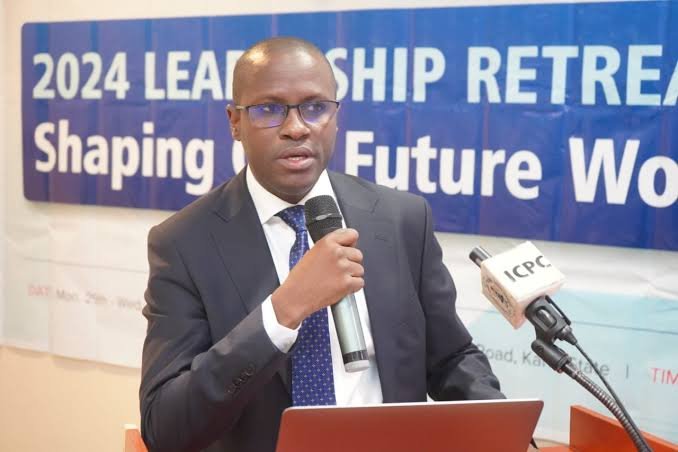
The ICPC Chairman, Dr Musa Aliyu, stated this while inaugurating the commission’s Workforce and Structural Audit Committee in Abuja
According to him, the commission will conduct a comprehensive audit of its workforce and structure to align personnel with its anti-corruption mandate.
The chairman noted that the exercise was necessary to ensure the effective deployment of personnel across the commission.
The audit, he said, was one of the most consequential internal exercises being undertaken by the commission.
Aliyu said that this would provide a verified basis for determining the appropriate workforce structure, skills, and deployment required to deliver on ICPC’s mandate effectively.
He explained that since the establishment of the commission in 2000 and the recruitment of its first 88 officers in 2002, recruitment had taken place at irregular intervals without a deliberate policy to ensure coherent workforce progression.
The chairman noted that this had resulted in an imbalance in the workforce, with a disproportionate concentration of middle and senior-level officers in some areas compared to personnel at the operational level.
He said the audit would therefore examine the commission’s approved structure alongside its actual workforce, deployment, and operational needs, with a view to identifying gaps and recommending appropriate interventions.
The chairman emphasised that the exercise must be guided by evidence rather than assumptions.
He stressed that recommendations should be based on verifiable institutional records, including case-tracking data, court schedules, petition registers, and other relevant operational records.
He also cautioned against relying solely on numerical ratios in determining workforce requirements, noting that the complexity of cases handled by the Commission and the need for specialised expertise must be taken into consideration.
Aliyu also stressed the need to strengthen the Commission’s law-enforcement culture, noting that ICPC’s institutional identity must consistently reflect its mandate as a law-enforcement and anti-corruption agency.
“The ICPC is a law-enforcement agency, and our culture must reflect that in full. We cannot claim to be law enforcement when it suits us, and conduct ourselves as a core Civil Service establishment when that suits us instead.
”We cannot continue to project this Commission as an institution with an identity crisis. No. We must know what we are, and be it consistently.”
The chairman stressed that the exercise was not intended to victimise staff or reduce the workforce, but to ensure effective deployment, strengthen institutional capacity, and build a merit-based structure that supports the commission’s mandate.
In his remarks, the Secretary to the Commission, Mr Clifford Oparaodu, commended the chairman for initiating the exercise, stressing that the commission must continue to move forward in strengthening its institutional capacity.
Oparaodu urged members of the Committee to give the assignment their best efforts and ensure that the objectives of the exercise are fully achieved.
He appealed to the members to support the chairman and the management of the commission in finding practical and sustainable ways of strengthening the institution and leaving a lasting legacy for the commission.
Mr Oche Godwin, the Director of Planning, Research and Statistics, who is the Chairman of the Committee, thanked the commission for finding them worthy and promised to bring to bear all principles of integrity and expertise on the assignment.(NAN)
Edited by Abiemwense Moru


Comments