


By Sarafina Christopher
The Coalition for Disaster Resilient Infrastructure (CDRI) has called for stronger investment in resilient infrastructure to reduce the economic and social losses caused by natural disasters globally.
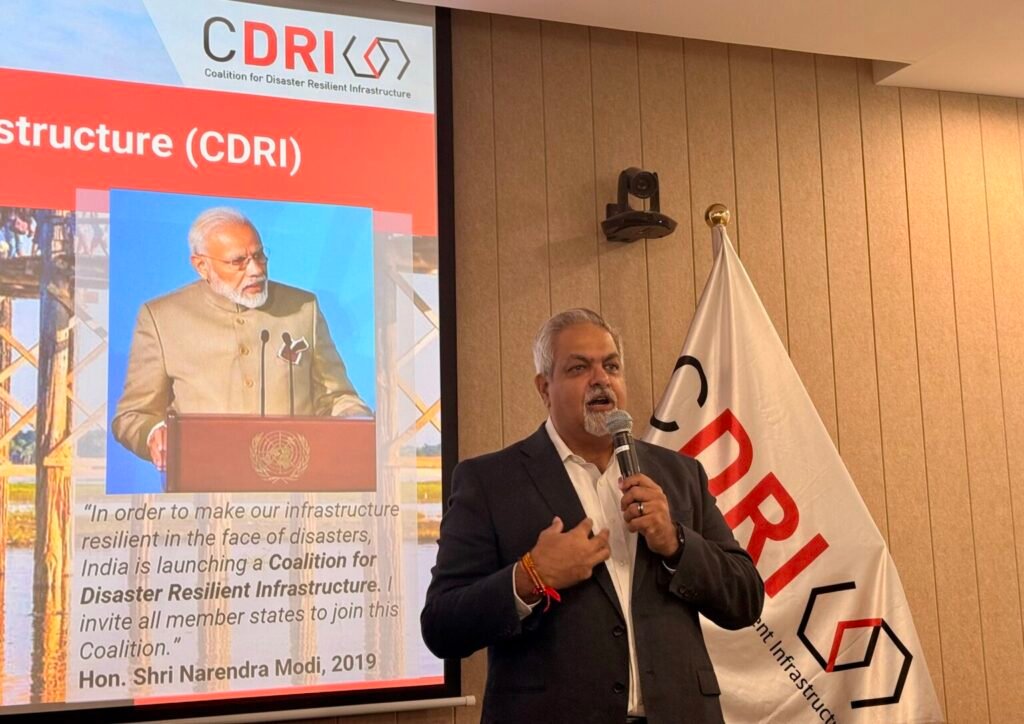
Mr Amit Prothi, Director General of CDRI, made the appeal when media delegates from BRICS member and partner countries paid a courtesy visit to the coalition in New Delhi.
Prothi said the world suffered between 700 billion dollars and 800 billion dollars in direct infrastructure losses annually from natural disasters.
He, however, said the wider economic impact was about seven times the value of the direct infrastructure damage.
“On average, we lose about 700 to 800 billion dollars of infrastructure every year. That’s only the direct damage. The economic cost of that damage is roughly seven times higher,” he said.
He said the increasing frequency and intensity of climate related hazards, including wildfires, floods, earthquakes and cyclones, required governments to rethink the way infrastructure was planned, designed and maintained.
According to him, resilient infrastructure would enable essential systems to withstand disasters and recover faster when they occurred.
“We are the chilli in the soup,” Prothi said, while explaining CDRI’s role in helping countries incorporate resilience into infrastructure development.
He said CDRI did not directly finance infrastructure projects but supported governments in assessing risks and ensuring that critical infrastructure was designed to withstand current and future hazards.
“You may not have experienced floods before, but patterns are changing. The question is how you prepare your infrastructure for those future risks,” he said.
Prothi stressed the importance of telecommunications infrastructure during disasters, recalling his experience during the 2015 earthquake in Nepal.
“I was in Kathmandu during the earthquake and could send a brief message to my family. Others couldn’t contact their loved ones because telecommunications infrastructure had broken down,” he said.
“Communication is becoming increasingly critical during disasters,” he added.
He said CDRI was also working with governments to assess risks to power and transport infrastructure and integrate disaster risk information into development planning.
Prothi said data and emerging technologies were becoming increasingly important in improving disaster preparedness and infrastructure resilience.
He said the coalition had developed a global risk database to help countries identify infrastructure vulnerabilities and estimate potential losses.
According to him, Brazil recorded average annual infrastructure losses of about 13 billion dollars, while losses across Africa were estimated at a similar level.
He said the database enabled governments to identify sector specific risks and develop appropriate resilience measures.
“Different infrastructure sectors face different risks. Power transmission systems, for example, may be highly vulnerable to cyclones, while buildings may face greater risks from earthquakes,” he said.
Prothi identified artificial intelligence, satellite data and advanced modelling as key tools that could strengthen early warning systems and improve disaster preparedness.
“There is an incredible amount of work under way on using data and predictive models. This will be one of the most important conversations over the coming years,” he said.
He said disaster resilience should also extend beyond preparedness to post disaster recovery.
Prothi said countries needed mechanisms that would enable them to restore critical infrastructure quickly after disasters.
“The speed of recovery matters. The longer it takes countries to rebuild, the greater the impact on communities and national economies,” he said.
He added that discussions were under way on innovative financing mechanisms, including insurance and private sector participation, to help countries access reconstruction funds more quickly.
Prothi said CDRI, launched by India in 2019 at the United Nations in New York, had grown from 24 founding members to 70 members.
He said the Philippines were expected to become the coalition’s 71st member.
The coalition comprises countries from Africa, Asia, Europe, the Americas and the Pacific, as well as multilateral institutions, including the World Bank and regional development banks.
“The coalition was created to bring practices, knowledge and experiences together so that countries can better understand and address the growing complexities of disaster risks,” he said.
Prothi said CDRI had also become an active technical partner in major global platforms, including the G20, BRICS, United Nations platforms and climate conferences.
He said the coalition supported the establishment of the Disaster Risk Reduction and Resilient Infrastructure Working Group during India’s G20 presidency.
He said CDRI’s future programmes would focus more on Africa, small island developing states, mountain regions and cities, where climate and disaster risks were becoming increasingly complex.
Prothi also called for greater participation by ASEAN countries, saying their experience in managing earthquakes, tsunamis, floods and other hazards could contribute to global efforts to strengthen disaster resilience.(NAN)



Comments