


By Sarafina Christopher
The Institute for Peace and Conflict Resolution (IPCR) has called for deliberate and sustained investment in peacebuilding across Nigeria, urging government, private sector, civil society and citizens to treat peace as a collective national responsibility.
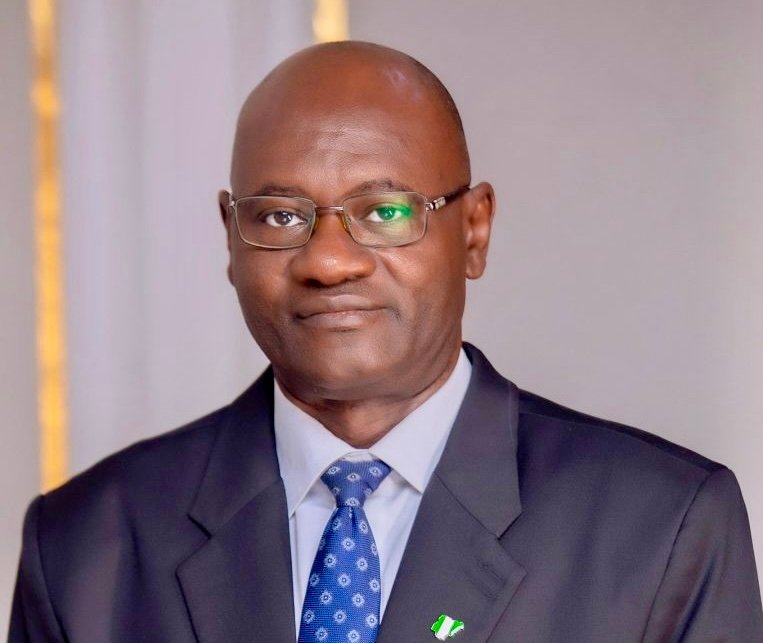
The Director-General of IPCR, Dr Joseph Ochogwu, made the call on Thursday at the 2026 Peace and Dialogue Awards organised by the Ufuk Dialogue Foundation in collaboration with the Institute in Abuja.
Ochogwu said Nigeria needed to move from reactively responding to conflicts after they had erupted, to investing more resources in prevention, early warning, peace education, mediation, justice reform and community resilience.
“To invest in peace is to move from rhetoric to resources, from reaction to prevention,” he said.
He said global military expenditure stood at more than 2.4 trillion dollars in 2024, while peacebuilding spending remained below 60 billion dollars.
The IPCR DG described the disparity as evidence of the need to rethink how societies allocate resources to prevent violence.
According to him, peace investment should cover early warning systems, peace education, youth employment, interfaith literacy, justice reform, community mediation, psychosocial support, and strengthening the agency of women and young people.
Ochogwu said the benefits of peacebuilding were often measured by crises that did not occur, making its impact less visible than expenditure on conflict response.
“Its dividend is often invisible to what does not happen and that is precisely why it demands intentionality,” he said.
He also identified extremism, banditry, farmer-herder tensions, resource conflicts, separatist agitations and climate-related displacement among the interconnected challenges requiring tailored peacebuilding responses in Nigeria and the wider West African region.
He said a blanket approach to peacebuilding would not adequately address Nigeria’s diverse conflict landscape, stressing the need for context-specific interventions.
Ochogwu also linked economic development to peace, saying the government’s economic reforms under the Renewed Hope Agenda could contribute directly to peace by creating jobs and reducing poverty-driven vulnerabilities.
“Economic renewal is not a separate track; it is the bedrock on which peace is sustained,” he said.
He also identified inadequate funding, fragmented interventions, weak tracking mechanisms and greater visibility for security hardware than prevention efforts as some of the reasons peacebuilding remains underfunded.
Ochogwu also proposed a five-point compact for collective responsibility.
The IPCR boss urged federal, states, and local governments to fast-track the National Peace Policy, establish a National Peace Investment Fund and strengthen IPCR’s coordination and early-warning mandate.
He also urged the private sector to commit part of its corporate social responsibility resources to peacebuilding, while calling on faith, traditional and community leaders to institutionalise dialogue and community-level dispute resolution.
Ochogwu urged civil society organisations, the media and academia to counter hate speech and disinformation, generate local evidence and support the development of a Peace Investment Tracker to monitor peacebuilding expenditure and its impact.
He called on individual Nigerians to contribute to peace through everyday actions, including refusing to escalate disputes, reporting early warning signs and mentoring young people at risk of violence.
The DG also noted that the ultimate choice before societies was whether to invest in peace upfront or bear significantly higher costs when violence occurred.

Earlier, President of Ufuk Dialogue Foundation, Mr Emrah Ilgen, said the Peace and Dialogue Awards were established to recognise individuals and organisations whose contributions promote peace, reconciliation, humanitarian service, education, youth development and peaceful coexistence.
Ilgen said the foundation’s approach to investing in peace centred on building relationships and creating opportunities for people with divergent views to dialogue, listen to one another and identify areas of common ground.
“Investing in peace means investing in relationships,” he said.
He also added that the foundation had adopted a whole-of-society approach to conflict resolution, stressing that peace should not be regarded solely as the responsibility of governments, security agencies or international organisations.
Mr Olatunji Disu, Inspector-General of Police, represented by AIG Victor Olaiya, said peace and democracy were mutually reinforcing, with lasting peace dependent on the rule of law, political participation and respect for human dignity.
Disu commended Ufuk Dialogue Foundation and IPCR for sustaining the awards, describing recognition of peacebuilders as an important way of encouraging more Nigerians to contribute to peaceful coexistence.
“Just as security is everyone’s business, peace is also everyone’s business,” he said.
The IGP also urged Nigerians to make peace an everyday commitment, saying the collaborative nature of the event demonstrated that no single institution could build sustainable peace alone.
He also appealed to young Nigerians to avoid actions that could undermine their future or bring disrepute to their families and country, stressing the importance of responsible conduct, tolerance and respect for others.
NAN reports that the 2026 Peace and Dialogue Awards was organised as part of activities around the 2026 International Day of Peace, themed “Investing in Peace For Everyone, Everywhere, Every Day.”
It recognises contributions across areas including youth development, education, media, sports, arts and culture, humanitarian service, community peacebuilding, interfaith dialogue, gender sensitivity and support for persons with special needs. (NAN)
Edited by Mark Longyen

Comments