


By Justina Auta
The Federal Ministry of Justice (FMoJ), UNDP and development partners have called for stronger legal protection, survivor-centred services and increased investments to address Gender-Based Violence (GBV) and Intimate Partner Violence (IPV) nationwide.
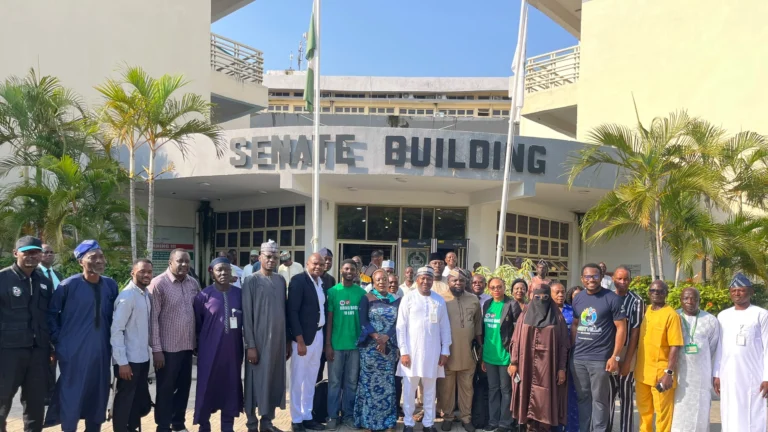
The call was made at a one-day National Consultative Workshop on IPV/GBV Programming in Nigeria, on Thursday in Abuja to shape priorities under the Global Fund Grant Cycle Eight framework.
The workshop was organised by UNDP in collaboration with the Global Fund, UN Women, the Institute of Human Virology, the National Human Rights Commission and relevant federal ministries.
Mr Oyedepo Rotimi, Director of Public Prosecutions of the Federation, said Nigeria’s efforts to combat HIV, tuberculosis and malaria would remain limited without addressing GBV, stigma, discrimination and structural inequalities.
Rotimi noted that although Nigeria’s HIV prevalence had declined to 1.4 per cent, key populations and their partners still accounted for about 40 per cent of new infections.
He said discrimination in healthcare settings, fear of arrest, stigma and denial of services continued to prevent vulnerable populations from accessing essential healthcare and other critical support services.
“Gender-based violence and intimate partner violence are not incidental to the health crisis. They are structural drivers of it.
“Every GBV case that goes unreported, every IPV survivor who avoids a health facility because she fears her partner will find out, represents a health system failure with a legal dimension,” he said.
Rotimi highlighted the vulnerability of inmates in correctional facilities, noting that overcrowding, poor healthcare access and prolonged detention increased the risks of HIV and tuberculosis transmission nationwide.
According to him, the GC8 framework should prioritise interventions targeting persons in custodial settings, survivors of human trafficking and other vulnerable populations requiring specialised support services.
He said the ministry had strengthened legal-health referral pathways, trained prosecutors in trauma-informed practice and advocated removing barriers preventing adolescents and key populations from accessing healthcare services.
Rotimi urged stakeholders to integrate GBV screening and first-line support into HIV and tuberculosis services, strengthen forensic medical services and adequately finance survivor support programmes.
Dr Izukanji Sikazwe, Head of HIV at the Global Fund, described GBV and IPV as significant barriers to ending the HIV epidemic and achieving sustained epidemic control.
Sikazwe said the Global Fund was working with government institutions and communities to identify sustainable interventions that would reduce GBV and improve access to HIV services.
“We are committed to ending the HIV epidemic, but there are key structural and social barriers that make it difficult to achieve epidemic control, and one of them is gender-based violence.
“We are looking at where the Global Fund and the Government of Nigeria can invest resources to reduce the threat of GBV and IPV so that individuals can access HIV prevention and treatment services,” she said.
Earlier, UNDP Gender Lead, Onyinye Ndubuisi, said the workshop was convened to review Nigeria’s gender equality, GBV and IPV landscape and identify investment gaps.
Ndubuisi said stakeholders were examining legal, policy, social and structural barriers affecting access to services and health outcomes while strengthening coordination among relevant institutions.
“We want to build a coordinated platform and strengthen multi-sectoral collaboration. We want evidence-based recommendations that will inform the GC8 funding request and other programme areas.
“This workshop is an opportunity to reflect on how we can advance survivor-centred, rights-based, gender-transformative and inclusive approaches to programming,” she said.
She added that stakeholders were advocating recognition of GBV interventions as stand-alone programme components rather than treating them solely as cross-cutting issues within development initiatives.
Ndubuisi said the goal was to ensure future investments adequately addressed survivors’ needs through healthcare services, economic empowerment, behavioural change interventions and social protection measures.
Ms Krittayawan Boonto, Country Director of the Joint United Nations Programme on HIV/AIDS (UNAIDS) in Nigeria, called for clearly defined and adequately funded interventions.
“We are here to make the money work. If these interventions are not clearly programmed with indicators, targets and accountability mechanisms, they risk remaining vague aspirations,” she said.
Mr Hilary Ogbonna, Senior Human Rights Adviser at the NHRC, emphasised the importance of prevention, accessible reporting channels, quality support systems, legal protection and community engagement.
Ogbonna also called for well-funded and measurable interventions to ensure that no vulnerable person was left behind in efforts to address GBV and IPV.
Dr Olayemi Olupitan, Project Director of GF-NTHRIP HVN, underscored the need to intensify prevention and response efforts, improve documentation and reporting of GBV cases.
She said perpetrators must be held accountable through stronger legal frameworks while addressing the links between violence, poor health outcomes and broader public health challenges.(NAN) (www.nannews.ng)
Edited by Abiemwense Moru
Comments