


By Babajide Awoyinfa
The Minister of Women Affairs and Social Development, Hajiya Imaan Sulaiman-Ibrahim, has called for increased investment in childcare and essential care services, describing them as critical infrastructure for Nigeria’s economic growth.
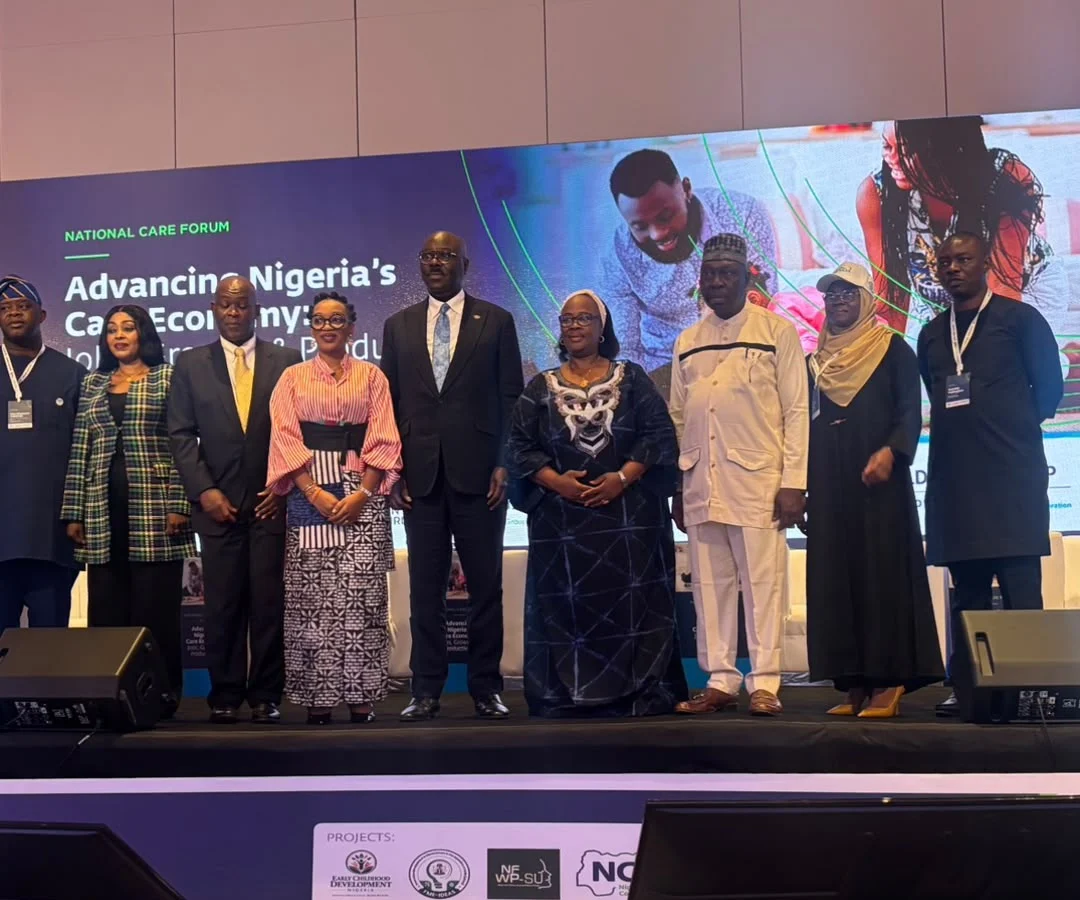
The News Agency of Nigeria (NAN) reports that the minister made the call in a special address delivered through her representative, Andrew Ali Madugu, Director, Child Development Department, at the World Bank Group’s National Care Forum in Lagos.
The forum, held at the Lagos Marriott Hotel, Ikeja, has the theme: “Advancing Nigeria’s Care Economy: Jobs, Growth and Productivity”.
Sulaiman-Ibrahim said Nigeria must recognise childcare and other essential care services as economic infrastructure capable of improving productivity, expanding businesses and strengthening women’s participation in the workforce.
“If we want to increase productivity, grow small businesses and expand women’s participation in the economy, we must begin to treat childcare and other essential care services as infrastructure that support economic growth,” she said.
She said developing a sustainable care economy required strategic partnerships, adequate financing and institutional arrangements reflecting Nigeria’s diverse social and economic realities.
According to her, the National Care Policy provides an opportunity to engage investors, employers, development partners and service providers in developing practical and scalable solutions.
The minister stressed that state and local governments must drive implementation and investment, while communities, development partners and private-sector actors contribute to accessible and sustainable care services.
She also emphasised the need to develop a skilled, protected and adequately remunerated care workforce, including childcare workers, social workers, domestic workers and other professionals.
Sulaiman-Ibrahim challenged the private sector to regard the care economy as an investment opportunity, noting that government alone could not finance or deliver the required services.
She identified translating the National Care Policy into measurable implementation, strengthening institutional coordination, mobilising financing and developing community-based care infrastructure as key priorities.
Earlier, Gov. Babajide Sanwo-Olu of Lagos State, represented by the Commissioner for Finance, Mr Abayomi Oluyomi, said sustainable care solutions required stronger collaboration between government and private-sector investors.
In his welcome address, Oluyomi said economic productivity depended not only on employment opportunities, infrastructure and investment capital, but also on support systems enabling people to participate effectively in economic activities.
He observed that many workers, particularly women, faced challenges balancing employment and business responsibilities with childcare and other family obligations.
“These responsibilities determine whether they can take up employment opportunities, expand their businesses or pursue opportunities that will improve their livelihoods,” he said.
Oluyomi said Lagos state’s development agenda recognised that infrastructure development and human development must advance together.
He listed investments in transportation, healthcare, education, economic opportunities and social protection as part of the state’s efforts to improve residents’ productivity and wellbeing.
The commissioner called for financing arrangements bringing together governments, development partners, employers and private investors to expand access to quality care services.
He said government must establish appropriate regulations, quality and safety standards and a supportive business environment without making essential care services unaffordable for ordinary families.
Also speaking, Christian Mulamula, Head of Office, Nigeria, International Finance Corporation (IFC), World Bank Group, described the care economy as central to women’s economic participation, children’s development, job creation and inclusive growth.
Mulamula said Nigeria had taken an important step with the National Care Policy, adding that its successful implementation required collective commitment from government, employers, care providers, financial institutions and development partners.
He said employers could support the agenda through workplace childcare facilities and family-friendly policies, while financial institutions and investors could provide capital for viable childcare businesses.
According to him, the World Bank Group is supporting efforts to strengthen Nigeria’s childcare sector through skills development, private-sector engagement and improved policy frameworks.
He disclosed that the World Bank’s Innovation Development and Effectiveness in the Acquisition of Skills (IDEAS) Project supported the development of Nigeria’s first National Occupational Standards for childcare.
Mulamula said more than 4,500 aspiring caregivers and entrepreneurs, approximately 90 per cent of them women, were undergoing training based on the standards.
He explained that the standards covered safety, hygiene, nutrition, responsive caregiving and early childhood stimulation.
He added that the IFC’s Nigeria Gender Country Programme and Care Works Nigeria were working with employers, strengthening childcare enterprises and exploring financing opportunities for businesses operating within the sector.
Mulamula further said the proposed Nigeria Early Childhood Development operation, being prepared with the Federal Ministry of Budget and Economic Planning, was expected to support integrated services across all 36 states and the Federal Capital Territory.
He said the initiative would also support childcare regulation and financing, helping to establish a quality childcare market across the country.
The forum explored the economic case for investing in childcare, particularly its implications for women’s workforce participation, job creation and business productivity.
Discussions also examined financing opportunities for childcare businesses, implementation of Nigeria’s National Care Policy and partnerships required to build an accessible, sustainable care economy.
Participants included senior government officials, representatives of the IFC, UN Women, development partners and private-sector leaders.
The discussions highlighted that closing gender gaps in key sectors can add nearly 23 billion dollars to Nigeria’s economy, underscoring the economic importance of expanding women’s participation and investing in care services. (NAN)
BAG/FAA
=========
Edited by Folasade Adeniran



Comments