


By Kadiri Abdulrahman
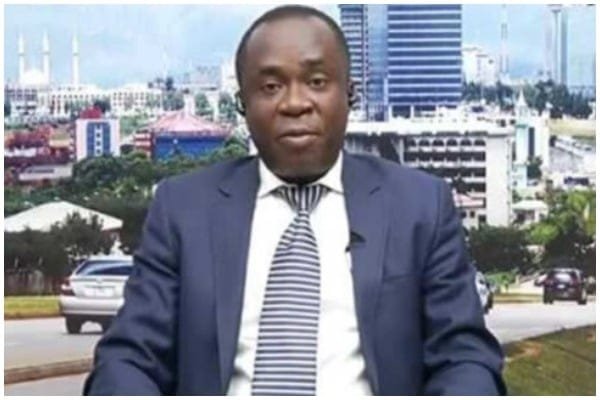
A financial expert, Prof. Uche Uwaleke, says the Monetary Policy Committee (MPC) of the Central Bank of Nigeria (CBN) is likely to reduce the Monetary Policy Rate (MPR) in its next meeting.
Uwaleke, who is the Director, Institute of Capital Market Studies, is also the President of Capital Market Academics of Nigeria.
He spoke in an interview with the News Agency of Nigeria (NAN) on Monday in Abuja, against the backdrop of the 307th meeting of the MPC scheduled for Monday and Tuesday.
NAN reports that the MPC had retained the MPR, the country’s benchmark interest rate, at 26.5 per cent at its 306th meeting in July.
The committee also agreed to retain the Standing Facilities Corridor at +50 / -450 basis points around the MPR.
The Cash Reserve Ratio (CRR) was also retained at 45 per cent for Deposit Money Banks, 16 per cent for Merchant Banks, and 75 per cent for non-TSA public sector deposits.
According to Uwaleke, reducing the MPR by 50 basis points will be justified by moderating inflation, exchange rate stability, improvement in fx market liquidity, and accretion to external reserves.
“I also see a mild rate cut against the backdrop of the recently signed Memorandum of Understanding (MoU) between the Minister of Finance and the CBN governor on fiscal and monetary policies collaboration,” he said.
The expert said that the recent decision by the Federal Ministry of Finance and the CBN to formalise their cooperation through an MoU on fiscal and monetary policy coordination marked an important development in Nigeria’s economic management.
“For an economy in which government spending, public borrowing, liquidity conditions, exchange-rate movements, inflation and private-sector credit are deeply interconnected, the institutionalisation of regular policy coordination is both timely and economically significant.
“The MoU provides a framework for cooperation that goes beyond personal relationships between the Minister of Finance and the Governor of the CBN.
“It establishes structured mechanisms for information-sharing, aligned macroeconomic assumptions and the resolution of areas where fiscal and monetary actions might otherwise work at cross-purposes,” Uwaleke said.
He said that the next logical step should be to move fiscal and monetary coordination from administrative practice towards a durable institutional framework.
According to him, the present MoU can provide a useful foundation, but an arrangement of such economic importance should ultimately rest on clear statutory provisions.
“Nigeria could consider reviewing and, where appropriate, amending the relevant provisions of the CBN Act 2007 and other fiscal-governance legislation to establish a transparent framework for fiscal-monetary coordination.
“The framework should also clarify the respective responsibilities of the fiscal and monetary authorities, establish procedures for setting broad inflation objectives, and protect the CBN’s instrument and operational autonomy.
“Such legislation should not create a mechanism through which fiscal authorities can dictate monetary-policy decisions. Rather, it should codify the distinction between shared macroeconomic objectives and independent policy instruments,” he said.
Uwaleke said that the fiscal authority should remain responsible for fiscal policy, taxation, public expenditure and debt management, while the CBN should retain the authority necessary to conduct monetary policy.
“At the same time, both institutions should be required to exchange information, publish relevant assumptions and explain publicly how their policies interact.
“The broader objective should be a coherent economic policy architecture in which monetary, fiscal, trade, financial and structural policies reinforce one another.
“Indeed, Nigeria’s current circumstances make this institutional question especially urgent.
“The country has made measurable progress in rebuilding macroeconomic stability, but inflation, financing costs, food and transport pressures, weak monetary transmission and the need for stronger private-sector credit continue to present difficult policy challenges.
“The CBN’s own 2026 outlook anticipates further disinflation and a lower interest-rate environment while recognising the importance of monetary conditions, fiscal operations and financial-market stability,” he said.(NAN)
Edited by Isaac Aregbesola


Comments