


By Ijeoma Olorunfemi
The Nigeria Data Protection Commission (NDPC) has urged judicial officers to take notice of the threats and opportunities presented by data processing technologies in the Fourth Industrial Revolution.
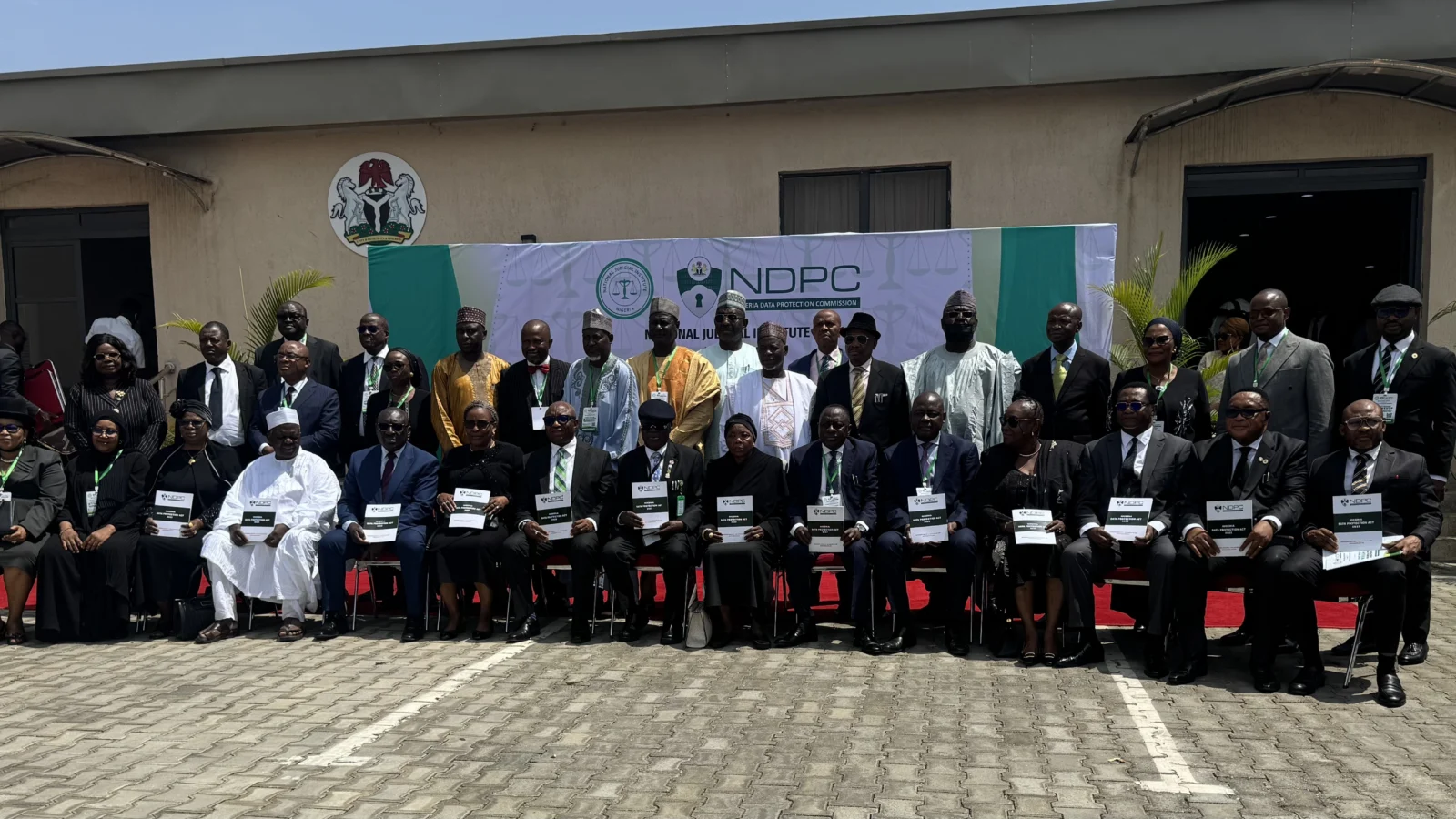
The National Commissioner of NDPC, Dr Vincent Olatunji, made the call on Thursday in Abuja at the opening of a capacity building workshop for judicial officers.
The event was organised by the commission in collaboration with the National Judicial Institute (NJI).
Olatunji said the growing dependence on technology had raised concerns about how personal data generated through digital transactions and other online interactions were processed, accessed and used by third parties.
“The messages we send and receive; the transactions we initiate through these third parties, how are they processed? Who is interested in our private live?” he asked.
He urged judicial officers to recognise the implications of emerging technologies for privacy rights and ensure that justice kept pace with developments in data processing.
Olatunji said Section 37 of the 1999 Constitution guaranteed and protected the privacy of citizens, their homes, correspondence, telephone conversations and telegraphic communications.
According to him, personal data falls within the scope of the constitutional protection, which informed the enactment of the Nigeria Data Protection Act (NDP Act), 2023.
He said the commission was committed to ensuring that individuals and organisations understood the law, while holding data controllers and processors accountable for violations.
“As the common man looks to the commission for regulation, he looks towards the courts for reliefs that redress his unresolved grievances. This power is recognised under Section 50 of the NDP Act,” he said.
The NDPC boss said Nigeria’s data protection framework was also driven by regional and international instruments, including the ECOWAS Supplementary Act on Personal Data Protection, 2010.
He said the framework was also informed by the African Union Convention on Cyber Security and Personal Data Protection, 2014; and the European Union General Data Protection Regulation, 2016.
The national commissioner said the frameworks required personal data to be processed lawfully, fairly and transparently, with adherence to the principles of purpose limitation and data minimisation.
Olatunji said the commission’s interventions had created more than 27,000 jobs, established 19 privacy clubs in major universities and strengthened regulatory oversight, enforcement and accountability within the data protection ecosystem.
The Administrator of NJI, Justice Babatunde Adejumo, said data had become a critical resource for industries and public institutions, making effective monitoring of its processing essential to achieving organisational objectives and preventing misuse.
He said rapid technological advancement had increased the volume of data generated, facilitated their modification and enabled multiple entities to access data repositories, thereby creating additional security risks.
“Since this fluid access inevitably extends to rogue actors, it poses heightened risks to comprehensive data security and national governance,” Adejumo said.
He said the judiciary had a crucial role to play in protecting data rights, resolving disputes over regulatory compliance and determining liability where personal data rights were breached.
According to him, such cases often require courts to balance collective public interests with individuals rights to privacy.
Adejumo said the NDP Act provided a vital legal framework for protecting personal data in Nigeria, adding that judicial officers needed to be familiar with its provisions and relevant global best practices.
He expressed hope that the workshop would strengthen collaboration among ministries, departments and agencies (MDAs) on data protection and privacy.
The News Agency of Nigeria (NAN) reports that Adejumo declared the workshop open on behalf of the Chief Justice of Nigeria, Justice Kudirat Kekere-Ekun. (NAN)
Edited by Uche Anunne



Comments