


By Emmanuella Anokam
The Nigeria Extractive Industries Transparency Initiative (NEITI) has called on civil society organisations, the media and industry stakeholders to support Nigeria’s 2026 validation, under the global Extractive Industries Transparency Initiative (EITI).
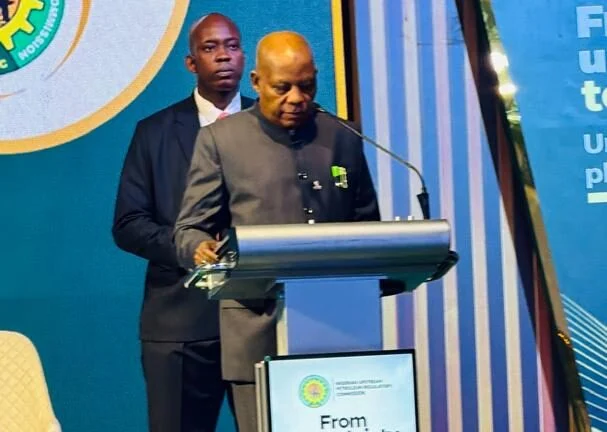
The Executive Secretary of NEITI, Mr Musa Sarkin-Adar, made the call on Wednesday in Abuja at a civil society and media engagement on the forthcoming 2026 Nigeria’s EITI validation, scheduled to commence on July 1.
The engagement was organised by NEITI in collaboration with the International Institute for Democracy and Electoral Assistance (IIDEA) and The Rule of Law and Anti-Corruption (RoLAC) programme.
The Validation is a quality assurance mechanism in the global EITI implementation to ascertain the level of a country’s compliance to the EITI Standard – a global benchmark for transparency and accountability in the oil, gas and mining sectors.
The engagement is expected to strengthen stakeholders’ readiness across constituencies, clarify roles and expectations, improve participation, buy-in and build confidence in validation outcomes among stakeholders.
Sarkin-Adar described EITI as an important platform for promoting transparency, accountability and investors confidence in the management of natural resources.
He said Nigeria remained committed to the validation process in spite of existing challenges, adding that the country was working to improve on its previous performance.
Sarkin-Adar said Nigeria scored 70 per cent in its last EITI validation but did not meet the initiative’s requirement for full compliance.
He sai d that an unfavourable validation outcome could discourage foreign investment in the oil, gas and mining sectors.
The NEITI boss called on regulatory agencies, extractive companies and other relevant institutions to cooperate with the agency by providing timely information and responding promptly to requests.
He said delays in responses from some institutions had continued to affect NEITI’s work and the country’s transparency commitments.
“The EITI is conducting validation exercises in several participating countries, and the initiative has about 54 member countries.
“NEITI will continue to work round the clock to complete all outstanding requirements within the stipulated timeline to ensure that Nigeria has no reason to seek further adjustments to the validation schedule.
“Nigeria is fully prepared for the exercise and remains confident of a successful outcome.
“We are ready for the validation. Nigerians are resilient and resourceful, and I am confident that this time we will achieve 100 per cent compliance,” he said.
He commended the Chairman of the National Stakeholders Working Group (NSWG) and Secretary to the Government of the Federation, Sen. George Akume for supporting efforts to address outstanding issues ahead of the validation.
Sarkin-Adar, while calling for greater public awareness, urged stakeholders to provide objective and constructive feedback during the validation process, noting that their responses would influence Nigeria’s assessment
He appealed to civil society groups to advocate greater involvement of NEITI in monitoring the recovery and utilisation of revenues identified through its audits.
The executive secretary said NEITI had commenced engagements with key stakeholders, including regulators, government institutions and extractive companies, ahead of the validation.
“EITI validators are expected in Nigeria from August for a two-week assessment as the country pushes to improve its compliance score and strengthen confidence in the governance of its natural resources,” he said.
In his address, Akume acknowledged the tight timeline for the validation and called for stronger collaboration among all stakeholders.
Represented by Dr Steve Akpan, a member of the NSWG, Akume urged civil society organisations and the media to actively support the process, adding that collective effort would be crucial to Nigeria’s success.
Also speaking, NEITI’s Director of Communications and Stakeholder Management, Mrs Obiageli Onuorah, said the 2026 validation would test Nigeria’s commitment to transparency, accountability and anti-corruption reforms.
Onuora said the new EITI validation framework placed greater emphasis on data disclosure, public engagement and subnational accountability. (NAN)(wwe.nannews.ng)
==========
Edited by Kadiri Abdulrahman

Comments