


By Edith Nwapi
The National Human Rights Commission (NHRC) and Accountability Lab on Wednesday called for a framework for coordinating issues relating to digital ecosystem complaints.
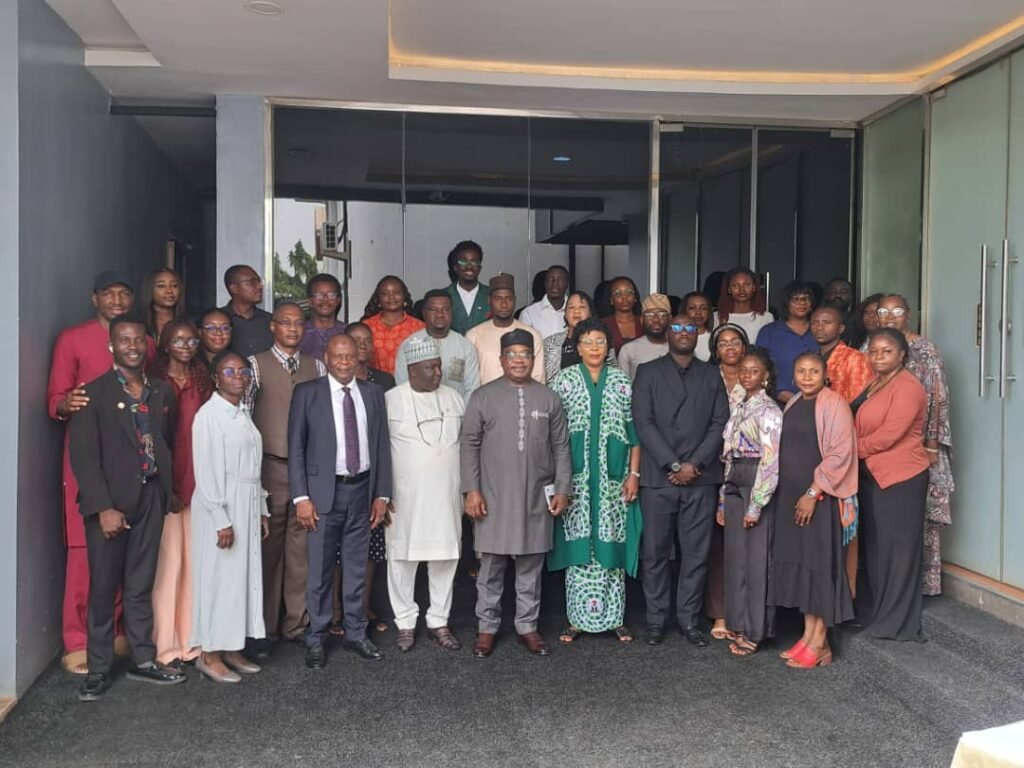
This call was made at a stakeholders’ meeting organised by NHRC and Accountability Lab in Abuja.
Speaking, at the event, the Executive Secretary, NHRC, Dr Tony Ojukwu, SAN, said the core questions before everyone today were both fundamental and urgent.
He asked, when the rights of a citizen are violated within or through the digital ecosystem, do we possess a sufficiently coordinated framework to respond swiftly, effectively and accountably?
Regrettably, he said, the present reality reflects persistent gaps.
“While civil society documents abused, the press highlights systemic infractions and legal practitioners initiate actions, our collective response often remained fragmented.
“Referral pathways are frequently ambiguous, digital evidence preservation lacks standard procedures and high-stakes cases encounter procedural delays.
“This operational disconnect is precisely what we aim to address today,” he said.
The Constitution of the Federal Republic of Nigeria, Ojukwu noted guarantees the dignity of the human person, the right to privacy, freedom of expression, freedom of assembly and association.
Ojukwu said these fundamental protections apply equally online as they do offline.
He stated that under the National Human Rights Commission Act (as amended), the Commission possesses an explicit statutory mandate to receive and investigate rights violations, secure remedies for victims, examine laws and policies against human rights benchmarks, and collaborate with statutory and non-governmental actors.
Ojukwu stated that NHRC stands ready to serve as an anchor for this collaborative architecture.
However, he said systemic protection requires collective actions.
“The complex nature of digital rights violations necessitates a multi-dimensional approach linking law enforcement, the judiciary, regulatory authorities, civil society, technology platforms and telecommunications providers into an integrated response network.
“In building this network, we must ensure that state actions addressing cybercrime, national security and online harms strictly adhere to constitutional safeguards, due process and international human rights obligations.
“With the enactment of the Cybercrimes (Prohibition, Prevention, etc.) Amendment Act of 2024 and specifically the statutory revision of Section 24, our interventions must align with current law.
“While recognising legitimate security imperatives, we must maintain vigilance to ensure statutory enforcement does not inadvertently curtail constitutionally protected speech, access to information, or civic space.
“The same rights-based scrutiny must guide our oversight of digital surveillance, data privacy, platform moderation,and network availability,” he said.
Ojukwu pointed out that as we look toward the 2027 electoral cycle, maintaining this balance becomes even more paramount.
“The digital ecosystem, reasoned will serve as the primary arena for political discourse, voter mobilisation and public accountability.
” Our imperative is to safeguard both the integrity of democratic processes and the constitutional rights of the citizens participating in them.
” Let us commit today to moving:
From fragmentation to coordination;
From documentation to remedy; and
From ad-hoc responses to sustainable institutional reform,” he said.
Similarly, Mr Friday Odeh Accountability Lab, Country Director in Nigeria, noted that in recent times the Nigerian space on the global space has gone digital and is moving at a rapid stage.
He added that what we are seeing was different platforms, different policies, and the violations that happen with individuals across Nigeria.
He explained that it would make a better sense if people know where to report their complaints and get results.
He said all the organisations , agencies saddled with these responsibilities should come together with a better framework and coordination.
Odeh stated that his organisation found out that people report to a civil society organisation, Paradigm Initiative on their RIPOTI platform.
He said the meeting was to bring government and relevant agencies to help understand these issues from a collective perspective.
” So, if Accountability Lab or any other civil society like Paradigm Initiative or any other has any of these concerns that they find in the field, we will all understand this and the place to go to solve our problem.
“This, is the person to contact. So, we ‘are just having a collective, coordinated response system that we will all understand and find support.
“That when we work at the grassroots, we bring these cases to them. They’re able to resolve and people will trust and understand that the system works for every one of them,” he said. (NAN)(NAN)
Edited by Francis Onyeukwu


Comments