


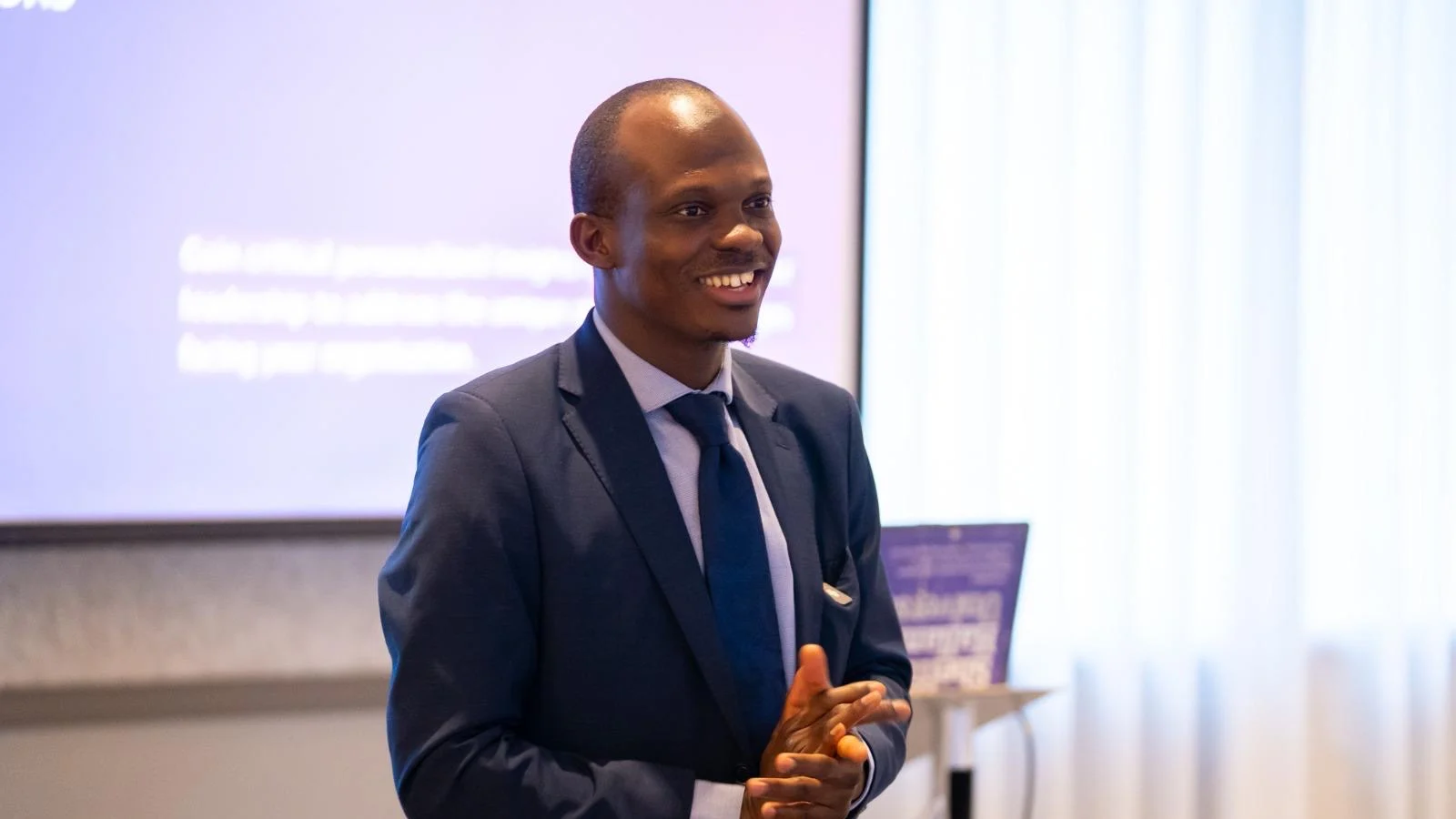
Dr Alim Abubakre, Founder of TEXEM, UK, Senior Lecturer at Sheffield Business School and Board Director of the Business Council for Africa, has urged Nigeria to stop treating resilience as a development achievement and build institutions that allow citizens and businesses to prosper without extraordinary improvisation.
Abubakre, in an interview with the News Agency of Nigeria (NAN) to mark Nigeria’s 66th Independence Anniversary, said the country’s defining challenge was no longer a shortage of talent, ambition or enterprise.
He said the deeper problem was Nigeria’s limited ability to convert its considerable human capability into institutions that consistently deliver results.
“Nigeria has proved that it can survive. At 66, survival is no longer an ambitious enough national objective.
“The more important question is whether we can build a country where progress continues beyond individual leaders, political cycles and moments of exceptional effort,” he said.
According to him, Nigeria has endured civil war, military rule, economic shocks, insecurity and repeated political and economic disruption, while producing globally competitive entrepreneurs, professionals, artists and business leaders.
He said this presented one of the country’s most important contradictions.
“Our people often outperform our systems.
“You see Nigerians succeeding in medicine, technology, finance, academia, engineering, entrepreneurship and the creative industries around the world.
“The issue is not whether Nigerians are capable. The evidence is overwhelming. The issue is whether we can build institutions capable of multiplying that talent at home,” Abubakre said.
He said Nigeria’s achievements since independence should neither be dismissed nor romanticised.
Abubakre identified the preservation of a complex federation, sustained civilian government, telecommunications expansion, global cultural influence and the emergence of a formidable diaspora as important national assets.
He said Nigeria’s diversity remained one of its most difficult realities, but could become a major competitive advantage if national institutions commanded the same confidence Nigerians often placed in family, religious, professional and hometown networks.
“Nigeria does not need weaker local identities. It needs stronger bridges between them.
“We have enormous social capital. Nigerians organise effectively around communities, professional groups, religious institutions, alumni associations and hometown networks.
“The strategic challenge is how to extend that capacity for trust and cooperation into institutions that serve people beyond their immediate circles,” he said.
Abubakre said the country’s telecommunications transformation offered a powerful lesson for policymakers.
He said Nigerians adopted mobile technology rapidly when access, competition and infrastructure improved, turning the mobile phone into a tool for commerce, finance, communication and entrepreneurship.
“That experience tells us something fundamental about Nigeria.
“We often do not lack demand, enterprise or ingenuity. We lack enabling systems.
“What happened in telecommunications should inform how we think about electricity, broadband, transport, finance and education,” he said.
Abubakre also described Nigeria’s growing cultural reach as an underutilised economic asset.
He said Afrobeats, Nollywood, literature, fashion, comedy and digital culture had given Nigeria influence far beyond its borders.
“Nigeria has acquired narrative power.
“People who may never have visited Nigeria consume our music, stories, language, humour and fashion.
“The next question is economic. How do we connect that influence more deliberately to tourism, intellectual property, technology, education, investment and exports?
“Culture is not merely entertainment. Properly harnessed, it is economic infrastructure,” he said.
On the diaspora, Abubakre said Nigeria should move beyond viewing citizens abroad primarily through the lens of remittances.
He described the diaspora as a global network of Nigerian knowledge, expertise, relationships and influence.
“We should ask a difficult but useful question: why does Nigerian talent so often become more productive when it enters better-functioning systems?
“The purpose of that question is not to criticise Nigeria. It is to understand what those environments are doing differently.
“The diaspora should be seen as distributed national knowledge, not simply as a source of foreign currency,” he said.
Abubakre identified weak institutional memory as one of the most expensive constraints on Nigerian development.
He said governments, public agencies and businesses frequently made progress under particular individuals, only for momentum to disappear when those individuals left.
“Nigeria restarts too often.
“A new administration arrives and programmes are abandoned. A capable public servant leaves and knowledge leaves with that person. An organisation performs because of one exceptional leader, then declines after the leader departs.
“No country compounds progress that way,” he said.
He called for clearer ownership of public commitments, measurable deadlines, stronger institutional records and greater continuity across political and organisational transitions.
“Leadership is not ultimately about becoming indispensable.
“It is about building something that continues to work when you are absent.
“That principle applies to companies, governments and nations,” Abubakre said.
On federalism, he urged states to devote greater attention to production and competitiveness rather than concentrating principally on the distribution of national revenue.
He said Nigeria should begin thinking of its 36 states as 36 potential laboratories of development.
“What should each state become exceptionally good at producing?
“That should become a much more important question.
“States should compete on investment, learning outcomes, agricultural productivity, exports, infrastructure, technology, tourism, healthcare, manufacturing and service delivery.
“Federalism becomes economically powerful when it encourages experimentation and production, not simply sharing,” he said.
Abubakre also called for a more commercially intelligent approach to Nigeria’s informal economy.
He said informal businesses already possessed sophisticated systems of reputation, apprenticeship, trust and credit, but these strengths often remained invisible to formal financial institutions.
“A trader may be trusted by an entire market and still be invisible to a bank.
“The answer is not simply to order people to formalise.
“Formal participation must create value. It should improve access to finance, insurance, procurement, pensions, larger customers and new markets.
“Formalisation should be an invitation to opportunity, not merely an obligation to government,” he said.
“A degree cannot remain the only respected evidence of capability.
“Nigeria needs credible routes through which people can acquire skills, demonstrate competence and participate in productive sectors of the economy,” he said.
He also warned that one of Nigeria’s most celebrated strengths, its ability to improvise, could become a development trap.
According to him, Nigerians routinely create private solutions to public failures by purchasing generators, drilling boreholes, paying privately for education and providing their own security.
“That resilience is admirable, but it can create a dangerous equilibrium.
“If citizens become exceptionally good at privately solving every public failure, the underlying system can remain weak for far too long.
“Resilience is valuable during adversity. It should not become a permanent economic model,” he said.
Abubakre said the same urgency applied to Nigeria’s rapidly growing cities.
He said congestion, flooding, poor transport, weak land administration, unreliable electricity and inefficient logistics represented hidden taxes on national productivity.
“Every unnecessary hour spent in traffic is productive time lost.
“Every business forced to generate its own power carries costs that competitors elsewhere may not bear.
“The ambition should not simply be bigger or more attractive cities. Nigeria needs productive cities,” he said.
Abubakre said Nigeria already possessed numerous pockets of excellence, but their national impact remained constrained because they were insufficiently connected.
“Our entrepreneurs have shown that Nigerians can build. Our communities have shown that Nigerians can organise. Our creatives have shown that Nigerians can influence the world. Our diaspora has demonstrated that Nigerians can excel in demanding environments.
“The evidence already exists.
“What Nigeria needs now is an institutional architecture capable of turning isolated excellence into national capability,” he said.
Abubakre said Nigeria’s next phase could not depend on repeatedly searching for exceptional presidents, governors, chief executives or public servants to rescue weak systems.
“Heroism does not scale. Institutions do.
“The real questions for Nigeria are whether community can become institution, whether federalism can generate production, whether informality can achieve scale, whether youth can become capability, whether cities can become productive and whether leadership can become legacy.
“At 66, Nigerians have demonstrated enough resilience.
“The greater ambition should be a country where ordinary people do not require extraordinary resilience simply to live, work, build businesses and succeed.
“Nigeria has proved that it can endure. The task now is to build progress that endures,” Abubakre said.(NAN)
Edited by Ismail Abdulaziz


Comments