


By Sumaila Ogbaje
Nigeria and the African Union (AU) have called for stronger military coordination, strategic collaboration and enhanced institutional capacity to address the continent’s evolving security threats and strengthen peace support operations.
The Chief of Defence Staff, Gen. Olufemi Oluyede, made the call at the Induction and Orientation Training Programme for members of Military Staff Committee (MSC) of the AU Peace and Security Council (PSC), on Monday in Abuja.
Oluyede was represented by the Director of Search and Rescue, Defence Headquarters, AVM Idi Sani, at the event, organised by the Defence Headquarters in collaboration with the AU PSC Secretariat.
He said Africa was facing increasingly complex and transnational security challenges that required collective action and stronger continental security mechanisms.
According to him, terrorism, violent extremism, organised crime and other emerging threats transcend national borders and underscore the need for strategic coordination among African countries.
He described the AU Peace and Security Council as the continent’s foremost platform for promoting peace, security and stability, adding that the Military Staff Committee remained central to its effectiveness.
“The Military Staff Committee occupies a uniquely important position within the African Union Peace and Security Council as its principal military advisory body.
“It provides professional military advice and strategic assessments that support informed decision-making on conflict prevention, crisis response and peace support operations.
“The quality of its advice directly influences the effectiveness of the Council’s decisions and interventions across Africa,” he said.
Oluyede said the induction programme was designed to strengthen institutional knowledge, improve strategic collaboration among member states and enhance the committee’s capacity to provide timely and professional military advice.
He reaffirmed Nigeria’s commitment to the ideals of the African Union, saying the country would continue to support initiatives aimed at promoting peace, security and sustainable development across the continent.
Also speaking, the Head of the AU Peace and Security Council Secretariat, Ms. Neema Chusi, said the Military Staff Committee occupied a unique position as the only AU PSC subcommittee specifically established under the protocol creating the council.
Chusi said the committee was created to ensure that ambassadors serving on the Peace and Security Council, many of whom came from diplomatic rather than military backgrounds, received sound professional military advice before taking critical decisions.
According to her, military expertise remains indispensable to effective conflict prevention, crisis management and peace support operations across Africa.
“Your role is critical because military considerations must be adequately reflected in the Council’s deliberations.
“Effective conflict resolution is not achieved solely through mediation, dialogue and negotiation; military expertise also plays a vital role in supporting peace and security efforts,” she said.
Chusi noted that the committee had continued to support major AU and regional peace operations, including the African Union Support and Stabilisation Mission in Somalia and the Multinational Joint Task Force combating terrorism in the Lake Chad Basin.
She urged participants to approach the induction with openness, objectivity and professionalism, stressing that the quality of their advice would influence decisions affecting millions of Africans.
“Our work represents the aspirations of millions of Africans.
“If we make poor decisions, history will remember us accordingly. If we make the right decisions, future generations will equally remember our contributions to Africa’s peace and security,” she said.
The Chairperson, Military Staff Committee for June 2026 and Sierra Leone’s Defence Attaché to Nigeria, Brig.-Gen. Abubakarr Conte, said the programme came at a critical period in the evolution of Africa’s peace and security architecture.
Conte said the continent continued to grapple with persistent terrorism, violent extremism, unconstitutional changes of government, transnational organised crime, maritime insecurity, cyber threats, humanitarian emergencies and the security implications of climate change.
According to him, the evolving security environment has made the committee’s role in advising the Peace and Security Council more relevant than ever.
“The Military Staff Committee remains one of the key pillars supporting the work of the Peace and Security Council.
“These evolving challenges demand coordinated responses, strategic foresight and sound military advice,” he said.
Conte said the induction would deepen participants’ understanding of the committee’s mandate, working methods and responsibilities while providing opportunities to exchange experiences, strengthen institutional memory and enhance cooperation among member states.
He said participants would examine the AU Peace and Security Council’s working methods, the evolving role of the Military Staff Committee, lessons from comparative experiences and innovative approaches to strengthening peace support operations.
He urged members to engage candidly throughout the programme, emphasising that their collective responsibility was to promote lasting peace, security and stability across Africa.
According to him, the committee’s success would ultimately be measured by its ability to translate discussions into practical actions that contribute to a more peaceful, secure and prosperous continent.
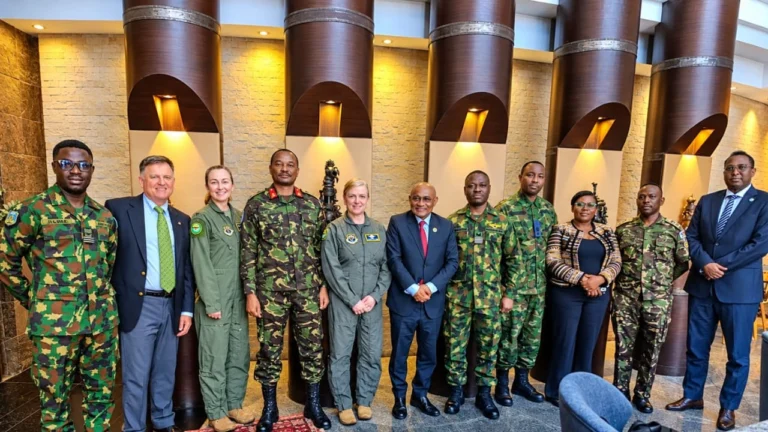
The two-day induction programme brought together defence advisers from AU member states serving on the Peace and Security Council, officials of the AU Commission.
Others are representatives of the United Nations, senior military officers, facilitators and resource persons to strengthen the committee’s advisory role within Africa’s peace and security architecture. (NAN) (www.nannews.ng)
Edited by Sadiya Hamza
Comments