


By Josephine Miller
A Senior Programme Officer at Gates Foundation, Dr Saad Abdulmumin, says Nigeria accounts for 30 per cent of Africa’s zero-dose children, describing the figure as a national emergency requiring urgent action.
Abdulmumin said this on Friday in Abuja, at the Her Health, Her Power Conference Africa, organised by the VickyHeldan Empowerment Foundation, with the theme “Leading with Wellness for a Sustainable Africa.”
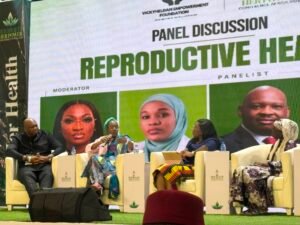
He said Africa currently hosted about seven million children who had not received their first dose of the pentavalent vaccine, with Nigeria accounting for more than two million of that number.
“Nigeria is the global capital of zero-dose children. That is really putting Nigeria in a very difficult situation in the country and also in the global community,” he said.
The health officer said the country needed tailored, context-specific interventions, noting that health challenges in the North-West differed significantly from those in the South.
He called for stronger community engagement, urging that traditional and religious leaders be brought into immunisation drives to build public confidence in vaccines.
Abdulmumin also stressed the need for sustainable financing, warning that Nigeria risked catastrophic disease outbreaks if vaccine supply gaps were not urgently addressed.
On maternal care, a family physician and health care executive, Dr Diya Ololade, said misinformation remained the biggest barrier to informed reproductive choices for Nigerian women.
Ololade alleged that many doctors imposed their own preferences on patients rather than presenting all available options and allowing women to decide.
He identified misinformation, affordability, accessibility, availability and concerns about side effects as some of the major factors influencing reproductive health decisions.
He urged women to seek professional guidance rather than rely on social media, adding that no family planning option was inherently bad as individual responses varied.
“There are no bad choices. It depends on how that particular woman responds or reacts to it,” he said.
A maternal health innovator, Mrs Eunice Benu, called for structured postnatal community support for new mothers, saying many women experienced isolation and depression after childbirth with little institutional support.
Responding Mrs Ummi Umar, a Nigerian public health specialist, identified gaps in follow-up care after screening as a major challenge in the fight against cancers affecting women.
Umar said while civil society organisations and other stakeholders had made significant efforts to encourage women to undergo screening, many women were not adequately supported after receiving their results.
She stressed the importance of access, information and trust in ensuring that women moved from screening to appropriate treatment.
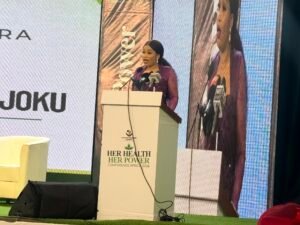
In her remarks, the Convener and Founder of VickyHeldan Empowerment Foundation, Dr Victory Njoku, said Africa could not achieve sustainable development without prioritising the health and wellbeing of its women.
Njoku said the conference was a call to action for government, healthcare practitioners, the private sector and development partners to work together in improving women’s health outcomes across the continent.(NAN)(www.nannews.ng)
Edited by Magdalene Ukuedojor

Comments