


By Tunmishe Omosofe
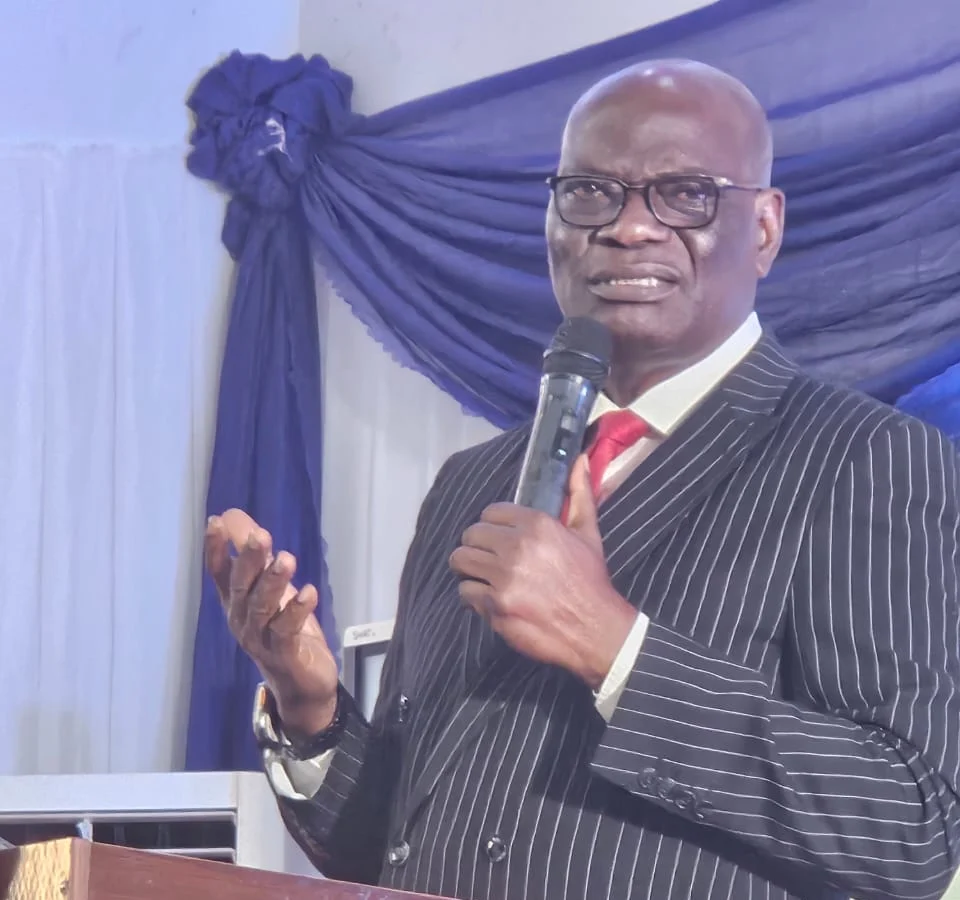
Prof. Oluwatoyin Ogundipe, Chairman, Governing Board, National Universities Commission (NUC), has called on universities to step up efforts in promoting quality education through research.
According to him, postgraduate education is key in advanced knowledge creation and innovation in Nigeria.
He stated this in a plenary paper delivered at the 67th Meeting of the Committee of Provosts and Deans of Postgraduate Colleges and Schools in Nigerian Universities, on Monday at the Redeemer’s University Ede, Osun.
The paper, made available to the News Agency of Nigeria (NAN) in Lagos, is with the theme: Rebuilding Academic Integrity in Nigerian Postgraduate Education; Governance, Innovation and Sustainable Institutional Reforms.
Ogundipe, also immediate past vice chancellor, University of Lagos, (2017-2022), said the value of the postgraduate schools and colleges’ research and degrees, rested on academic integrity, honest research and accurate attribution.
According to him, postgraduate schools are also hubs for responsible data management and fair assessment.
Speaking further, Ogundipe noted that where integrity weakened, the credibility of the country’s postgraduate degree declined.
He added that, international research collaboration also became harder and public confidence in the universities, eroded.
“Concerns such as plagiarism, contract writing, unacknowledged use of generative Artificial Intelligence (AI) and weak supervision, are often treated as individual moral failures to be detected and punished.
“This paper argues that they are better understood as symptoms of institutional conditions, inadequate research resources and limited ethics training.
“They are also understood as overstretched supervision and uneven governance.
“Sanctions remain necessary, but on their own they cannot rebuild integrity,” the NUC board chairman stated.
Speaking further, the don noted that academic integrity remained an institutional responsibility and not individual.
Ogundipe stressed that Nigerian postgraduate schools must move from a predominantly punitive approach, to a proactive culture of integrity.
This, he argued, must be supported by effective governance, responsible use of technology, as well, quality supervision.
“This paper sets out the main integrity challenges facing Nigerian postgraduate education.
“It also proposes a three-pillar framework for addressing them and identifies a small set of priority actions that Provosts and Deans can initiate within their institutions.
“This is together with a practical roadmap, measurable indicators and a collective call to action for this committee,” he added.
He highlighted structural vulnerabilities, rather than isolated instances of individual misconduct, as some of the integrity challenges facing the country’s universities.
The former UNILAG vice chancellor added that inadequate research resource was another key challenge facing the universities.
According to him, more than 60 per cent of postgraduate students lacked essential research tools, noting that under funding is a major constraint.
“The implication of this is that there will be pressure to cut corners, in order to meet degree requirements.
“Also, another challenge is that of limited research ethics training. Findings have shown that fewer than 30 per cent postgraduate students receive formal research ethics (Akpan 2024).
“The implications of this is that there is usually weak understanding of attribution data management and research ethics.
“There is also the issue of limited access to plagiarism-detection software, which is another major challenge.
“The implication of this too is usually inconsistent screening of thesis, as well as dissertations and publications,” he said.
Ogundipe further cited unguided use of generative AI.
According to him, this can amount to the risk of AI generated texts or data being presented as original work, among others.
The professor of Botany then urged provosts and deans within their existing authority and largely within existing resources, to make research ethics training mandatory for all postgraduate students.
This, he said should be initiated before proposal defence, drawing on existing faculty expertise and freely available online resources.
He also called for the introduction of supervision agreements with agreed meeting schedules, a feedback service standard and monitor compliance through the postgraduate school.
Ogundipe also stressed the need for the issuance of school guidelines on responsible AI use, including a disclosure requirement for theses,dissertations and seminar papers.
“There should also be fair and consistent similarity checking of all theses and dissertations, with reports reviewed by supervisors and examiners, rather than applied mechanically, among others,” he said.
According to the former UNILAG vice chancellor, integrity cannot be policed into existence, adding that it must be governed into structures, supported by responsible technology and live through quality supervision everyday. (NAN)
Edited by Chinyere Nwachukwu


Comments