
By Rose Okudaye and Funmilola Gboteku
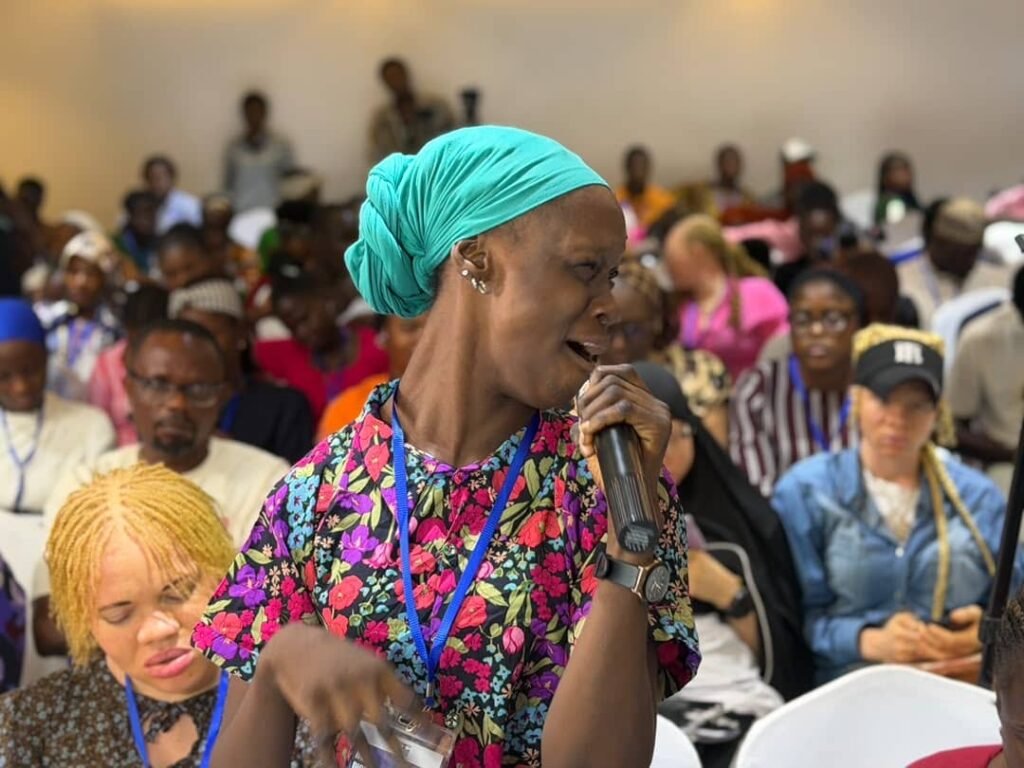
Participants at a digital citizenship training for Persons with Disabilities (PwDs) in Lagos, called for advanced digital skills programmes.
They made the call at a two-day training organised by the Nigerian Communications Commission (NCC) to promote safe and productive digital participation.
Mrs Binta Agbonika, Lead Facilitator, said participants demonstrated stronger digital knowledge than expected, warranting more specialised technology training.
“I was pleasantly surprised by their performance. These people are extremely intelligent, and I think we should have more advanced training for them,” she said.
Agbonika, Head of Career Advancement Centre, Miva Open University, said the training also exposed gaps in participants’ knowledge of accessibility features.
She said many participants were unaware of accessibility tools available on their mobile devices, despite possessing considerable digital skills.
According to her, the training introduced voice-to-text, text-to-speech, magnification, large text and other accessibility features.
Agbonika said cybersecurity was another major component, with participants taught how to protect devices, personal information and online activities.
She said participants were also exposed to free online learning platforms, CV improvement, email usage and opportunities for freelance work.
Agbonika urged stakeholders to move PwDs beyond basic digital literacy, saying their performance showed readiness for advanced and specialised training.
She also called for accessible training venues with adequate movement space and suitable toilet facilities for wheelchair users and others with mobility challenges.
The News Agency of Nigeria (NAN) reports that participants were drawn from different disability groups for the two-day training.
NAN reports that the programme focused on digital skills, accessibility tools, cybersecurity and opportunities available through online platforms.
Mr Hammed Wasiu, a participant from People with Disabilities in Agege, said the training improved his knowledge of several accessibility features.
Wasiu said he learnt to use voice recording, voice-to-text, accessibility settings and flash notifications for incoming calls.
He expressed interest in digital marketing and urged organisations and universities to create more opportunities for PwDs to acquire digital skills.
Mr Samuel Ezewanta, a participant from the Albinism Association of Nigeria, said he learnt to tailor CVs to specific job applications.
Ezewanta said the training also taught participants to create stronger passwords without relying on personal information.
He, however, complained about overcrowding at the venue, saying limited space and distractions affected participants’ comfort.
Bolu Raji, a secondary school student, said the training improved his knowledge of CV preparation and online safety.
Raji said he also learnt precautions to take before transferring money online, and appealed for devices to support continued practice.
Calister Uche, a content creator with albinism, said she learnt to use magnification, large text, select-to-speak and voice-input features.
Uche said the knowledge would help her create content that raises awareness and protects people from online scams.
Mrs Titilayo Odukoya of the Lagos State Office for Disability Affairs (LASODA) said the training would improve her performance as a civil servant.
Odukoya said she particularly benefited from lessons on email, Excel and other digital tools relevant to her duties.
She urged the NCC to provide devices to enable participants to practise and consolidate the skills acquired during the training.
According to her, providing computers and other devices would extend the programme’s benefits beyond mobile-phone-based learning. (NAN)
Edited by Kamal Tayo Oropo
Comments