


By Edith Tsokar
A scholar in the Department of Mass Communication, National Open University of Nigeria (NOUN), Prof. Chidinma Onwubere, has urged broadcasters to address Nigeria’s maternal and child health challenges as communication failures need sustained, rights-based reporting.
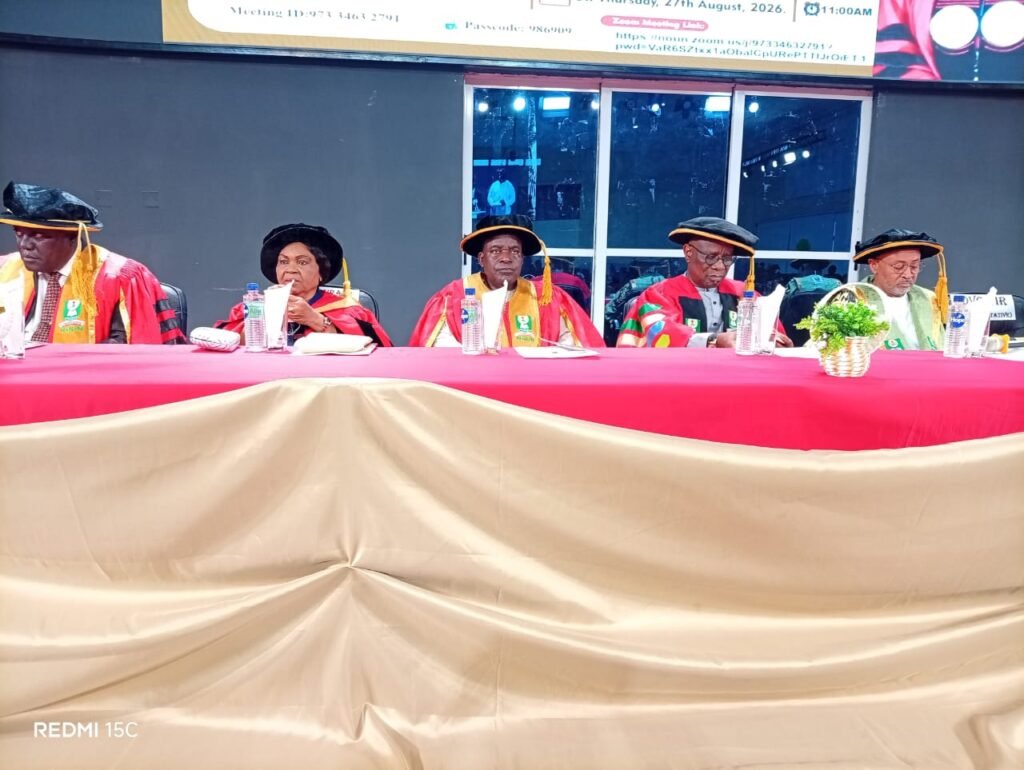
Onwubere made the call at the 42nd inaugural lecture of NOUN on Thursday in Abuja, where she drew on her experiences in nursing, education, broadcasting, communication and law to examine healthcare journalism.
The lecture, titled “Bridging the Airwaves and Lifeline: Broadcasting, Healthcare Journalism and the Struggle for Maternal and Child Health Rights in Nigeria,” explored journalism as an essential tool for promoting maternal and child healthcare in the country.
She said responsible broadcasting could help bridge information gaps, challenge harmful cultural practices and enable women to make informed decisions about pregnancy, childbirth and child healthcare.
Onwubere said her early community health experience exposed how cultural beliefs and inadequate information discouraged pregnant women from accessing nutritious foods and professional healthcare services.
According to her, some pregnant women avoided foods such as eggs, snails and vegetables because of traditional beliefs, in spite of their nutritional importance during pregnancy.
She recalled that community interventions, including role-play and health education, were deployed to encourage pregnant women to consume nutritious foods and challenge deeply rooted dietary restrictions.
The professor also identified preference for traditional birth attendants, poor access to healthcare facilities, weak infrastructure, poverty and information gaps as major maternal health challenges.
She said women and children were entitled to skilled care, emergency services, immunisation, adequate nutrition and dignity, stressing that healthcare communication should emphasise these rights.
Onwubere said many health messages were fragmented, crisis-driven and urban-centred, often presenting healthcare as an obligation rather than informing citizens about their entitlements.
She urged journalists covering healthcare to acquire specialised knowledge to interpret medical data, understand health systems and report human experiences with accuracy, empathy and context.
According to her, journalists must move beyond routine reporting and use evidence, lived experiences and rights-based communication to hold relevant authorities accountable for healthcare failures.
“Nigeria’s maternal and child health challenges are not only healthcare system failures but also communication failures which responsible broadcasting can conveniently salvage.
“Through broadcasting, through jingles in radio, through dramas on television, through storytelling and live experiences, we can reach these audiences.
“If these factors are achieved, then broadcasting can effectively help families to make informed decisions about healthcare and other general life processes that will save lives rather than cost lives,” she said.
The scholar, however, warned that digital convergence had increased exposure to misinformation, recalling how false health information during the Ebola outbreak demonstrated the potentially dangerous consequences of misinformation.
She therefore called for evidence-based reporting, community engagement and credible health information across traditional and digital platforms to help families make informed decisions and protect lives.
Onwubere said broadcasting could become a powerful instrument for improving maternal and child health outcomes when journalists consistently connected information, citizens’ rights and government accountability.
She maintained that Nigeria’s maternal and child health problems required stronger collaboration among health professionals, journalists, broadcasters and communities to ensure that life-saving information reached vulnerable populations.
Earlier, the Vice-Chancellor of NOUN, Prof. Uduma Uduma, represented by the Deputy Vice-Chancellor, Prof. Shehu Adamu, described the event as significant to the institution and national development.
Uduma noted that inaugural lectures occupied a special place in the university’s academic tradition and intellectual heritage.
He said the lecture by Onwubere would stimulate interdisciplinary discourse and demonstrate the relevance of scholarly research in addressing national development challenges. (NAN)(www.nannews.ng
Edited by Funmilayo Adeyemi



Comments