








By Halima Muhammad
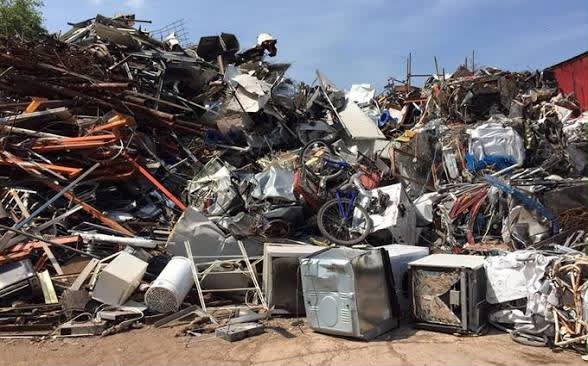
A steel expert, Anthony Madagua, says the shortage of scrap remains a major challenge to sustainable steel production and the manufacture of affordable, quality steel products.
Madagua said this in an interview with the News Agency of Nigeria (NAN) on Wednesday in Abuja.
He described scrap as a key raw material for steel production.
According to him, Nigeria’s steel industry is yet to align with acceptable steel production practices and continued to face several challenges, notably scrap availability, logistics and energy supply.
“Scrap availability continues to be a major challenge to sustainable steel production and affordable quality steel products.
“Scrap aggregation should be regulated to some extent. But, most importantly, scrap generation strategies already being discussed by the Ministry of Steel Development should be embarked upon and accelerated,” he said.
He said that a vibrant steel industry remained critical to the industrialisation of any nation, adding that no country has achieved sustainable industrialisation without one.
He expressed concern that in spite the abundant iron ore and other raw materials Nigeria possessed, the country still depended on import of steel products worth four billion dollars annually.
He urged the Nigerian government to strengthen partnerships with ECOWAS and other African countries to maximise opportunities under African Continent Free Trade Area (AfCFA) to boost its steel industry.
He also recommended collaboration with Guinea to process its high-grade iron ore into finished steel products for African markets under the AfCFA agreement.
“The Simandou Iron Ore mine in Guinea is one of the largest high grade iron ore and presently exports to China, which now brings it back to Africa, including Nigeria as finished products.
“Such partnerships will reduce dependence on imports and improve Africa’s competitiveness in steel production,” Madagua said.
He said that poor infrastructure, unreliable power supply and quality control issues were also affecting the development of the steel sector.
He called for the upgrade of existing steel technologies, expansion of gas-powered electricity for industrial clusters and improved rail infrastructure for efficient transportation of raw materials.
He also called for the resuscitation and operationalisation of the integrated steel plants at Ajaokuta and Aladja steel complexes, including the completion of the Ajaokuta project.
He described them as the foundation of Nigeria’s steel industry.
The expert said that resuscitating the inland rolling mills at Jos, Katsina and Osogbo could provide a steady supply of raw materials such as wire coils for MSMEs involved in steel processing.
“Most of the producers of wire coils produce for their sister companies, thereby making this critical raw material for the downstream MSMEs uncompetitive for further processing into nails, wire gauze and binding wire,” he said. NAN(www.nannews.com)
Edited by Kadiri Abdulrahman