


By Sunday John
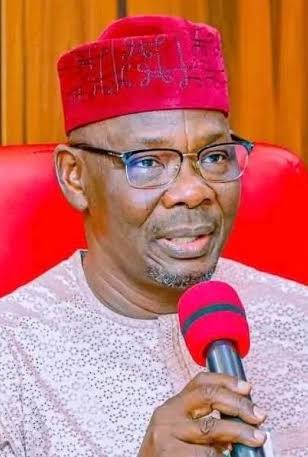
Gov. Abdullahi Sule of Nasarawa has inaugurated the State Council on Agriculture, with a charge to ensure effective implementation of the state’s agriculture policy and investment plan to boost food production and strengthen food security.
Sule, while inaugurating the council on Tuesday in Lafia, also launched the Nasarawa State Agriculture and Food System Policy and the State Agriculture Investment Plan (SAIP), alongside the unveiling of the State Agriculture Intelligence Dashboard.
He said the initiatives were designed to institutionalise ongoing reforms in the agricultural sector and ensure their sustainability beyond his administration.
The governor said implementation remained the most critical aspect of the policies, noting that governments often formulated policies and collected data without adequately translating them into concrete results.
“We have always come up with a lot of policies, a lot of dashboards and collected data. But in most cases, implementation has been a challenge.
“So now that we are putting this together, indeed, implementation is key,” he said.
Sule said the state had demonstrated its commitment to implementation through its partnership with the Alliance for Green Revolution in Africa (AGRA), which provided US 370,000 dollars to support the agricultural transformation initiative.
He said the funds were not merely received but judiciously deployed to deliver the frameworks being unveiled.
The governor stressed the need to institutionalise the reforms, saying the sustainability of the initiatives was more important beyond his tenure as governor.
“For us, we are actually in transition. In the next one year, I will not be here standing as a governor to be doing this. But somebody else will do that.
“The implementation of that and the commitment that we have put in to do that is what is more important than anything else,” he said.
Representing the Minister of Agriculture and Food Security, Sen. Abubakar Kyari, Mr Olawunmi Ayodele, a director in the ministry, said Nasarawa had more than 2.4 million hectares of arable land, with agriculture contributing over 40 per cent of the state’s Gross State Product.
He said more than 70 per cent of the state’s population was engaged in agriculture, but only about two to three per cent of cultivated land was irrigated.
Kyari also said post-harvest losses for perishable agricultural commodities were estimated at between 30 and 50 per cent, while fewer than one in 10 smallholder farmers had access to formal agricultural grants.
He said the figures highlighted the need to close the execution gap through the newly inaugurated council and other agricultural transformation instruments.
According to him, the council will provide the platform for coordination and oversight, while the Agriculture and Food System Policy will set the direction and the SAIP will provide the investment framework.
The minister said the SAIP required an estimated N808.3 billion between 2026 and 2030 across 14 investment components.
“States’ financial allocation and development partner support account for roughly one-third of that requirement, with planned sector and community contributions and federal programmes expected to provide the balance,” he said.
Kyari said that the next step was to translate the investment requirement into an investable pipeline with clear project owners, timelines, financing structures and measurable outcomes.
He said the Agriculture Intelligence Dashboard would consolidate data on production, markets, assets, nutrition and welfare from different institutions to support planning, budgeting and performance monitoring.
He added that every indicator on the dashboard should have an assigned owner and reporting cycle to ensure that it became a management tool rather than merely a display platform.
Kyari said the state agriculture policy was aligned with the Federal Government’s agricultural priorities and would support the translation of national policies and programmes into concrete production activities at state and local government levels.
He said the Federal Ministry of Agriculture and Food Security would continue to work with Nasarawa to align national programmes and financing opportunities and address implementation bottlenecks.
Dr Rufus Idris, Country Director, AGRA, said the launch of the policy and investment plan provided the foundation for attracting and mobilising additional resources into Nasarawa’s agricultural sector.
Idris said AGRA would continue to support the implementation of the policy and investment plan and help the state attract investments required to transform its food system.
Mr Ibrahim Abdullahi, Managing Director, Nasarawa Investment and Development Agency (NASIDA), said the council would institutionalise agricultural reforms and help sustain the gains recorded in the sector.
Abdullahi said the objective was to move the state from being primarily a producer of agricultural raw materials to a hub for agricultural transformation, agribusiness and manufacturing.
He said the SAIP would support the continued attraction of investments into agriculture and strengthen existing centres of excellence in the state.
Mr Kenneth Ode, Project Manager, AGRANigeria State Capability for Inclusive Agricultural Transformation Project, said the initiative had strengthened institutional capacity in the state and addressed gaps that previously hindered agricultural transformation.
Ode said 137 officers had been trained, US 3.4 million dollars mobilised, nine policy dialogues convened and five civil society organisations supported under the initiative.
He said the Council on Agriculture would serve as the state’s supreme agricultural policy organ, coordinating relevant commissioners, local governments, ministries, departments and agencies, as well as other stakeholders.
According to him, the council will advise on budgets and promote public-private partnerships in agro-processing, technology adoption, irrigation and value-chain development, while the SAIP will drive productivity, climate resilience, sustainable land management and stronger market linkages.
Earlier, Mr Mohammed Eimoga, the Commissioner for Agriculture and Food Security, reaffirmed the ministry’s commitment to effective implementation of the frameworks to increase productivity, improve food security, attract investment and create employment opportunities in the state.
Eimoga commended Sule for providing the political will for the initiatives and AGRA for its grant and technical support, saying the frameworks provided the institutional, policy, investment and technological foundations for agricultural transformation in Nasarawa. (NAN)
Edited by Isaac Ukpoju
Comments