


By Abdullahi Mohammed, News Agency of Nigeria (NAN)
By most accounts, the health sector in Borno has witnessed unprecedented transformation in the last seven years.
Stakeholders attribute this feat to the resilience and commitment of Gov. Babagana Zulum in addressing healthcare infrastructure deficits, workforce shortages, ageing facilities, and poor services.
For Zulum’s administration, it is not just about catching up with international best practices, but about demonstrating clear patriotism. For the people of Borno, it is about having a caring leader.
Residents, experts and stakeholders say the transformation is evident and should be sustained.
Alhaji Musa Gubio, a resident of Maiduguri, said public hospitals remained the primary source of medical care for low-income families and must be sustained by the government.
“Government hospitals are very important to ordinary people.
“More resources should be provided to improve services and reduce the burden on patients,” he said.
In spite of under-funding, medical brain drain, and severe workforce shortages, analysts say a number of health facilities in some states have recently begun receiving the transformation they deserve, even as infrastructural standards remain affected.
Dr Amina Kolo, a public health specialist in Maiduguri, said the health indicator had significantly improved since the peak of insurgency following a dramatic commitment towards rapid expansion of health facilities and increasing manpower in the sector.
“Government and development partners have contributed significantly to strengthening healthcare services, particularly in maternal health, immunisation and disease control programmes,” she said.
However, the Nigerian Association of Resident Doctors recently expressed concern over the country’s poor doctor-to-patient ratio of 1:9,000, compared to 3.6 per 1,000 in the U.S. and the UK, and 4.5 per 1,000 in Germany.
Weighing in on this worrying ratio, Dr Abubakar Mustapha, a physician at one of the facilities in Borno, said doctors were often required to attend to large numbers of patients daily.
“The patient-to-doctor ratio remains high.
“We need more healthcare workers, including doctors, nurses, pharmacists, and laboratory scientists to meet the growing demands,” he said.
According to him, emergency units and outpatient departments are among the most affected sections due to the volume of cases being handled daily.
Stakeholders say that to address the aforementioned, Zulum introduced a welfare package to incentivise young doctors, nurses, and midwives to take charge of general and specialist hospitals in rural communities, where they are needed most.
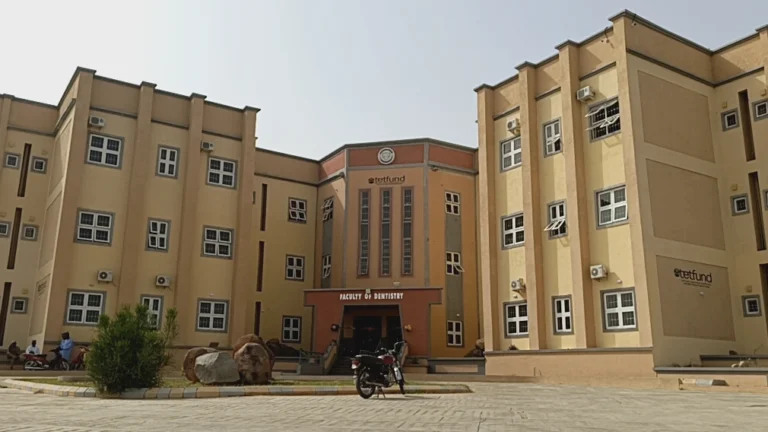
The governor spoke recently while inaugurating the state-of-the-art Gwoza College of Nursing and Midwifery in Southern Borno, as well as new dental and eye hospitals and another College of Nursing and Midwifery in Monguno, in order to rapidly boost manpower development in the sector.
“For years, we have diagnosed a critical ailment in our healthcare system; a severe deficit of these skilled hands could not allow us to move forward.
“We have relied on a precarious model of importing professionals from other regions, a temporary fix that is neither sustainable nor dignified.
“It is a model that leaves us perpetually vulnerable. Today, we move from diagnosis to treatment; we move from identifying the problem to implementing a permanent cure.
“What matters is not only the construction of facilities, but human resources for health are a key ingredient that will ensure the provision of quality healthcare in Borno.
“Therefore, this nursing college will train our younger ones in nursing, midwifery, and allied health courses so that they can fill the gap in the manpower not only in this region but also in other parts of the state.’’
According to Zulum, the eye hospital, equipped with modern diagnostic and surgical tools, will provide sight-saving treatments and surgeries locally, eliminating the incidence of eye conditions like cataracts, glaucoma and trachoma, which can lead to preventable blindness if left untreated.
“The dental hospital will offer services from basic check-ups and fillings to more complex procedures, addressing a long-neglected aspect of healthcare in the area,” the governor said.
Beyond that, the Zulum administration had established a state health insurance scheme tagged Borno State Contributory Healthcare Management Agency (BOSCHMA) to complement the services of the existing healthcare facilities in different communities.
The agency, from inception to date, has enrolled more than 97,000 beneficiaries under the Basic Healthcare Provision Fund (BHCPF).
Dr Abba Kaza, the BOSCHMA’s Executive Secretary, said that the agency had disbursed more than N1.2 billion to primary healthcare facilities under the scheme in the last three years across the state.
In 2026 Zulum approved a special fund for the training of 56 medical doctors undergoing residency and also approved the recruitment of 473 medical personnel in the state in order to strengthen the healthcare service delivery.
Observers say that in spite of workforce shortages in the health sector, Borno is doing relatively well given the Nigerian context, with a doctor-to-patient ratio of 1 to 7,983 when compared with some states in the North.
Prof. Abubakar Kullima, the Chief Medical Director of the Borno State Hospitals Management Board, said the recruitment of the 473 medical personnel was aimed at improving access to quality healthcare services and increasing commitment toward addressing workforce shortages in hospitals and primary healthcare centres.
He said the approved recruitment covered a broad range of health professionals, including medical doctors, nurses, pharmacists, laboratory scientists, Community Health Extension Workers (CHEWs) and other critical health workers.
Some healthcare workers and patients said the ongoing transformation was yielding results in maternal and child healthcare services in most communities.
Fatima Goni, a nursing mother, said she received adequate care during childbirth.
“The nurses were supportive throughout the process and attended to me professionally,” she said.
Available data indicates that in 2024 alone, Zulum sponsored 103 students to the People’s Republic of China for medicine and engineering studies.
In addition, no fewer than 150 doctors in the state, including those working at federal establishments for residency training, received support.
The indigenes among them received N2 million, and non-indigenes received N1 million each to ensure that Borno residents have more medical doctors in their facilities.
For Dr Ali Zubairu, a Senior Resident in Obstetrics and Gynaecology, said the strategy adopted by the governor had increased the number of resident doctors in the state significantly from six in 2019 to about 56 in 2026.
Lawan Wakilbe, the state Commissioner for Education, Science, Technology and Innovation, said the Zulum administration had invested more than N11 billion since 2019 on scholarship with N1.28 billion allocated specifically for medical training.
Recently, the governor announced his plans to complete the multi-billion-naira, 400-bed capacity Kashim Ibrahim University Teaching Hospital by August.
Zulum also promised to deliver a befitting state-owned 300-bed Orthopaedic Hospital and an additional General Hospital in Kaleri before December.
Providing further insights, the state Commissioner for Health and Human Resources, Prof. Baba Gana, insisted that the administration would consistently prioritise high budgetary provision for the health sector to address most of the basic challenges before the end of its tenure.
Although not all health objectives have been achieved, analysts believe Governor Zulum’s creative initiatives are fundamentally changing how medical services are delivered, inspiring personnel and driving greater professionalism in the field.(NANFeatures)
Edited by Chijioke Okoronkwo

Comments