


By Felicia Imohimi
The Federal Government has endorsed the International Fund for Agricultural Development (IFAD)-supported Value Chain Development Programme (VCDP) as a model for rural transformation and economic diversification.
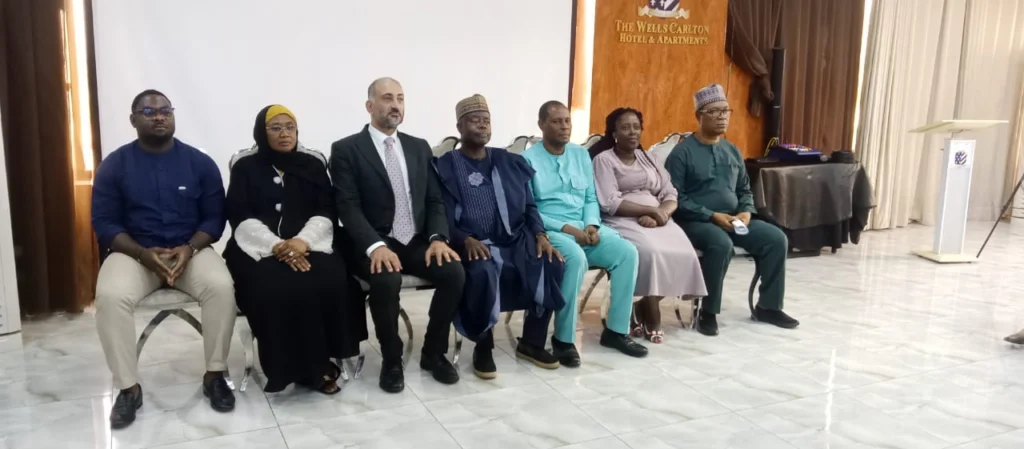
Dr Emmanuel Akogun, Director, Federal Department of Development Partners Projects (FD-DPP), Federal Ministry of Agriculture and Food Security, said this at the inception workshop of the 13th Joint Federal Government/IFAD Supervision Mission of the VCDP on Tuesday in Abuja.
Akogun said the programme, implemented in nine states, focused on rice and cassava value chains, covering production, processing and marketing.
He said the commodities were central to Nigeria’s food security agenda, adding that strengthening the entire value chain could improve farmers’ incomes, reduce post-harvest losses and stimulate local industries.
“The VCDP speaks directly to the Federal Government’s determination to enhance the agricultural value chain of our country: to raise productivity, add value to what our farmers produce, expand market access, reduce reliance on food imports, and create jobs for our rural youth and women.
“The programme is not merely a project; it is a practical model of how agriculture can drive rural transformation and economic diversification.
“I have seen first-hand the impact of this project. In the communities where the programme operates, I have met farmers whose yields have improved, processors whose enterprises have expanded, and households whose incomes and food security have been transformed.
“Farmers’ organisations have become stronger, with women and youth actively participating and leading along the value chain, while producers are now linked to reliable markets,” he said.
Akogun reaffirmed the ministry’s commitment to sustaining and consolidating the programme’s gains across participating states.
He said the ministry would continue to work with the National Programme Management Unit to ensure that VCDP contributed to national goals on food security, economic diversification and rural transformation.
He added that continued partnership with IFAD would help extend the programme’s benefits to more communities.
Also, Mr Stanley George, Director, International and Economic Relations Department, Federal Ministry of Finance, called for faster project disbursements and timely payment of counterpart funds by state governments to maximise the programme’s impact.
George, represented by Mr Andrew Arebun, said the supervision mission marked another milestone in efforts to transform smallholder agriculture, improve food security and accelerate rural economic growth.
He said the programme had recorded progress in market access, productivity of key staples such as rice and cassava, and the livelihoods of women and young people.
However, he identified delays in fund disbursement, counterpart funding and the development of climate-resilient infrastructure as areas requiring urgent attention.
“The project performance is the primary justification for how subsequent phases are structured, funded and scaled.
“We are not just evaluating past figures; we are looking for the proven capacity to absorb resources efficiently and deliver measurable value to the Nigerian taxpayer and our international partners,” he said.
George outlined four priorities for the mission and the programme’s long-term sustainability.
They included accelerating disbursement and implementation by reducing bureaucratic bottlenecks, and working with state governments to ensure timely payment of counterpart funds.
Others were strengthening private-sector participation through commercially viable, private-sector-driven off-taker arrangements, and improving data collection, monitoring and evaluation to provide verifiable evidence of the programme’s impact.
He said timely implementation was essential to protecting rural livelihoods, while long-term sustainability depended on aligning production with market demand. (NAN) www.nannews.ng
FUA/TAK
Edited by Tosin Kolade


Comments