


By Ginika Okoye
An Economist with the Nasarawa State University, Keffi (NSUK) says reviving the power sector and ensuring value addition are factors that can contribute to harnessing the country’s economic potentials.
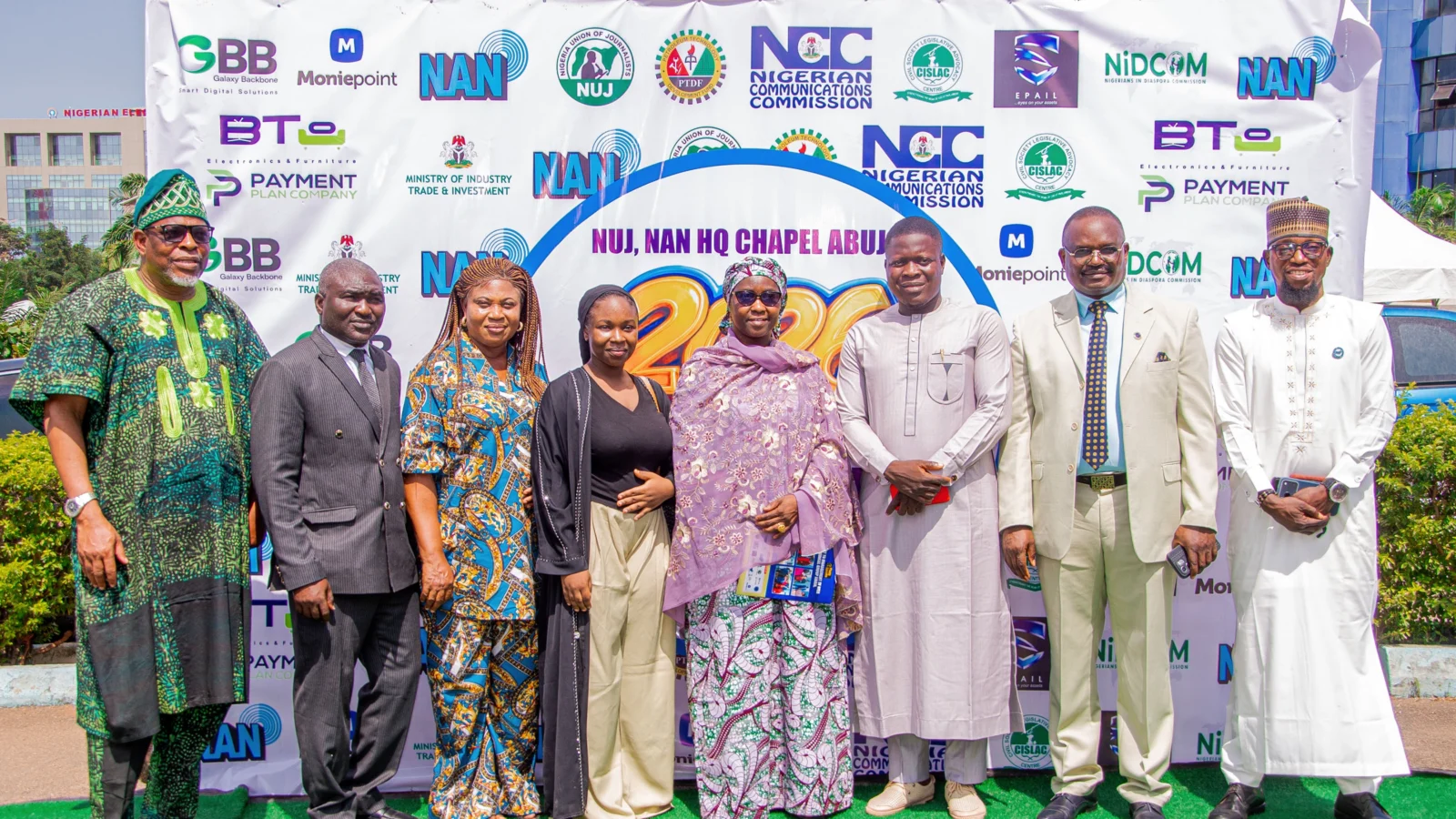
Dr Abdul Ibrahim, the Head of Economic Department of NSUK, said this at the Nigeria Union of Journalist (NUJ), News Agency of Nigeria (NAN), Abuja Chapel, 2026 Press Week on Wednesday.
Ibrahim said that government must decentralise power and prioritise stable energy, as no economy would progress in darkness.
He regretted that raw materials like lithium and sesame were being exported and their finished products imported back into the country.
The economist suggested that establishing vibrant processing zones would enable the country to harness its potentials.
He said the media must champion skills acquisitions revolution of the youths for effective development.
Ibrahim also noted that government could leverage systems like the National Identification Number (NIN) and Bank Verification Number (BVN) to finance the informal sector.
The economist added that providing low interest credit and support for Small and Medium-Enterprises (SMEs) would help in the development of the economy.
He categorised the country’s economic potential into four main pillars including the human, green, brown and the blue pillars.
According to him, Nigeria possesses over 70 million hectares of land but only 40 per cent of that arable land is cultivated.
”While the agricultural sector contributes 24 to 28 per cent to Gross Domestic Product (GDP) and employs over 35 per cent of the workforce, government spending on food importation (rice, sesame, and fish) exceeded 10 billion dollars as of 2025.
”Nigeria holds about 44 solid minerals across its 36 states, with an estimated in-ground value of 700 billion dollars.
”However, only 1.8 per cent of these mineral deposits contribute to the GDP compared to 6.2 per cent in South Africa and 30–38 per cent in Botswana.
”The creative and film industry accounts for about 58 per cent of the GDP, yet this sector remains largely undertapped and underfinanced.”
Ibrahim highlighted that exportation of critical raw materials, productivity crisis, trust deficit and policy inconsistency had hampered the country’s prosperity.
He urged the media to always disseminate credible news adding that no country would prosper without reliable information.
NAN reports that the title of the lecture is ”Harnessing Nigeria’s Economic Potentials for Greater Prosperity”.(NAN)
Edited by Deborah Coker

Comments