



By Abujah Racheal, News Agency of Nigeria (NAN)
Malaria elimination in West Africa is no longer hindered by a lack of solutions, but by execution.
Validated strategies and tools exist; the focus, stakeholders say, must now be on immediate, widespread deployment.
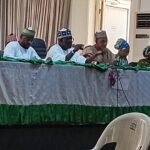
At the 27th Ordinary Session of the Assembly of Health Ministers of the Economic Community of West African States (ECOWAS), held in Freetown, the malaria question took centre stage.
Behind the formal speeches, technical presentations, and policy frameworks, one message echoed: West Africa does not lack plans; it struggles to consistently implement them.
Tales from the grassroots expose the menace of malaria and the urgency of evolving from promises to action.
In a small, dust-swept village in Kebbi State, 27-year-old Malama Maimuna Salisu watches her two-year-old son, Shehu, shiver under a thin blanket, his body burning with malaria fever.
In spite of repeated campaigns and the distribution of insecticide-treated nets, the realities of daily life often get in the way.
The heat makes the nets uncomfortable; the nearest primary healthcare centre is far; transport costs eat into the family’s modest farming income.
For Salisu, malaria is not just a disease, it is a cycle.
Her son is one of the nearly 110 million clinically diagnosed malaria cases recorded annually in Nigeria.
Records indicate that Nigeria carries the heaviest malaria burden globally, accounting for about a quarter of all cases and nearly a third of deaths worldwide.
In West Africa alone, Nigeria represents more than half of reported cases.
Malaria is responsible for more than 36 per cent of under-five mortality in Nigeria, with more than 300,000 deaths recorded each year.
For families like Salisu’s, repeated infections drain household income, reduce productivity, and deepen poverty.
At a nearby primary healthcare centre, community health worker Mrs Ruth Bala sees the consequences every day.
“We know the preventive methods, but behavioural change is slow, and resources are limited.
“We see too many children like Shehu when it could have been prevented,” Bala said.
Her experience reflects a broader reality across rural communities, where awareness exists, but access, affordability, and social factors continue to undermine progress.
With nearly 97 per cent of Nigerians at risk and a child dying every five minutes from malaria, the scale of the challenge remains staggering.
It is against this backdrop that regional leaders gathered in Freetown recently.
Speaking on behalf of the President of Sierra Leone at the Opening session, the Chief Minister, Dr David Sengeh, called for a shift from commitments to measurable results, highlighting malaria and maternal mortality as urgent priorities.
For the Sierra Leone’s Minister of Health, Dr Austin Demby, the message was clear: “We have all we need to eradicate malaria; there is no reason why we should not; the time to end it is now.”
At the centre of discussions was a renewed push for coordinated regional action.
The West African Health Organisation (WAHO), led by Dr Melchior Aissi, Director-General of WAHO, emphasised that malaria could not be tackled in isolation.
The Regional Malaria Elimination Framework, presented by Dr Virgil Lokossou, Director of Healthcare Services at the West African Health Organisation (WAHO), sets ambitious targets, including a 90 per cent reduction in malaria incidence and elimination in at least three countries by 2035.
Complementing this is the Freetown Charter, introduced by Sattie Kenneth, which promotes real-time data systems and stronger accountability in health governance.
Back in Nigeria, new interventions are beginning to emerge.
The rollout of the R21 malaria vaccine in states like Kebbi and Bayelsa offers a glimmer of hope, particularly for children like Shehu.
Yet, for many families, access remains uneven, and the gap between innovation and impact persists.
One of the most pressing concerns raised during the assembly was sustainability.
Mr Aruna Fallah, Acting Director for Administration and Finance, WAHO, pointed to the risks of continued reliance on donor funding.
At the same time, the technical and financial partners, Mr Dionke Fofana, Lead of the WAHO partner, called for stronger domestic investment and institutional stability.
Without it, experts warn, progress may stall.
Increasingly, experts are recognising that malaria control is not just technical, it is deeply social.
Dr Monique Murindahabi, senior public health expert specialising in malaria control and elimination in Africa, highlighted the need to integrate community realities into interventions, from engaging traditional leaders to addressing gender dynamics and behavioural barriers.
Experts say, ultimately, the success of any intervention depends on whether it is accepted and used.
As Dr Alie Wurie, Director of Primary Health Care at the Ministry of Health and Sanitation (MOHS) in Sierra Leone, noted, cross-border surveillance and coordinated responses are essential in tackling malaria and emerging resistance.
As the meeting concluded, commitments were renewed and frameworks adopted.
But the real work lies ahead.
As Prof. Charles Senessie, Deputy Minister of Health, Sierra Leone, observed, the region had an opportunity to align ambition with action.
For Salisu in Kebbi, success will not be measured by declarations in Freetown.
It will be measured by whether her son survives, and thrives.
There is a consensus that ending malaria in West Africa will require more than plans; it will demand consistent action, sustained investment, and health systems that reach even the most remote communities.
Until that happens, analysts argue that the distance between policy and people will remain, and children like Shehu will continue to pay the price. (NANFeatures)
Edited by Chijioke Okoronkwo