


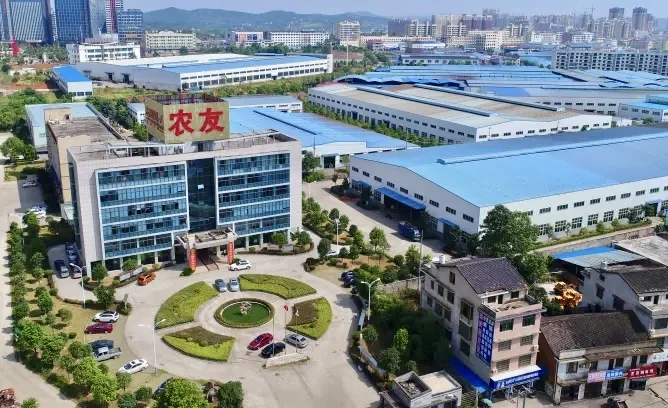
The Nongyou Agricultural Machinery Group Co, Ltd., located in Hunan Province, with over 30 years agric equipment production experience, has a 100,000 square meters standard workshop, produces various equipment like grain dryers, rotary tillers, combine harvesters, rice milling machines for export.
News Analysis by Mark Longyen, News Agency of Nigeria (NAN)
From carrying loads in manufacturing factories to assembling cars and even playing board games with children, humanoid robots are becoming part of China’s changing industrial landscape.
Across factories, artificial intelligence (AI), automation and other technology-driven innovations are changing production processes, raising questions about the implications of technological advancement for employment, productivity and economic development.
China’s transformation from a relatively poor country five decades ago into the world’s second-largest economy provides an opportunity to examine how industrialisation, manufacturing, technological investment and economic diversification can influence national development.
For Africa, which continues to grapple with unemployment, infrastructure deficits, low productivity and dependence on imported manufactured goods, China’s industrial experience offers lessons worth examining.
However, the challenge for African countries is not to reproduce China’s industrial model wholesale, but to identify relevant approaches and adapt them to their economic circumstances, institutional capacities and development priorities.
Recent engagements with manufacturing enterprises in China’s Hunan Province provide insights into how specialised manufacturing, research, automation and international economic cooperation are being applied in different industrial sectors.
Experiences from Shuangfeng, Loudi and Hengyang, in particular, illustrate different approaches to manufacturing development, ranging from agricultural machinery and advanced materials to energy storage and environmental management.
Shuangfeng County has developed a specialised agricultural machinery industry, with a focus on rice-milling equipment and machinery designed for hilly and mountainous agricultural communities.
The industry’s development dates back to 1952 and has evolved over seven decades into a manufacturing cluster serving different agricultural needs.
The county now hosts 85 agricultural machinery manufacturers and component suppliers, employing more than 30,000 people across its industrial ecosystem.
Its industrial base includes 37 national high-technology enterprises, three nationally recognised specialised innovative companies and 23 provincial-level specialised enterprises.
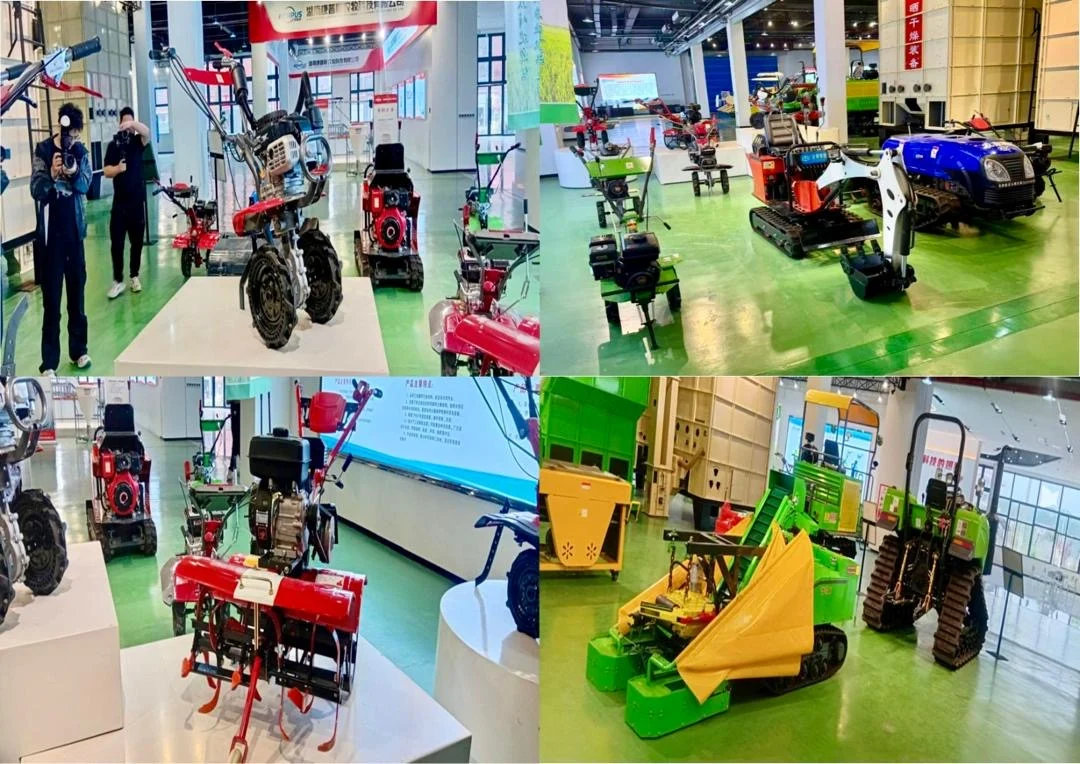
Products manufactured in the county include rice mills, grain dryers, rotary tillers, harvesting equipment, livestock machinery and agricultural processing technologies.
Its range of more than 70 product categories and 300 models illustrates how manufacturing specialisation can support the development of industrial clusters around specific products and market demands.
The introduction of Beidou-enabled unmanned tractors and specialised oil-tea harvesting equipment also reflects the application of technology to agricultural production.
For African economies, where agriculture remains a major source of employment and livelihood, such equipment could offer opportunities to improve productivity, reduce post-harvest losses and strengthen food security.
However, the suitability of imported machinery will depend on its affordability, accessibility, maintenance requirements and compatibility with local farming systems.
Mechanisation adapted to fragmented farmland, varying terrain and smallholder farming could help address some of the continent’s agricultural constraints.
More importantly, Shuangfeng’s experience suggests that industrial development does not necessarily have to begin with large automobile or aircraft factories.
Specialised machinery production, component manufacturing and supporting services could provide alternative entry points for countries seeking to expand their manufacturing bases.
Beyond its domestic manufacturing activities, Shuangfeng’s engagement with African markets illustrates how Chinese manufacturers are exploring opportunities through equipment exports, investment and commercial partnerships.
The county exported agricultural machinery worth approximately 15 million yuan (2.26 million dollars) in 2024, increasing to more than 40 million yuan (6.02 million dollars) in 2025.
According to official information provided, projected exports for 2026 stand between 60 million yuan (9.02 million dollars) and 80 million yuan (12.03 million dollars).
Its equipment has been exported to more than 10 African countries, including Nigeria, Kenya, Tanzania and Rwanda.
In 2026, an official delegation led by the county magistrate visited Nigeria and Tanzania to explore markets and strengthen commercial relationships.
Preparations are also underway for sister-city cooperation with Onitsha North in Anambra State, potentially expanding institutional and business exchanges.
An agricultural machinery assembly plant has also been completed in Nigeria, while an exhibition and service centre operates in Tanzania.
These developments indicate a move beyond the export of finished products towards establishing local commercial and technical support arrangements.
Such structures could reduce transportation costs, improve equipment maintenance and create opportunities for skills development and employment.
Nevertheless, the extent of these benefits will depend on the level of local participation, the availability of technical expertise and whether assembly activities eventually support broader domestic manufacturing.
For African countries, therefore, technology partnerships should be assessed not only by the volume of imported equipment but also by their contribution to local assembly, training, spare-parts production, maintenance and technical capacity.
One company involved in this approach is Hunan Nongyou Machinery Group, which specialises in agricultural machinery and equipment.
Established in 1995 in Shuangfeng County, the company manufactures machinery for hilly and mountainous agriculture, grain dryers, harvesters, rotary tillers and oil-tea fruit harvesting equipment.
Its 5H series batch-circulating grain dryers have received national manufacturing single-champion recognition, according to company information.
The company operates research facilities in Changsha and Shuangfeng, employing 77 full-time research and development personnel.
Its technological portfolio includes 104 authorised invention patents and participation in developing 22 national, industrial and local standards.
Beyond product development, Nongyou has introduced digital manufacturing systems through an industrial internet platform and a 5.5G private industrial network.
According to company officials, automation across its production operations exceeds 90 per cent, with improvements in productivity and manufacturing efficiency.
Following technological upgrades, production capacity increased by 270 per cent, while product acceptance rates rose from 70 per cent to 99 per cent, according to figures provided by the company.
Since 2024, Nongyou has pursued Nigerian operations involving local assembly, technical training and machinery adapted to domestic agricultural requirements.

The company’s Nigerian activities raise a broader question about the role of foreign manufacturers in Africa’s industrial development.
The key issue is whether their investments will extend beyond equipment distribution to include local production, technical training and the development of domestic suppliers.
For African governments, ensuring these outcomes will require clear investment agreements, local-content provisions and mechanisms for monitoring technology transfer.
While Shuangfeng illustrates the development of specialised agricultural machinery, Loudi County provides another perspective through its advanced-materials industry.
At the centre of this development is Hunan Hongwang New Materials Technology Co. Ltd., which produces materials used in different manufacturing and technological applications.
Established in 2021, the company has developed a smart-manufacturing facility producing high-grade silicon steel, with its products exported to more than 40 countries.
According to Deng Weiquan, Deputy General Manager, the company is currently the world’s sole manufacturer of the most complete portfolio of soft-magnetic material products, supplying international markets from its base in central China.
He added that its products serve emerging technological applications, including drones, humanoid robots and other advanced electrical equipment.
“Our non-oriented silicon steel is mainly used in motors, including industrial motors, such as those in home appliances, as well as new energy vehicles. Non-oriented silicon steel is also the foundation of our new energy vehicle segment.
“If we upgrade the grade of our high magnetic induction grain-oriented silicon steel, which is mainly used in power transformers, by one level, we can save the annual power generation of the Three Gorges Dam every year.
“Our new energy non-oriented silicon steel is mainly used in new energy vehicles like BYD, Xiaomi, Geely, with whom we have cooperation, as well as drones, humanoid robots and many other fields,” he said.
Zhou Xianlin, another company official, said that with a workforce of 850, the company’s annual sales stood at 3.5 billion yuan (527 million dollars).
“This year we also signed a long-term investment agreement with the Tanzanian government.
“We are also building related factories in Malawi, Madagascar, and other surrounding countries,” he said.
These developments highlight the role of specialised materials in modern manufacturing, where competitiveness depends not only on assembling finished products but also on producing the industrial inputs and components required by different sectors.
For African countries, this raises questions about their position within global manufacturing value chains and the extent to which local industries can participate in producing materials rather than relying predominantly on imports.
Developing capabilities in metals processing, component manufacturing and industrial inputs could expand domestic production and create additional employment opportunities.
Hongwang’s production model also illustrates the application of digital technologies to manufacturing.
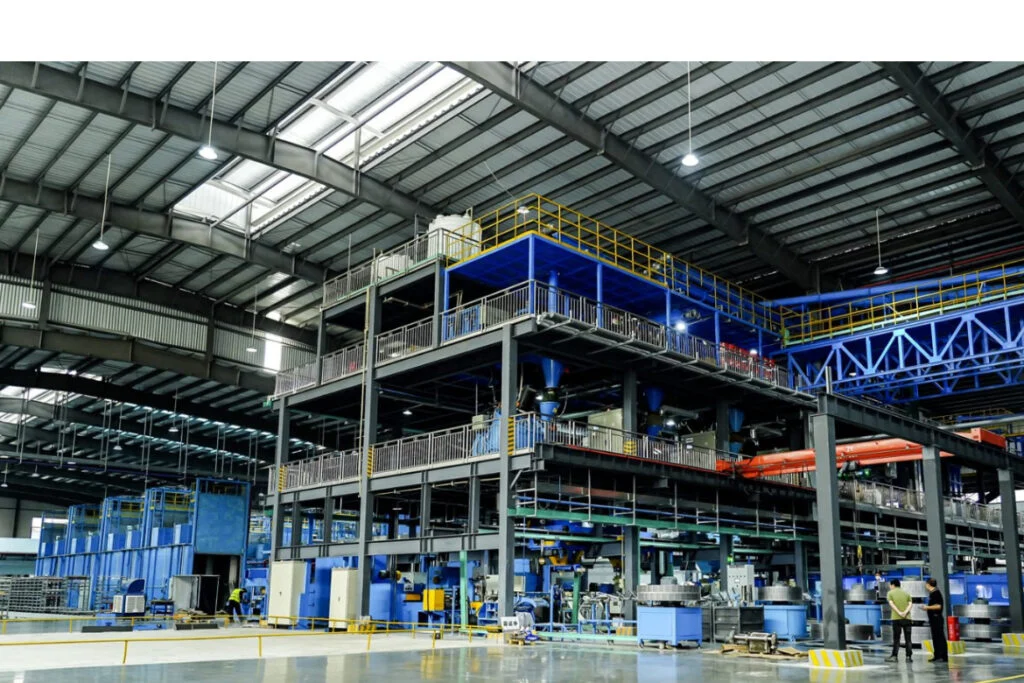
Its systems combine digital research, automated production, intelligent inspection and quality management across manufacturing operations.
The company has established an intelligent monitoring centre to oversee production processes, while its expansion into titanium materials forms part of its broader industrial diversification plans.
It is developing additional facilities targeting high-performance silicon steel, titanium materials, composite products and titanium-alloy structural components.
Beyond its manufacturing activities in China, the company’s proposed African investments raise questions about how mineral resources can be linked to industrial development within the continent.
Under a proposed “Two Countries, Two Parks” cooperation framework, Hongwang is developing an industrial arrangement linking Tanzanian mineral resources with processing activities in Loudi.
The proposed value chain encompasses African mining, primary processing, transportation, Chinese industrial processing and international marketing.
Its Tanzanian operations include activities involving vanadium-titanium magnetite and titanium-related mineral processing.
If implemented with adequate safeguards and local participation, such arrangements could provide opportunities for African countries to expand beyond exporting largely unprocessed mineral resources.
However, the economic benefits will depend on where processing activities take place, the nature of investment agreements, local employment opportunities and the extent of technology transfer.
Foreign investment in mineral extraction does not automatically translate into industrial development, particularly where higher-value processing and manufacturing activities remain outside the resource-producing country.
African governments must therefore negotiate agreements that promote domestic processing, develop local suppliers and retain a greater proportion of the economic value generated from natural resources.
Another area of China’s industrial engagement with Africa is energy storage, which could help address some of the continent’s electricity infrastructure challenges.
Hengyang Ritar Power Supply Co. Ltd., a Hunan-based manufacturer, operates in international battery markets, supplying products for telecommunications, renewable energy, data centres and electricity backup systems.
Christina Liao, the company’s Africa Business Director, said it manufactures lead-acid and lithium-ion batteries for these applications.
She said its products had reached more than 100 countries and territories, supported by international distribution networks and technical service facilities.
Its African markets include Nigeria, South Africa, Ethiopia, Zambia and several other countries.
The company’s batteries are used in solar installations, off-grid electricity systems and backup infrastructure in communities and industrial facilities.
In South Africa and Zambia, it has supplied batteries for energy-storage projects supporting electricity reliability and renewable energy integration.
Such applications are relevant to African economies facing electricity shortages, unreliable power supply and inadequate transmission infrastructure.
Although solar power generation offers opportunities to expand electricity access, generation alone cannot guarantee uninterrupted supply.
Energy-storage systems can store electricity generated during daylight hours for use during evening demand and periods of reduced solar production.
Rwanda provides an example of the investment opportunities emerging from Africa’s renewable energy plans.
Liao said the company had supplied the country through distributors for more than 15 years, identifying unmet electricity needs and expanding solar ambitions as potential markets for battery-storage technologies.
Rwanda’s Vision 2050 envisages electricity generation capacity reaching as much as 5,000 megawatts.
However, Prime Minister Justin Nsengiyumva told Parliament in July 2026 that installed generation capacity stood at 471 megawatts.
The difference between the country’s long-term target and existing capacity indicates the scale of investment required to expand electricity generation.
Rwanda is also pursuing a proposed 200-megawatt floating solar installation on Lake Sake, incorporating an 800-megawatt-hour battery-storage system.
The project, for which the country’s energy authorities opened a procurement process in October 2026, is expected to combine solar generation with storage infrastructure. reg.rw +1
For African governments, the development highlights the need to approach renewable energy as an integrated system involving electricity generation, storage, transmission infrastructure and sustainable financing.
While partnerships with Chinese manufacturers could facilitate access to battery technologies, African countries must also develop domestic technical capabilities for installation, maintenance and, where commercially viable, local production.
Beyond manufacturing capacity and international trade, China’s industrial experience also raises questions about environmental management and resource efficiency.
This is particularly relevant to African countries seeking to expand mining, mineral processing and heavy manufacturing without worsening environmental degradation.
Hunan Zhuye Nonferrous Metals Co. Ltd. provides an example of how a traditional heavy-industry operation is applying technologies aimed at improving resource utilisation and reducing industrial pollution.
Established in 2018, the company operates a zinc-smelting facility with an annual production capacity of 300,000 tonnes.
Its operations include recovering valuable metals such as silver, lead, copper, indium and germanium from industrial processes.
The company has introduced wastewater treatment and recycling systems designed to reduce freshwater consumption and eliminate industrial wastewater discharge.
It also uses technologies to recover valuable materials from industrial waste, with the aim of improving resource utilisation and reducing environmental burdens.
According to company records, its industrial wastewater recycling system has saved approximately 1.1 million tonnes of freshwater since commissioning.
Its energy-efficiency improvements have also reduced annual standard-coal consumption by 18,618 tonnes.
The company reports an annual carbon-emission reduction of approximately 69,610 tonnes following its technological upgrades.
In 2024, it received recognition as a national high-technology enterprise and National Green Factory.
For African countries, where mineral extraction and processing frequently generate environmental challenges, these experiences highlight the need to incorporate cleaner technologies into industrial development.
However, the adoption of such technologies must be accompanied by independent environmental monitoring, regulatory enforcement and transparent reporting of industrial emissions and waste management.
Industrial expansion should not come at the expense of public health, environmental protection or the livelihoods of communities surrounding manufacturing facilities.
Taken together, the industrial experiences across Hunan point to several issues relevant to Africa’s development priorities.
First, expanding manufacturing requires sustained investment in research, technological innovation and specialised production capabilities.
China’s experience illustrates how industries built around specific products and technical expertise can develop manufacturing clusters and participate in international markets.
For African governments, this means creating conditions in which small and medium-sized enterprises can access financing, infrastructure, technology and markets to develop competitive production capabilities.
Second, technical education, vocational training and research partnerships are necessary to develop the workforce required by modern manufacturing industries.
Without skilled engineers, technicians, researchers and production specialists, investments in advanced machinery and automated factories may deliver limited domestic benefits.
Equally important are reliable electricity, transportation networks, digital connectivity and accessible financing.
These remain major considerations for African manufacturers seeking to reduce production costs, improve efficiency and compete with imported products.
Furthermore, foreign investment agreements should include measurable commitments to local employment, sourcing, skills development and technology transfer.
The experiences of Shuangfeng, Loudi and Hengyang illustrate different areas of potential cooperation, ranging from agricultural machinery assembly and advanced-materials production to energy storage and cleaner industrial technologies.
Nevertheless, African governments must examine the terms of such partnerships to ensure that investment benefits extend beyond the immediate commercial interests of foreign companies.
Another consideration is the need to strengthen regional markets to make industrial production commercially viable beyond individual national economies.
The African Continental Free Trade Area (AfCFTA) provides a framework for expanding markets, encouraging investment and developing regional manufacturing value chains.
Through greater economic integration, African countries could develop complementary industrial specialisations rather than competing primarily as exporters of raw materials.
For instance, Nigeria could leverage its agricultural market, energy resources and manufacturing potential to expand machinery production and industrial processing.
Similarly, Tanzania’s mineral resources could support value-added processing, while Rwanda’s renewable energy plans could create demand for electricity-storage solutions.
However, translating these opportunities into industrial capacity will require coordinated policies, effective institutions, consistent regulations and carefully negotiated international partnerships.
Without such measures, the continent risks remaining primarily a destination for imported finished products and a supplier of raw materials, even as foreign manufacturing investments expand.
China’s experience also illustrates that industrial transformation requires sustained investment, policy coordination, infrastructure development and continuous technological upgrading.
For Africa, therefore, the challenge is not simply attracting factories but developing productive economies capable of supporting domestic enterprises, creating skilled employment and participating more actively in international trade.
The continent must also consider how automation and artificial intelligence could affect employment, particularly in economies with large populations of young people seeking work.
While technological adoption could improve productivity and product quality, it could also reduce demand for some categories of routine labour.
Consequently, industrial policies must incorporate skills development, technical education and opportunities for workers to adapt to changing production systems.
Ultimately, the effectiveness of China-Africa industrial cooperation should be assessed not by the number of factories established, machinery imported or investment agreements signed, but by how much economic value African countries create, retain and distribute.
Technology transfer must translate into practical domestic capabilities, while investment in natural resources should generate benefits beyond extraction and exports.
For Africa, China’s industrial experience provides examples worth examining, but the responsibility for determining the direction, terms and outcomes of industrial development rests with African governments, businesses and institutions.
The extent to which the continent can translate international partnerships into domestic manufacturing, employment, technological capacity and regional value chains will remain central to its long-term economic development. (NAN)
Edited by Tosin Kolade


Comments