


By Philomina Attah
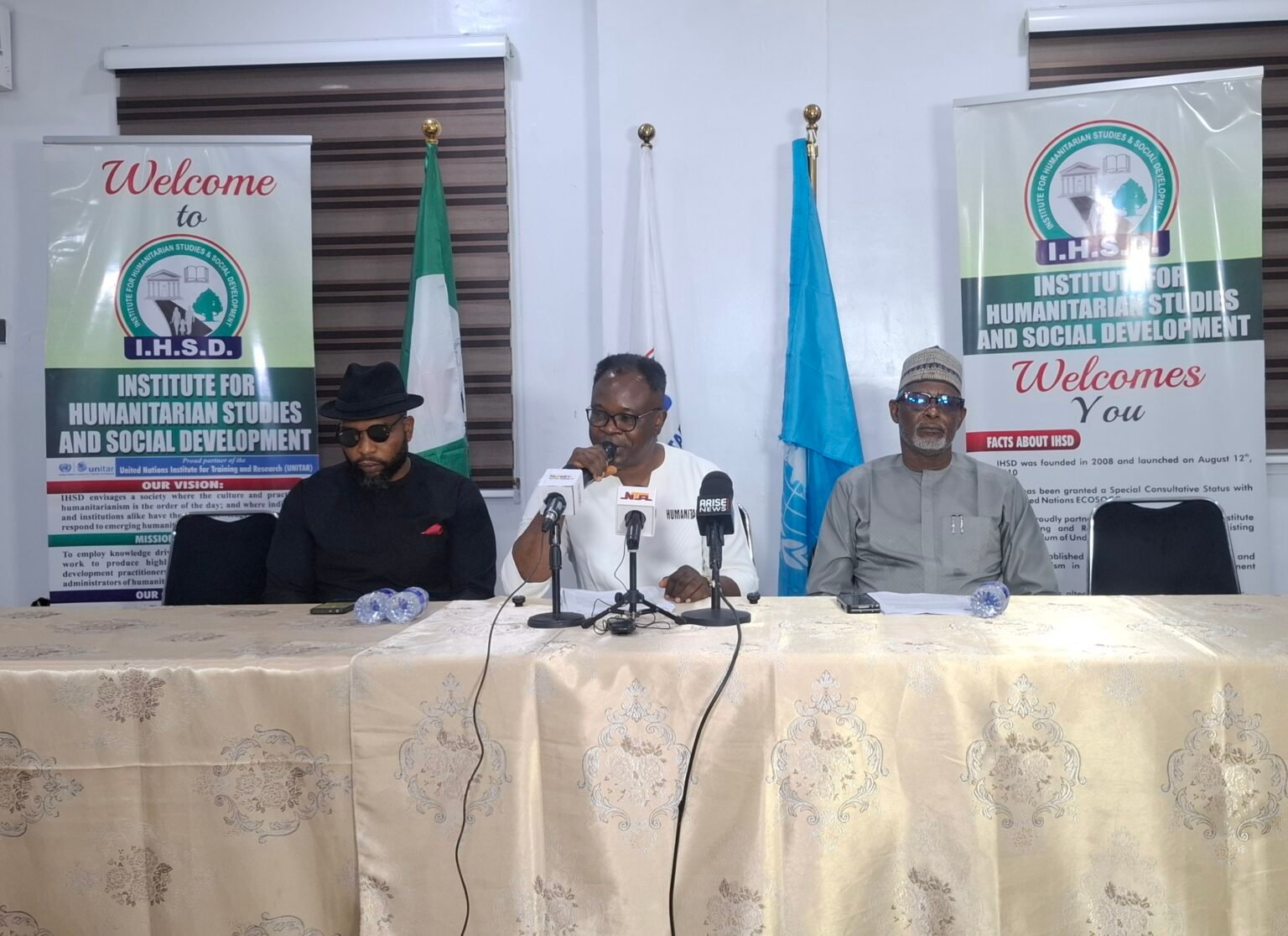
The Registrar/Chief Executive Officer, Institute for Humanitarian Studies and Data (IHSD), Amb. Francis Origa, said 1,932 people were killed in Nigeria’s North-East within three months.
Origa disclosed this in Abuja on Wednesday during a news conference to mark the 2026 World Humanitarian Day (WHD).
The news conference was organised in partnership with the United Nations Institute for Training and Research – International Training Centre for Authorities and Leaders (UNITAR-CIFAL Nigeria).
The theme for World Humanitarian Day 2026 is “The time for consequence is now,” with the global campaign hashtag #ActForHumanity.
The registrar said that the killings had severely hampered ongoing humanitarian operations in the region.
He said that the figures, drawn from recent United Nations reports, underscored the escalating dangers faced by aid workers and vulnerable populations in conflict zones across the country.
He explained that World Humanitarian Day was observed annually on Aug. 19 to honour aid workers who risk or lose their lives in service.
He recalled that the UN General Assembly established the day in 2008 to commemorate the Aug. 19, 2003 truck bombing of the Canal Hotel in Baghdad, Iraq.
The attack, which claimed 22 lives, including the UN’s top envoy in Iraq, Sérgio Vieira de Mello, targeted the UN headquarters.
Origa noted that Nigeria continued to face complex humanitarian challenges ranging from displacement and food insecurity to climate-related emergencies.
He reiterated the institute’s commitment to advancing humanity through professionalism and knowledge building, in line with its motto.
He emphasised that sustainable change required equipping communities and leaders with essential skills rather than relying solely on charity.
He also announced three new initiatives to strengthen humanitarian response and frontline capacity across Nigeria.
Speaking ahead of the institute’s programmes, Origa said the initiatives were designed to promote ethical leadership, inclusivity, and access to justice at the grassroots.
“The first is the 16th Annual Humanitarian Public Lecture scheduled for Saturday, Aug. 22, 2026, in partnership with UNITAR-CIFAL Nigeria.
“The lecture will be held under the theme: ‘Resilience in Action: Strengthening Ethical Leadership, Inclusivity and Humanitarian Values in Nigeria,” he said.
“The event will also feature the presentation of a new book titled Materialism and Humanitarianism, which examines the shift from the pursuit of material wealth to professional, value-driven service.
“The third initiative is the official rollout of the Honorary Humanitarian Ambassadors Network, an expanded programme for training, advocacy, and community development.
“In collaboration with the Legal Aid Council of Nigeria, the network will integrate para-legal services into humanitarian work to ensure access to justice and protect human dignity,” he said.
Origa lamented the growing trend of deliberate attacks on aid workers globally, calling for the strict enforcement of international humanitarian law to end impunity and guarantee the safety of first responders.
He stressed the need to adopt the UN human security framework, which views security holistically by addressing systemic failures in governance, the judiciary, and the legislature, rather than relying strictly on traditional military approaches.
The IHSD boss also called for increased synergy between the government, the private sector, and civil society to achieve the UN Sustainable Development Goals (SDGs) and solve local humanitarian crises through homegrown African solutions.
On the ambassador network, Origa revealed that strict screening mechanisms had been instituted to prevent corruption and ensure only credible individuals participated.
”In the volunteer ambassadors network, credibility and integrity are our watchwords. There is no way we expect to bring in an ex-convict or persons of questionable character,” Origa said.
He advocated that Nigeria adopt a system requiring political aspirants to present a “humanitarian scorecard” evaluating their community contributions before seeking public office.
Origa attributed global donor withdrawal to corruption and weak governance institutions (SDGs 16 and 17), warning that diverted funds directly exacerbate suffering in Internally Displaced Persons (IDP) camps.
Also speaking, Amb. Adamu Ibrahim, President and Chairman of the Governing Council of IHSD, reassured the public that over a decade of continuous capacity building by the institute had ensured proper resource management across Ministries, Departments and Agencies (MDAs), as well as non-governmental organisations.
Ibrahim emphasised that trained humanitarian actors were essential to ensuring that government and donor aid directly benefited occupants of IDP camps and other vulnerable citizens.(NAN)(www.nannews.ng)
Edited by Funmilayo Adeyemi


Comments