


Why rabies still threatens Nigerians
By Hafsah Tilde, News Agency of Nigeria (NAN)
The recent confirmation of rabies cases in Gwagwalada and Kwali Area Councils of the FCT has renewed concerns about the persistent threat posed by the disease.
Although rabies is preventable through vaccination and timely treatment, it remains almost always fatal once symptoms appear.
The development has drawn attention to persistent gaps in rabies prevention, including low dog vaccination coverage, poor public awareness, delayed treatment of bite victims and inadequate disease surveillance.
Following the confirmation, the FCT Administration urged residents to report suspected cases and seek immediate medical attention after exposure to potentially infected animals, while health and veterinary authorities intensified awareness efforts.
Globally, the World Health Organisation (WHO) classifies rabies as a neglected tropical disease that is almost always fatal once clinical symptoms appear.
However, the organisation says the disease is preventable through timely post-exposure treatment and vaccination of dogs, which account for about 99 per cent of human rabies infections.
Albeit available preventive measures, rabies remains a major public health concern worldwide, causing an estimated 59,000 human deaths annually, with most cases occurring in Africa and Asia.
According to WHO, Africa accounts for a significant proportion of global rabies deaths, with children below 15 years among the most affected groups.
Furthermore, the organisation says dog bites remain the leading source of human rabies infections, while timely access to post-exposure prophylaxis can prevent deaths after exposure.
In Nigeria, available studies indicate that thousands of people are bitten by dogs and other animals annually, with many victims requiring post-exposure treatment.
Nevertheless, experts say the actual burden may be higher due to under-reporting, weak surveillance systems and inadequate documentation of cases, especially in rural communities.
Similarly, the Nigeria Centre for Disease Control and Prevention (NCDC) has identified rabies as a priority zoonotic disease requiring stronger coordination between veterinary and public health authorities.
To address these challenges, veterinary experts say Nigeria could greatly reduce human rabies deaths through routine vaccination of dogs, responsible pet ownership, prompt treatment of bite victims and stronger collaboration between animal and human health sectors.
Explaining the disease mechanism, Dr Yahaya Abdullahi, a veterinary doctor with the Bauchi State Ministry of Livestock Development, said rabies is caused by a virus that attacks the central nervous system.
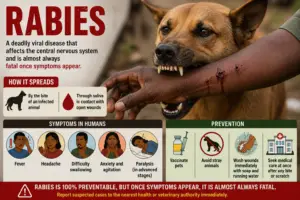
According to him, the disease is transmitted mainly through the saliva of infected animals during bites or when saliva comes into contact with broken skin.
He noted that although dogs remain the principal reservoir of rabies, cats, bats and other mammals could also transmit the disease.
In addition, he said early recognition of unusual animal behaviour is crucial in preventing rabies infections.
He explained that infected animals often show signs such as aggression, excessive salivation, difficulty swallowing, restlessness and a tendency to bite people, animals or objects without provocation.
“Any unprovoked bite should be treated with suspicion and reported promptly to veterinary authorities,” Abdullahi said.
Similarly, he advised members of the public to avoid handling suspected rabid animals and urged anyone bitten or scratched by an animal to immediately wash the wound thoroughly with soap and running water before seeking medical attention.
However, Abdullahi warned against the use of traditional remedies on bite wounds, saying practices such as applying herbs, engine oil, ash or animal hair could delay proper treatment and increase the risk of death.
“People should not rely on unproven remedies after an animal bite. The first step is to wash the wound properly and seek medical attention immediately,” he said.
Beyond individual actions, Abdullahi identified inadequate veterinary manpower as a major challenge affecting rabies control efforts in the country.
He expressed concern that many qualified veterinary graduates remained unemployed in spite of shortages of veterinary professionals in several parts of Nigeria.
According to him, deploying more veterinary personnel would strengthen disease surveillance, improve early detection and expand community-based rabies prevention programmes.
“Veterinary professionals are needed at the grassroots level because they are central to animal disease detection, vaccination campaigns and public awareness,” he said.
Meanwhile, Dr Abdulwaheed Agboola, Field Technical Commercial Executive (FTCE), Kaduna/Zaria Axis, Animal Care Services Konsult Nigeria Ltd, identified routine vaccination of dogs and cats as the most effective strategy for preventing rabies transmission.
He explained that modern anti-rabies vaccines provide between 95 and 99 per cent protection when properly administered.
Furthermore, he said vaccinating at least 70 per cent of the dog population could achieve herd immunity capable of interrupting transmission within communities.
“Routine vaccination of dogs and cats remains the most effective strategy for interrupting rabies transmission,” Agboola said.
In spite of the availability of effective vaccines, experts say vaccination coverage among dogs in Nigeria remains below the level required to interrupt transmission.
Therefore, they note that achieving at least 70 per cent annual vaccination coverage among dogs is critical to reducing circulation of the virus in communities.
To reduce risks after exposure, Agboola advised victims of suspected rabid animal bites to wash affected areas thoroughly with soap and running water for at least 15 minutes, disinfect the wound where possible and immediately visit a health facility for post-exposure prophylaxis.
He added that veterinary and public health authorities should be notified to enable proper observation or laboratory testing of the animal involved.
Nevertheless, Agboola identified low dog vaccination coverage, increasing numbers of stray and free-roaming dogs, poor public awareness, weak disease surveillance and limited access to vaccines in some communities as major barriers to rabies control.
For this reason, he stressed the need for stronger collaboration among government agencies, veterinary authorities, healthcare providers and communities.
“A coordinated One Health approach involving government, veterinary authorities, healthcare providers and communities is required to strengthen rabies surveillance, improve laboratory capacity, expand annual mass dog vaccination campaigns and improve access to vaccines,” he said.
Beyond its health impact, experts say rabies also places an economic burden on affected families through the cost of post-exposure treatment, transportation to health facilities and loss of income during medical visits.
As a result, they argue that sustained investment in prevention remains more affordable and effective than responding to human cases after exposure.
Experts called for stricter enforcement of responsible pet ownership, including routine vaccination, proper confinement of dogs and prompt reporting of suspected rabies cases.
Ultimately, they said sustained investment in veterinary services, improved access to vaccines and continuous public enlightenment would be critical to achieving the global target of eliminating dog-mediated human rabies by 2030.
Although rabies remains one of the world’s deadliest infectious diseases, experts say it is also among the most preventable.
They maintain that sustained mass dog vaccination, stronger veterinary and public health systems, responsible pet ownership and prompt treatment of bite victims could save thousands of lives and move Nigeria closer to eliminating dog-mediated human rabies by 2030. (NANFeatures)
Edited by Tosin Kolade
***If used, please credit the writer and the News Agency of Nigeria.



Comments