


By Vivian Emoni
Gender experts say women occupy only 5.6 per cent of seats in State Houses of Assembly, expressing concern over persistent gender inequality in political representation.
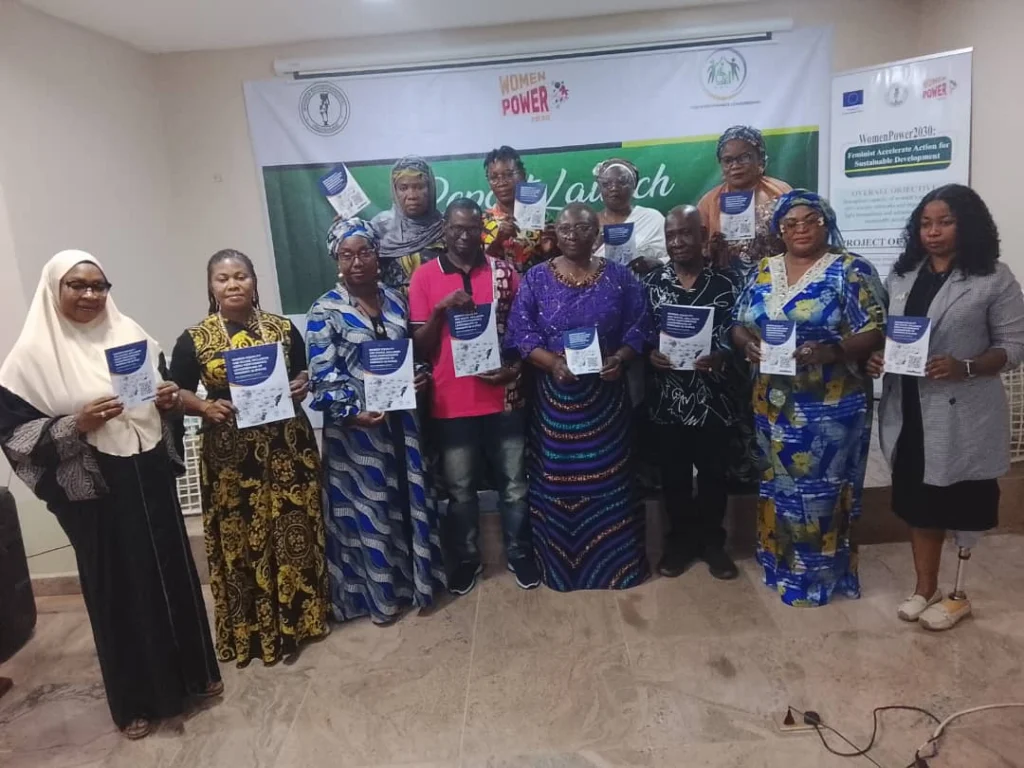
The experts disclosed this at the inuaguration of Nigeria’s Gender Equality and Social Inclusion (GESI) Performance Leaderboard of 36 States, on Friday in Abuja.
Dr Priscilla Achakpa, the Founder and Global Lead, Women Environmental Programme (WEP), said the initiative assessed how women, youths and persons with disabilities were included in governance, recalling Nigeria’s commitment to leaving no one behind.
Achakpa said the assessment examined six areas, such as leadership and representation, policy and legal frameworks, accessible infrastructure, budget allocations, access to justice and open governance.
She urged stakeholders to promote inclusive governance and women’s political participation ahead of the 2027 elections.
According to her, 108 data collectors have been trained and deployed across the 36 states and the Federal Capital Territory (FCT) to gather assessment evidence.
“The assessment drew on official records, interviews, online reviews and physical inspections to establish the basis for the leaderboard.
“The inauguration of the gender equality performance leaderboard assess inclusion of women, youths and persons with disabilities across Nigeria’s 36 states.
“Women occupy only 5.6 per cent of seats in States Houses of Assembly. There is persistent gender inequality in political representation,” she said.
Achakpa said persons with disabilities had almost no representation in States Houses of Assembly, underscoring the need for inclusive political participation.
She added that Lagos was the only state with an anonymous online platform for reporting human rights violations.
However, she acknowledged progress in violence prohibition laws and institutional support for women and youths, noting that existing achievements offered opportunities for improvement.
Achakpa said the leaderboard was designed to measure performance, motivate improvements and promote accountability.
She appreciated government officials which provided information for the assessment and acknowledged partners, including Christian Aid, ActionAid and other supporting organisations.
Dr Iniobong Abiola-Awe, the Director, Department of Climate Change, Ministry of Environment, reaffirmed the importance of gender equality and social inclusion in promoting effective climate action and sustainable development.
Abiola-Awe, who was represented by Mrs Cordelia Elebeke, department of climate change, described the leaderboard as a timely accountability and advocacy tool for assessing state governments’ progress in gender-responsive governance and identifying areas requiring improvement.
According to her, the assessment will encourage healthy competition among states, promote the sharing of best practices and inspire policy reforms that improve citizens’ lives.
Mr John Baaki, the Co-Executive Director of WEP, said the assessment examined representation of women, youths and persons with disabilities in state governance.
Baaki said the assessment covered states Houses of Assembly, executive councils and existing laws promoting women’s political participation and protecting vulnerable groups.
He said the assessment also examined laws protecting persons with disabilities and promoting youth participation in politics, alongside access to justice.
He said states were scored using a developed assessment guide, which considered representation, accountability mechanisms and measures promoting inclusive governance.
Baaki said Anambra emerged top in the gender equality and social inclusion assessment, followed by Cross River, among states evaluated nationwide, adding that Zamfara was among states ranking low.
Mrs Aver Akighir, the Executive Director, Hope Alive for Possibilities Initiative (HAPI), an NGO, commended organisers and partners of the GESI initiative.
Akighir said gender equality and social inclusion meant ensuring that women, young people and persons with disabilities enjoyed equal opportunities to participate, contribute and thrive.
Ms Stella Abah, the Senior Gender Equality and Social Inclusion Specialist, Christian Aid, an NGO, congratulated WEP and partners on the inuaguration of the 2024 GESI Performance Leaderboard Assessment Report.
Abah, who represented the organisation, said inclusive governance required meaningful participation of women, youths, persons with disabilities, displaced persons and other marginalised groups in governance and equitable access to development benefits. (NAN)
VOE/EEE
=======
Edited by Ese E. Ekama-Williams
Comments