








By Justina Auta
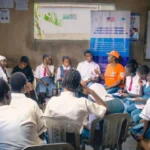
Top 10 finalists of the Digital Peers International – Small Grants Programme 2.0 Innovation Challenge, have showcased youth-led solutions leveraging artificial intelligence to tackle plastic waste management.
The project was themed: “Deploying the Power of IT-Engaged Youths in Effective Plastic Use and Plastic Waste Management 2.0.”
The event, organised by Digital Peers International (DPI) on Thursday in Abuja was in collaboration with Small Grants Programme (SGP) Nigeria.
It also featured expert panel review, prototype demonstrations, and stakeholder engagement, highlighting a pipeline of youth-driven innovations aimed at converting plastic waste into economic and environmental value.
Mr Adeolu Odusote, Project Chairman, DPI/SGP 2.0 and Managing Director, Pearls Learning Hub, said 400 young people grouped into different teams were initially brought together under the programme.
“Over the past year, we brought together 400 young people grouped into different teams.
“They came to learn about plastic waste management and develop innovative ideas that can contribute to solving challenges associated with plastic use and how the challenge of waste generated therefrom can be better solved,” he said.
Odusote explained that the competition progressed through several elimination stages.
“The focus of this initiative goes beyond prize money. What excites us most is the creativity, innovation and energy displayed by these young people.
“We want to ensure that these ideas continue to be developed into market-ready products and services,” he said.
He further disclosed that the initiative included funding support, mentorship and international exposure opportunities.
“We will explore opportunities for funding, mentorship and market access. In fact, two participants will be travelling to China in the coming weeks as part of opportunities arising from this programme,” he said.
Dr Edith Yohana-Ishidi, Director, Special Duties, Sheda Science and Technology Complex (SHESTCO), Federal Ministry of Innovation, Science and Technology, emphasised the role of the youths in national development.
“We are here to initiate a thought line in the mind of our youths that it is not all about producing, developing a very fantastic CV.
“It is about being innovative and solving problems; looking at our environment and thinking out of the box on how we can provide solutions,” she said.
She, therefore, stressed the need for the government and other stakeholders to invest in waste to energy technology.
“It is highly capital intensive to convert waste into energy, especially the plastic waste.
“Government should key in because of the resources and job creation. A single individual cannot be able to procure the facilities that will be required for this process.
“This will ensure that youths participate in the area of waste to energy generation,” she said.
Also speaking, Ishaq Abubakar-Ibrahim, Director, Waste Management, Nasarawa State Waste Management and Sanitation Authority (NASWAMSA), described plastic waste as a resource that can be converted into wealth.
He urged a shift in mindset among young people towards recycling and waste collection as a livelihood.
“We have people we call material recovery agents. They are mostly youths who sell them to upscalers who will now take it to industry for recycling,” he said.
He further called for stronger investor participation and government support in waste management systems.
Abdulmujib Yusuf, one of the top 10 youth innovators and Team Lead, Nature’s Heart Foundation-ADEI, said its project focused on behavioural change through technology.
“Our project is Plastic RR. Plastic RR is a tech-enabled platform that seeks to drive behavioural change towards plastic waste management.
“We want people to see plastics not as waste anymore but as an opportunity for education; for dignity in the girl-child menstrual hygiene management.
“We want them to appreciate it as an opportunity to build a safe and cleaner environment in Abuja and Nigeria as a whole,” he said.
Similarly, Miss Vivian Maduekwe, Team Lead, E-Cycle, said her team was using a game-based platform to influence behaviour change among children aged six to 12 years.
“We are utilising a game-based platform that connects children to real-world experiences while helping to change their perception of plastic waste,” she said.
The News Agency of Nigeria (NAN) reports that the challenge featured youth-led prototypes across digital platforms, recycling innovations, and circular economy solutions aimed at addressing Nigeria’s plastic waste challenges. (NAN) (www.nannews.ng)
Edited by Uche Anunne