


By Emmanuel Oloniruha
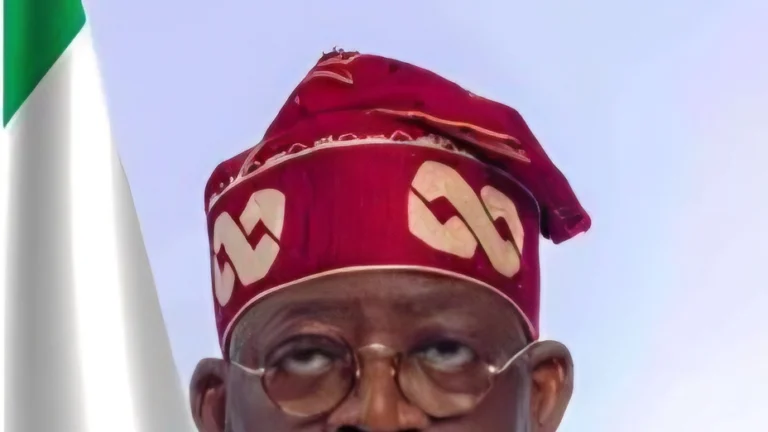
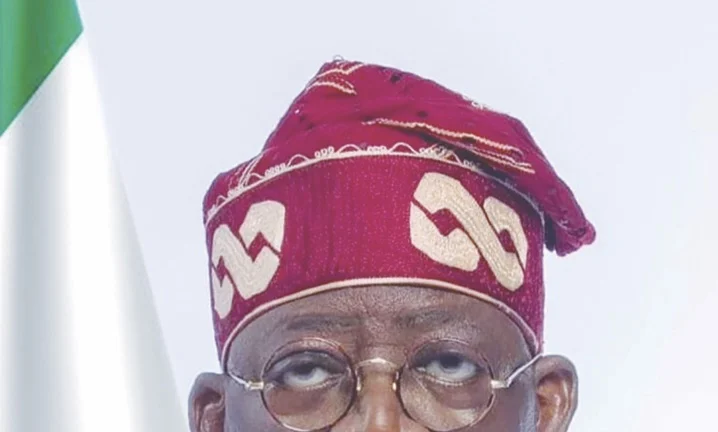
The Convener of South West Agenda for Asiwaju (SWAGA), Mr Oyetunde Ojo, has urged Nigerians to support the re-election of President Bola Tinubu in 2027, saying continuity would enable the administration to consolidate ongoing reforms and deliver greater benefits.
Ojo, who is also the Managing Director of the Federal Housing Authority (FHA), made the call on Wednesday in Abuja while speaking with journalists on the performance of the Tinubu administration.
He said the president deserved another term based on visible achievements in infrastructure, education reforms, economic policies and security.
The SWAGA convener urged Nigerians to consider the state of the country before Tinubu assumed office and compare it with developments recorded across various sectors before assessing the administration.
According to him, the administration inherited significant challenges but had taken bold steps to address longstanding issues affecting the country.
Ojo cited ongoing road projects nationwide as evidence of the government’s commitment to infrastructure development.
He listed major projects including the reconstruction and expansion of the Abuja-Makurdi-Otukpo-Enugu corridor, Kaduna-Kano road, Lagos-Ibadan Expressway and other key routes connecting different regions.
“These are not cosmetic roads. They are roads designed to serve Nigerians for many years. People travelling across the country can already see the difference,” he said.
On education, Ojo said the administration’s engagement with university unions had helped prevent prolonged nationwide academic disruptions.
“There has not been a prolonged nationwide university shutdown under this administration. Students are completing their programmes on schedule, and parents have greater certainty about their children’s education,” he said.
He also said positive assessments from international rating agencies showed increasing confidence in Nigeria’s economic reform direction.
Ojo noted that although some government decisions had been difficult, they were necessary to strengthen fiscal stability, attract investment and improve infrastructure.
“Leadership requires taking difficult decisions and listening to the people. President Tinubu has demonstrated both. Nigerians should look at where the country was, where it is today and where it is heading before making their decision in 2027,” he said.
On the power sector, the FHA boss said the Electricity Act signed by the president had created opportunities for states to participate more actively in electricity generation and distribution.
He said the removal of previous restrictions had opened the sector to more investment and would produce long-term benefits.
“Electricity cannot be transformed overnight. The president has provided the legal framework. States can now generate and distribute power. Investors are already showing interest, and the long-term benefits will become increasingly visible,” he said.
On insecurity, Ojo said the administration was taking steps to address security challenges, adding that some of the problems could have been reduced earlier if Nigeria had adopted state policing.
He recalled that during his time as a member of the House of Representatives between 2011 and 2015, he supported moves to introduce state police during the administration of former President Goodluck Jonathan.
According to him, the proposal faced political resistance despite concerns over emerging security threats in the Sahel region.
“We saw the dangers coming from the Sahel region and the growing instability in Libya, Mali, Burkina Faso and Niger. Some of us believed state police were necessary because of the nature of our borders and emerging security threats, but politics got in the way,” he said.
Ojo said Tinubu had long advocated for state policing, drawing from security models in countries such as the United States and the United Kingdom.
He added that Lagos State’s security structure under Tinubu’s administration as governor demonstrated the effectiveness of decentralised security arrangements.
He cited initiatives including the Rapid Response Squad, Lagos State Security Trust Fund and investment in security equipment as measures that helped improve security in the state.
“The challenges we are seeing today reinforce the argument for state police. What some of us warned about years ago has now become a reality,” he said.
He urged the National Assembly to conclude the constitutional process on state policing and called on states to support the initiative.
While acknowledging ongoing security concerns, Ojo said technology, intelligence gathering and aerial surveillance would be crucial in tackling insecurity, especially along Nigeria’s borders.
He also called on Nigerian innovators to develop local drone technology and surveillance solutions to support security operations (NAN)(www.nannews.ng)
Edited by Tosin Kolade
Comments